
How Does Beet Root Powder Improve Color Stability in Beverage and Food Formulations?
Oct 10, 2026
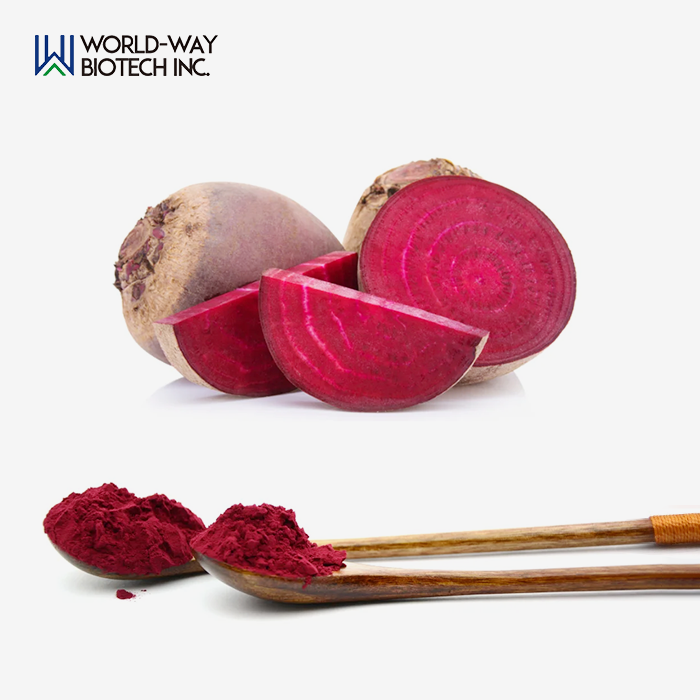
Beet Root Powder makes food and drinks more colour-stable because it contains betalain pigments like betacyanins and betaxanthins, which give them deep red to purple colours that don't break down easily. These colours dissolve in water and keep their shape over a mild pH range. They also work well when processed in a controlled way. Beta vulgaris-derived powder is a clean-label colouring solution that has been shown to have antioxidant activity that actively slows pigment breakdown during production and shelf storage. This is in contrast to many manmade colourants that are coming under more and more scrutiny from regulators and consumers.

Understanding Color Stability Challenges in Food and Beverage Formulations
People often decide how good something is by looking at its colour first. People are less likely to buy something if the colour fades, shifts, or looks bad, even if the way it's made is good. For those in charge of purchasing and research and development (R&D), colour differences directly cause customers to be unhappy, batches to be rejected, and money to be lost.
What Causes Color Degradation?
Four outside forces—oxidation, changes in pH, heat, and light—cause most colour loss in food and drinks. Oxidative stress hurts the structures of chromophores when oxygen gets into packaging that hasn't been sealed. It's bad for betalain-type colours when the pH level is above 7.0 because it often turns red tones yellow or brown. Thermal degradation happens faster when things are processed at high temperatures, like when food is pasteurized or baked.
Why Synthetic Colorants Are Losing Ground?
Regulatory bodies in the US and around the world are paying more attention to man-made colours. As an example, the FDA is still keeping a close eye on Red 40, and some big stores now demand that ingredient lists don't have any man-made dyes on them. Brands that use fake colourants might have to change their recipes. Sources of natural colour, like beet juice, give both a safety net and a better label for the product.
The Cost of Color Failure in B2B Supply Chains
A lot of drinks that change colour while being shipped or kept in stores cost money. Colour that doesn't match up hurts brand reputation and shop shelf placement in more ways than just recalls. Colour stability is becoming more and more important to procurement professionals as a requirement, not an extra thought. They choose where to get their materials based on data that can be used to measure how well pigments are kept.

The Science Behind Beet Root Powder's Color Stability Properties
It's easy to see why betalain powder from beets works better than other natural colourants in tough food situations once you know how they work.
Betalains: Betacyanins and Betaxanthins
There are two different types of betalains. Betacyanins, mostly betanin, give colours their reddish-violet tones. Betaxanthins, on the other hand, give colours their yellow-orange tones. Depending on the pH and concentration, they give a lot of different colours, from deep purple to amber. Standardized Beet Root Powder extract powders with at least 1% betanin give a steady colour baseline that can be used to make batches that are all the same.
Antioxidant Capacity as a Pigment Protector
Another thing that betalains do is get rid of free radicals that could damage the structure of the colour. A study in the Journal of Agricultural and Food Chemistry found that betanin can absorb a lot of oxygen radicals (ORAC). This means that it actively saves the colour while it is being processed. There is less need for many man-made stabilizers because it can be used as both a colourant and an inhibitor.
pH Range and Thermal Behavior
When the pH level is between 4.0 and 6.0, which is slightly acidic, betalains work best. It's safe for most drinks if the colour stays the same after being heated to 72°C for 15 to 30 seconds. Above pH 7.0, it's very easy for the chromophore structure to begin to break down. The colour performance should be the same as or better than many plant-based alternatives if the processing conditions are kept slightly acidic, like in fruit-based drinks and fermented dairy alternatives.

Practical Applications of Beet Root Powder in Beverage and Food Formulations
To turn research into production, certain technical decisions need to be made about how to dose, how well it works with matrices, and how to process it.
Beverages: Juices and Functional Drinks
Citrus or berry bases are naturally acidic, which keeps the pH in the right range for betalain. This is why beet powder works well in fruit juice mixes and functional drinks. Most of the time, an inclusion rate of 0.5% to 2.0% by weight gives a steady red-to-pink colour that is easy to see. This is all about how well it dissolves in water. World-Way's beet extract (95% pass 80 mesh, moisture ≤5.0%) dissolves fully in cold water and doesn't settle, so you can be sure that each batch will be the same.
Dairy Alternatives, Baked Goods, and Confectionery
This powder works well in plant-based yogurts and oat milk drinks that don't have dairy because it has small bits and doesn't taste bad when used in small amounts. Since something is hot when it's baked, the pH needs to be carefully watched. It takes longer for betalain to break down when you add ascorbic acid to dough or batter to keep it slightly acidic. Adding ascorbic acid or citric acid to beet colouring in candy makes the colour last longer.
Processing Recommendations for Stable Color Output
This is what production teams should keep an eye on during processing:
- Managing the pH: To keep the betacyanin intact, keep the formulation's pH between 4.0 and 6.0 during processing and packing.
- Temperature control: If possible, keep heat exposure above 70°C to less than 30 seconds. Cold-fill processes help retain heat the longest.
- Light protection: Use dark or UV-blocking packing materials, since betalains break down when they are exposed to UV light for a long time.
- Oxygen exclusion: Nitrogen flushing or vacuum-sealed packing can help stop reactive colour loss while a product is being stored.
People who buy and use the products will be much less likely to complain about colour shift if these controls are always used during Beet Root Powder production.

Comparing Beet Root Powder with Alternative Natural Colorants
There are times when different natural red colourants don't work well together. Based on facts, this comparison helps teams that buy things decide where to buy things.
Beet Root Powder vs. Beet Juice Powder
Beet juice powder has three to five times the amount of dietary nitrates and dissolves better in cold water, so it's the best choice for sports nutrition drinks. Whole Beet Root Powder, on the other hand, contains both color and fiber, making it a more cost-effective choice for food uses where fiber content increases label value. Beet Root Powder has a lower unit cost per kilogram, making it more affordable for color-primary applications in baked goods or sweets.
Organic vs. Non-Organic Options
Organic-certified beet extract costs more, but it helps products that are USDA organic by being labeled directly. The Organic Trade Association says that the natural and organic market will be worth over $67 billion in U.S. sales in 2023. For brands that want to sell in this market, the higher price earnings often make it worth it. Non-organic choices can still be used for regular products where cost per unit is the most important factor.
Formulation Forms: Raw Powder vs. Encapsulated Extract
Raw beet powder can be used in foods and drinks directly. Encapsulated formats, like microencapsulated betanin, make colors more stable in high-shear or high-heat manufacturing settings, like when snacks are extruded. This is because the colors aren't exposed to conditions that could damage them until the product gets to the customer. Formulators who work with difficult handling conditions should ask their provider for encapsulated versions.
Sourcing and Procurement Insights for Beet Root Powder in B2B Markets
Before even one batch of Beet Root Powder is made, decisions about color stability are made based on how qualified the suppliers are.
Evaluating Supplier Certifications
Suppliers you can trust have certifications that are recognized around the world and lower regulatory risk. The beet extract from World-Way is certified as ISO9001, FSSC22000, Kosher, and Halal, which means it is safe for use in North American, European, and Middle Eastern markets. There is a lot of agreement between FSSC22000 and the GFSI standards that big food stores and co-manufacturers need.
Scalability, Lead Time, and Documentation
When demand goes up, procurement teams need sellers who can keep up without lowering quality. Heilongjiang, Inner Mongolia, and Xinjiang are known for growing high-quality beets, so World-Way gets its premium beet raw materials there. The company can process more than 3,000 tons of beets every year. Logistics planning is made easier by a 10-day lead time and standard 25 kg/drum packaging. Every order comes with full technical information, including a COA, MSDS, non-GMO statement, and allergy statement.
Customization and OEM Capabilities
Specifications often need to be flexible for long-term contracts. World-Way offers OEM and private label services and can change the amounts of betalain standardization, particle size, and moisture content to meet the unique formulation needs of each client. You can get free trials before you sign a contract, which lowers the risk of qualification for new product development processes.

Conclusion
Betalain pigments in beta vulgaris extract help colors stay stable when pH, temperature, and air exposure are all managed correctly. Beet Root Powder is a natural way to add color and protect cells from damage. It can be used instead of synthetic dyes in drinks, dairy-free options, baked goods, and sweets. When buying this ingredient, procurement professionals should look for certified, vertically integrated suppliers whose raw materials can be tracked and whose production can be changed as needed. Beetroot-derived pigments reliably keep their visual quality over the course of a product's shelf life when they are mixed with the right ingredients.
FAQ
What dosage of beetroot extract delivers visible, stable color in beverages?
An inclusion rate of 0.5%–2.0% by weight typically produces reliable color in beverage applications. The exact dose depends on target hue intensity and the base matrix's natural pigmentation. Formulators should run pilot batches at multiple concentration levels before committing to full production specifications.
Is betalain color stable in acidic products like sports drinks?
Yes. Betalains perform best in mildly acidic environments (pH 4.0–6.0), which aligns well with most sports drink and juice formulations. Stability decreases above pH 7.0, so alkaline formulations require additional protective measures such as encapsulation or antioxidant co-addition.
Are there allergen concerns with beet-derived colorants?
Beet extract does not belong to the major allergen groups recognized by the FDA. However, suppliers should still provide an allergen statement confirming no cross-contamination risk from shared production lines. World-Way supplies full allergen documentation with every product shipment.
Can beet pigments withstand pasteurization?
Short-time pasteurization (72°C for 15–30 seconds) at pH 4.0–5.5 produces acceptable betanin retention for most beverage applications. Extended high-temperature treatments cause measurable pigment loss. Cold-fill processing or aseptic packaging preserves color integrity most effectively.
Partner with World-Way for Premium Beet Root Powder Supply
In the years since 1992, World-Way has given plant materials to more than 500 businesses in over 60 countries. Our beet extract comes in 25 kg drums and has a 10-day lead time. It is fully water-soluble, standardized to betalains ≥1%, and certified ISO9001/FSSC22000/Kosher/Halal. We support OEM formulation and provide free samples as a reputable producer of Beet Root Powder with our own plantations and in-house extraction capacity. To get your sample right away, email us at info@world-way.net or go to worldwaybio.com.
References
1. Stintzing, F. C., & Carle, R. (2004). Functional properties of anthocyanins and betalains in plants, food, and in human nutrition. Trends in Food Science & Technology, 15(1), 19–38.
2. Clifford, T., Howatson, G., West, D. J., & Stevenson, E. J. (2015). The potential benefits of red beetroot supplementation in health and disease. Nutrients, 7(4), 2801–2822.
3. Herbach, K. M., Stintzing, F. C., & Carle, R. (2006). Betalain stability and degradation—structural and chromatic aspects. Journal of Food Science, 71(4), R41–R50.
4. Azeredo, H. M. C. (2009). Betalains: properties, sources, applications, and stability—a review. International Journal of Food Science & Technology, 44(12), 2365–2376.
5. Organic Trade Association. (2023). U.S. Organic Industry Survey 2023. Organic Trade Association.
6.Martínez-Pinna, R., & Larqué, E. (2021). Natural colorants in the food industry: regulatory framework and stability challenges. Food Chemistry, 345, 128731.
Standard Disclaimer (DSHEA):
These statements have not been evaluated by the Food and Drug Administration.
This product is not intended to diagnose, treat, cure, or prevent any disease.

Send Inquiry
Related Industry Knowledge
- Bulk Soy Extract Powder Enables Flexible Formulation Options for Protein-Rich Food and Beverage Applications
- How Can Companies Choose a Stable Melilotus Extract Supplier for Customized Production Needs?
- How Can Buyers Evaluate Soy Extract Powder Quality for Large Scale Food Manufacturing?
- 6 Benefits of Schisandra Extract Powder
- What Applications Can Melilotus Extract Support in Botanical Ingredient Manufacturing?
- What Role Does Soy Extract Powder Play in Modern Plant-Based Product Development?
- What Advantages Does Coffee Extract Offer for Developing Premium Beverage and Food Products?
- Top Benefits of Aloevera Leaf Powder for Skin Health
- How Does Hibiscus Extract Support Women’s Health?
- The Secret Ingredient: The Anti-Aging Benefits of Apple Extract