
What Applications Can Melilotus Extract Support in Botanical Ingredient Manufacturing?
Sep 23, 2026
Melilotus Extract, derived from Melilotus officinalis (L.) Pall., supports a broad range of applications in botanical ingredient manufacturing. Its key bioactives — coumarins, flavonoids, and triterpenoid saponins — make it well-suited for cardiovascular health supplements, anti-edema topicals, and functional nutraceuticals. As a standardized herbal ingredient with coumarin ≥1% (HPLC), it addresses formulation needs across pharmaceuticals, cosmetics, and dietary supplements. Manufacturers sourcing this greenish-brown fine powder gain a traceable, water-soluble ingredient backed by ISO9001, FSSC22000, Kosher, and Halal certifications, with a 10-day lead time and free sample availability.
Understanding Melilotus Extract: Properties and Health Benefits
Before choosing a plant for mass production, R&D teams need to know a lot about its science, safety history, and health effects that have been proven. People are interested in yellow sweet clover extract not only because it comes from nature, but also because its bioactive profile is unique and has been studied a lot.
Core Bioactive Composition
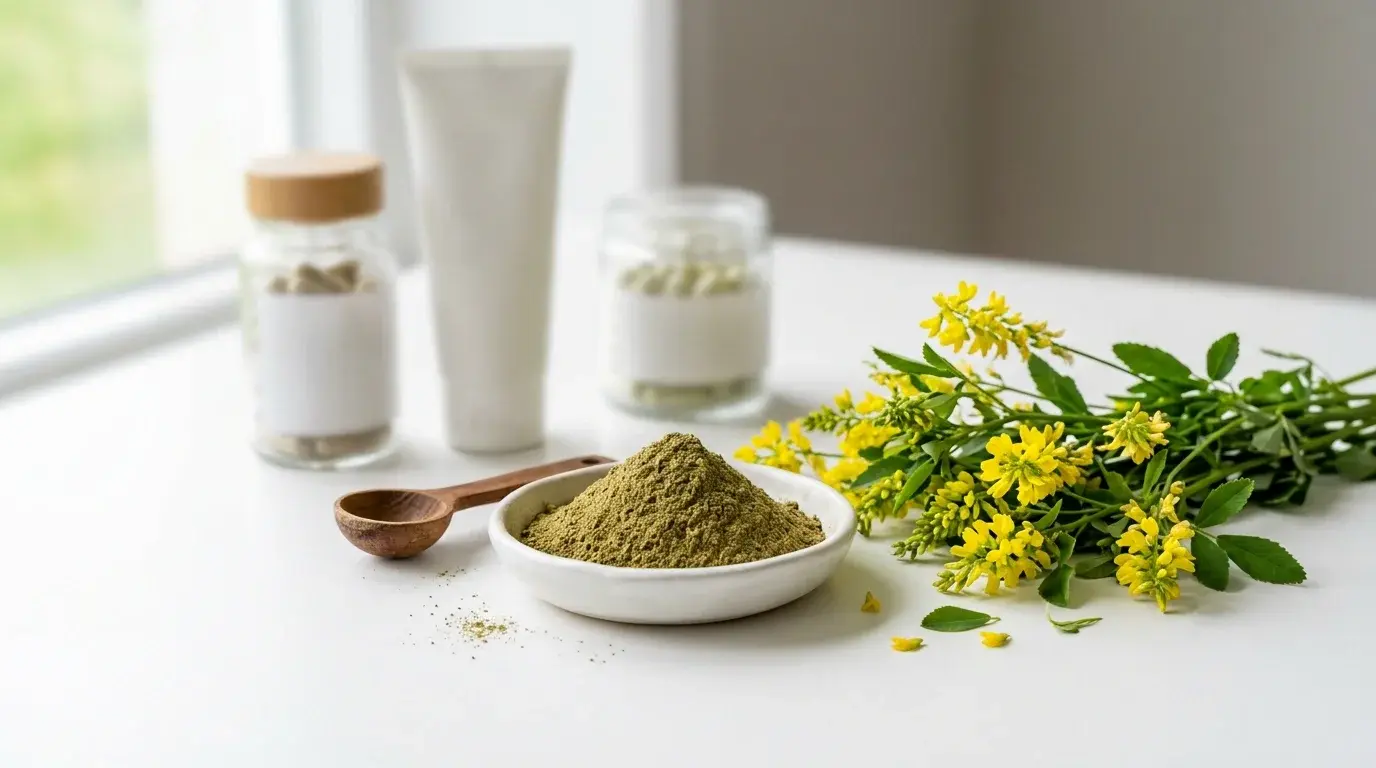
The whole herb of M. officinalis is used to make World-Way's Melilotus Extract. Naturally produced coumarins (melilotoside, dicoumarol intermediates), flavonoids, and triterpenoid saponins are what make it work. Coumarin must be at least 1%, as shown by HPLC, and have moisture levels of at least 5%, ash levels of at least 5%, and 95% of it must pass through an 80-mesh screen. The powder form that dissolves in water can be used in water-based products, pills, and tablets.
Documented Health Benefits
There is evidence from both clinical and preclinical studies that sweet clover extract can improve lymphatic circulation, lower protein-rich edema, and make veins more toned. Instead of just getting rid of water like other diuretics do, coumarin from M. officinalis starts the protease activity of macrophages, which breaks down tissue proteins that cause chronic inflammation swelling. It has been shown in published studies that dicoumarol can have effects on blood viscosity that are similar to synthetic anticoagulants, but without the risks. This is especially important when the dicoumarol content is controlled.
Safety, Standardization, and Dosage Considerations
One common concern in procurement is dicoumarol contamination, which only happens when the raw herb is dried or fermented incorrectly. Every batch at World-Way goes through HPLC-based dicoumarol limit testing to keep this risk under control. In therapeutic settings, 7–30 mg of coumarin everyday is often mentioned in clinical research. Formulators who want to sell food supplements in the US should make sure that the dose suggestions they give are in line with FDA rules and third-party testing.
Core Applications of Melilotus Extract in Botanical Ingredient Manufacturing
Procurement managers and product developers can better prioritize this ingredient in their formulation pipelines if they know where Melilotus Extract works best.
Venous Health and Circulatory Supplements
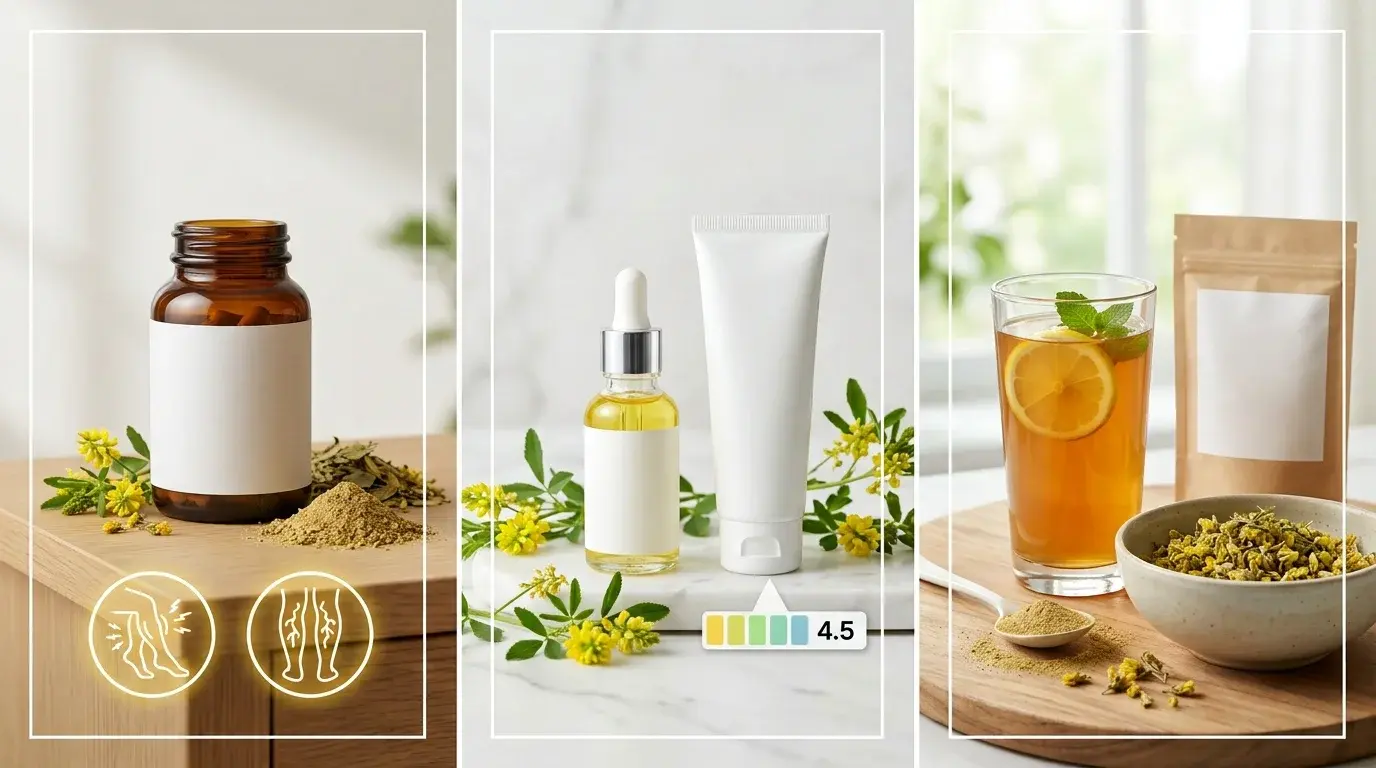
M. officinalis extract has been used for a long time in venous health supplement lines. Standardized coumarin ingredients in pill and tablet forms are often found in products that treat chronic venous insufficiency (CVI), leg pain, and varicose veins. World-Way provides standardized coumarin content along with 5:1 and 10:1 ratio extracts, which gives formulators options for dosage structure and potency.
Anti-Edema Topicals and Cosmeceuticals
When applied to the skin, the anti-edema and lymphotropic qualities of sweet clover extract can be used to make products that help with swelling after surgery, serums that reduce puffiness under the eyes, and leg gel creams. The fine powder that dissolves in water mixes easily at pH levels 4.5 to 6.5 to keep the flavonoids stable, which will be useful for personal care makeup R&D teams.
Functional Foods and Nutraceutical Blends
This botanical extract's natural source and "clean label" credentials make it a good choice for people who want plant-based functional foods. It can be used in wellness blends that reduce inflammation, drinks that help the heart, and encapsulated nutraceutical formulations. Because it works with water-based matrices, it's an easy addition for food scientists who work with healthy drinks or powder blends.
Comparison and Selection: Melilotus Extract vs Other Herbal Extracts in Manufacturing
It's helpful to see how yellow sweet clover extract stacks up against other plants that make similar health claims when making a source plan.
Melilotus vs. Horse Chestnut Extract
The most popular rival in venous health formulas is horse chestnut, which is aescin-based. Aescin mostly affects the permeability of capillaries, but coumarin from M. officinalis works in a different way—it encourages macrophages to clear out proteins in lymphatic tissue. Because of this, the two extracts work well together instead of against each other, and some high-quality formulations use both.
Powder vs. Liquid Extract Format for Manufacturing
World-Way's Melilotus Extract comes in the form of a fine, greenish-brown powder that weighs 25 kg per drum. This powder has better shelf life, more accurate weight measurements from batch to batch, and is easier to work with when dry mixing and encapsulating. Liquid extracts might work for some skin uses, but they pose more risks when stored because they are more likely to mix with water. Many times, the powder format makes it easier to handle the logistics of making a lot of supplements.
Supplier Credential Evaluation
Not every company that sells botanical extracts has the same amount of paperwork and traceability. When purchasing managers compare suppliers, they should give more weight to those that have ISO9001, FSSC22000, Kosher, or Halal certifications, full technical documentation (COA, MSDS, allergen statements, or non-GMO declarations), and HPLC-verified standardization. These things have a direct effect on getting regulatory clearance in the US, EU, and Asian markets.
Procurement Guide for Melilotus Extract: Ensuring Quality and Cost-Efficiency
To get a lot of a plant extract, you need to do more than just find a seller with good prices. Long-term supply deals depend on consistent quality, a lot of paperwork, and clear production.
When buying large amounts of standardized plant products, these are the main things you should look for:
- Certified quality infrastructure: Suppliers holding FSSC22000, ISO9001, Kosher, and Halal certifications provide audit-ready documentation and demonstrate alignment with global food safety frameworks. World-Way holds all four.
- HPLC-verified standardization: Every batch should include coumarin assay results, dicoumarol limit test data, heavy metal screening (ICP-MS), solvent residue analysis (GC), and microbiological purity reports.
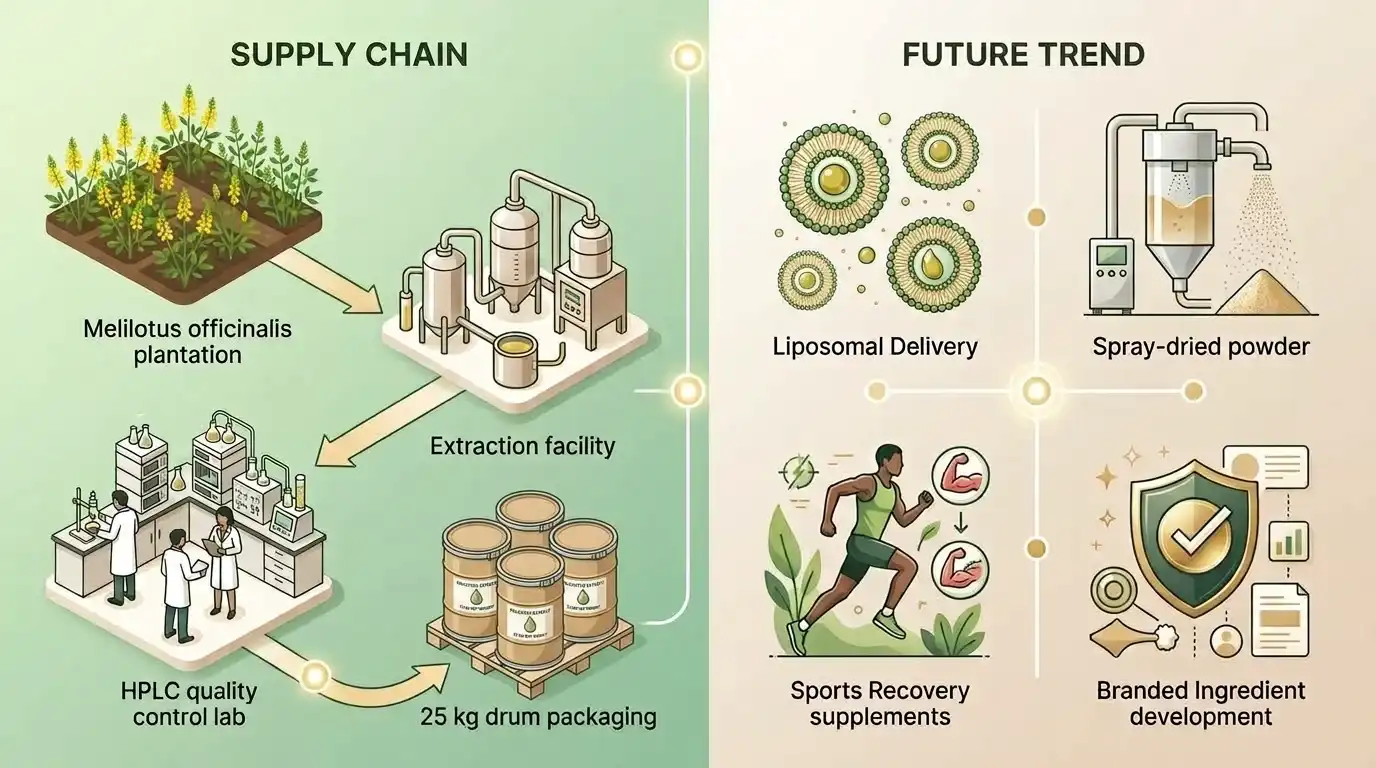
- Vertical supply chain ownership: Suppliers managing their own plantation bases reduce raw material variability. World-Way operates cultivation areas exceeding 67 hectares, directly supporting year-round supply stability.
- Formulation flexibility: Available specifications include 5:1 extract, 10:1 extract, and standardized coumarin content, packaged in 25 kg/drum with a 10-day lead time and free sample availability.
All of these criteria work together to lower the risk of poor quality and make it easier to follow the rules for many different markets. When purchasing teams build relationships with suppliers based on these Melilotus Extract standards, they report fewer batch rejects and faster times to start new products.
Future Opportunities and Innovation Trends in Melilotus Extract Applications
The market for plant ingredients is still moving toward better bioavailability, clearer stories about where the ingredients come from, and customizing ingredients for specific uses. These trends come together in an interesting way with sweet clover extract.
Advanced Delivery System Integration
Water-soluble coumarin molecules are becoming easier for the body to use thanks to encapsulation technologies like liposomal delivery and spray-dried powders. These delivery systems give companies that make sports nutrition or pharmaceutical supplements new ways to position their products in markets where customers care about faster onset and targeted release.
Expansion Into Sports and Wellness Categories
A growing market for anti-inflammatory plant extracts is helping people with post-exercise edema and healing. The way M. officinalis coumarin reduces swelling works well with recovery supplements, especially those for endurance athletes who have problems with leg swelling and poor circulation after long workouts.
Branded and Proprietary Ingredient Development
Supplement brands want botanical ingredients that are unique, have clinical support, and help them stand out in the market. Standardized extracts like this one that have known pharmacological processes work well for branded ingredient programs when paired with strong technical support from the provider and white-label manufacturing services.
Conclusion
Melilotus Extract from Melilotus officinalis works on a specific group of physiological targets, including lymphatic flow, venous tone, and inflammatory edema. These physiological targets are well-studied and match with a number of high-growth market categories. Its fine powder form that dissolves in water, coumarin levels ≥1% HPLC standardization, and full set of certifications (ISO9001, FSSC22000, Kosher, Halal) make it a good choice for supplement brands, cosmetic makers, and people who make nutraceuticals. This botanical extract should be carefully looked at by R&D leaders and procurement managers who base their ingredient plans on the trustworthiness of science and the dependability of the supply chain.
FAQ
Does Melilotus Extract function as a blood thinner like Warfarin?
No. Naturally occurring coumarin in M. officinalis does not carry anticoagulant activity. Anticoagulation only occurs when the plant ferments and produces dicoumarol. World-Way controls dicoumarol content through HPLC batch testing, ensuring the finished extract meets safety standards for supplement and cosmetic applications.
What certifications should I verify before bulk procurement?
At minimum, confirm ISO9001, FSSC22000, Kosher, and Halal certifications. Also request a complete COA, MSDS, non-GMO declaration, allergen statement, and heavy metal test results (ICP-MS). World-Way provides all of these as standard documentation.
Is the powder format stable in aqueous cosmetic formulations?
Yes, when formulated at pH 4.5–6.5, the extract maintains flavonoid stability. Moisture must be controlled during storage; the product has a 24-month shelf life in airtight containers in a cool, dry environment.
What extract ratios are available for formulation development?
World-Way supplies 5:1 and 10:1 ratio extracts in addition to coumarin-standardized grades. Free samples are available with a 10-day production lead time.
How is botanical authenticity confirmed?
Isotope ratio mass spectrometry (IRMS) or fingerprint chromatography can verify that coumarin is of botanical origin rather than synthetic. These tests are available on request.
Source Your Melilotus Extract Supplier Through World-Way
Since 1992, world-way biotech inc. has been making botanical extracts for about 500 businesses in 60 countries. We control quality from our 67-hectare plantation base all the way through shipping the finished product because we are a vertically integrated Melilotus Extract manufacturer. Our 42-person research and development team can help with custom standardization levels, OEM services, and full regulatory documentation packages that are ready in 10 days. You can get a free sample or bulk quote right now at worldwaybio.com or by emailing us at info@world-way.net.
References
1. Casley-Smith, J. R., & Casley-Smith, J. R. (1992). Lymphology, 25(3), 129–135.
2. Felter, H. W., & Lloyd, J. U. (1898). King's American Dispensatory. Ohio Valley Company.
3. Hoult, J. R. S., & Paya, M. (1996). Pharmacological and biochemical actions of simple coumarins. General Pharmacology, 27(4), 713–722.
4. Marshall, M. (1994). Conservative treatment of chronic venous insufficiency with coumarin. Phlebology, 9(3), 96–101.
5. Piller, N. B. (1976). A comparison of coumarin and benzo-pyrone on macrophage activity. British Journal of Experimental Pathology, 57(3), 317–322.
6. European Medicines Agency. (2016). Assessment Report on Melilotus officinalis (L.) Pall., Herba. EMA/HMPC/289430/2013.
Standard Disclaimer (DSHEA):
These statements have not been evaluated by the Food and Drug Administration.
This product is not intended to diagnose, treat, cure, or prevent any disease.

Send Inquiry
You may like