
What Role Does Soy Extract Powder Play in Modern Plant-Based Product Development?
Sep 23, 2026
Soy Extract Powder, derived from non-GMO soybeans (Glycine max L. Merr.), is one of the most scientifically validated botanical ingredients in the plant-based product industry. Standardized for bioactive phytochemicals—particularly isoflavones such as genistein, daidzein, and glycitein—it addresses real formulation challenges: inconsistent phytoestrogen dosing, poor bioavailability in raw soy formats, and the removal of anti-nutritional factors. Whether you are developing women's health supplements, cardiovascular support products, or functional cosmetics, this ingredient delivers measurable, reliable performance backed by decades of clinical research.
Understanding Soy Extract Powder and Its Core Benefits
You should know what makes a plant ingredient different from other materials that are similar before you choose it for use in a business product. Each soy-based nutrient works in a certain way and can't be switched out for another.
What Sets It Apart from Other Soy Derivatives?
Foods like soy flour, soy lecithin, and soy protein isolate are high in macronutrients. But Soy Extract Powder has a lot of helpful nutrients. The amount of isoflavones in it is tested. According to HPLC studies, this can be anywhere from 20% to 80%. Being able to do more than just add protein or mix things together makes it the best ingredient for therapeutic or useful exercise.
Key Bioactive Compounds and Their Functions
The main chemicals that make soy isoflavone extract work are genistein, daidzein, and glycitein. To change the function of estrogen receptors in both ways, these phytoestrogens work like estrogen itself. A study that came out in 2012 in the journal Menopause found that taking genistein supplements cut the number of hot flashes by about 51% compared to taking a fake supplement. The extract's soy saponins do more than just work on hormones. Also, they help the body use fats and keep the bacteria in the gut healthy.
Physical and Technical Specifications
With an 80-mesh screen, 95% of the time, World-Way's soy isoflavone extract goes through. It is a fine, gray to white powder. The amount of water and ash in it is less than 5%. It works with capsules, tablets, and liquid drinks, and it stays solid at room temperature while it is being processed. They make it possible for it to be used as an ingredient in many different finished goods.
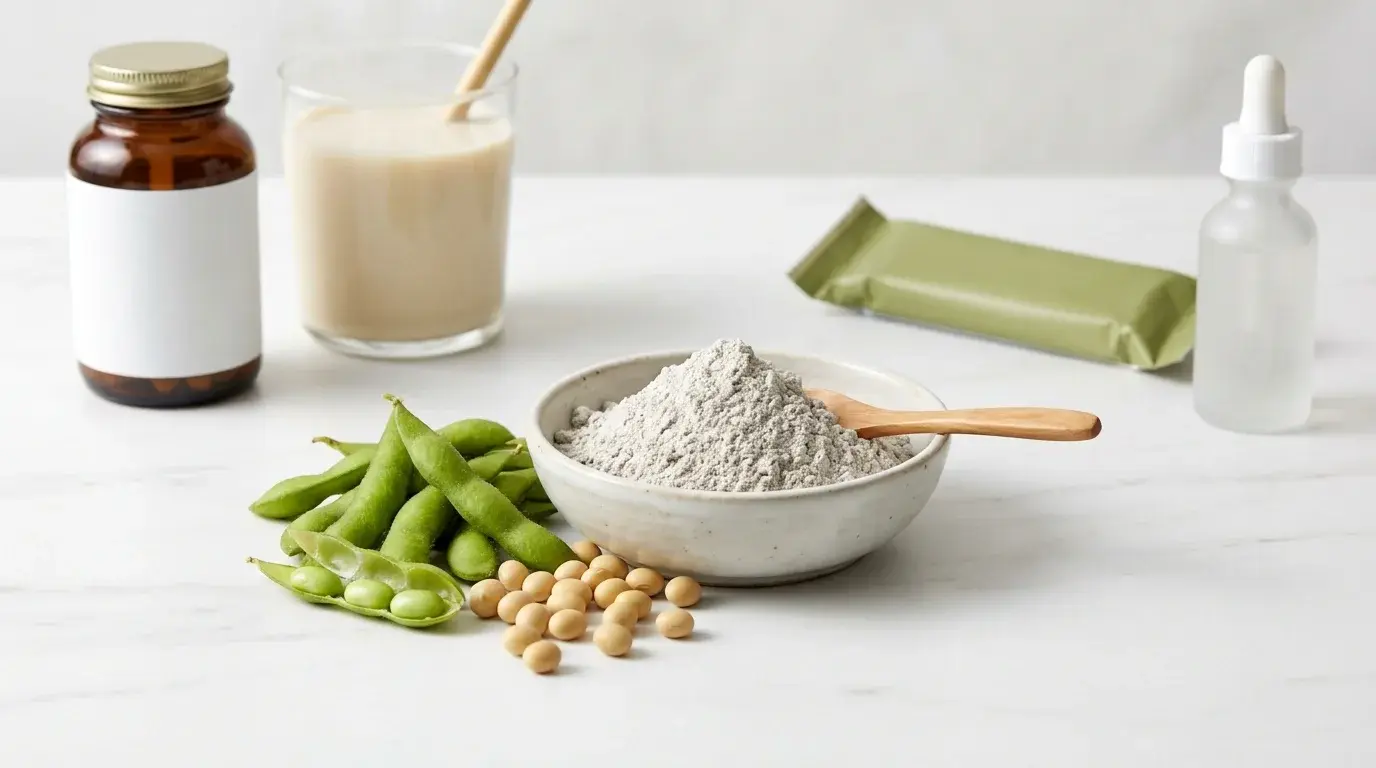
Role of Soy Extract Powder in Modern Plant-Based Product Development
As more people switch to plant-based diets, there is a big need for ingredients that are both full of nutrients and work in a certain way. This is a great time for soy phytoestrogen extract, which is used in health items, supplements, and food.
Supporting Women's Health and Hormonal Balance
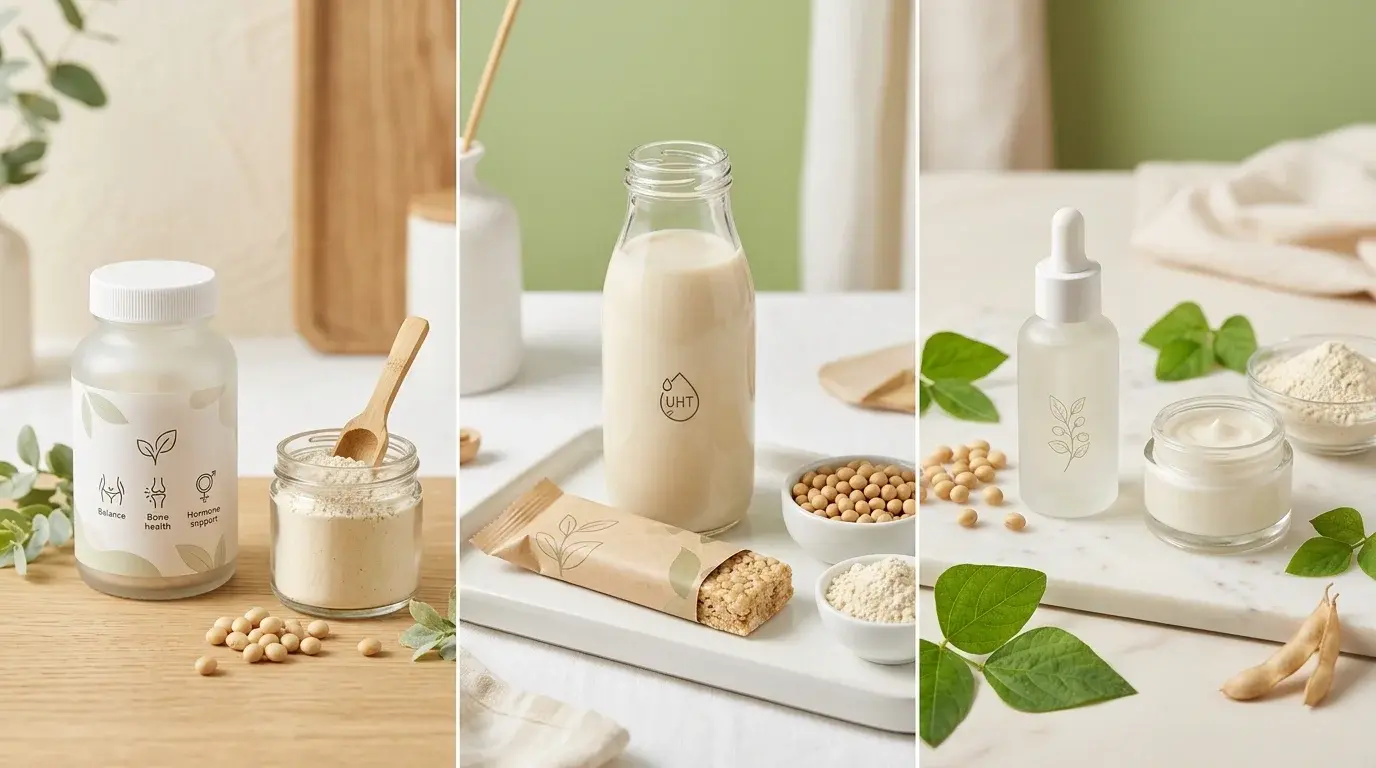
Support for women going through menopause is still one of the biggest markets for Soy Extract Powder soy isoflavone standardized extract. For women who are close to menopause, taking isoflavone supplements may help with vasomotor symptoms and make their bones stronger. That the ingredient can change how estrogen works without using man-made hormones makes it a logical choice that both patients and doctors like.
Functional Food and Beverage Fortification
It is safe at pH levels between 4.0 and 7.0, and it can handle being processed under ultra-high temperature (UHT) in drinks that are good for your heart and foods that are high in protein. In other words, it won't change the taste or texture of health shakes, improved drinks, or protein bars when added to them. This is important for brands that want to compete on taste and usefulness.
Cosmetic and Skincare Applications
Because it helps the body make collagen and has protective properties, soy isoflavone extract can be used in topical preparations. The powder is easy to mix into serums, creams, and emulsions because it is 80 mesh and doesn't have any bits in it. This doesn't affect the safety of the emulsion. More and more people who buy makeup are looking for anti-aging ingredients that come from plants. Another good choice that has been backed by research is phytoestrogen extract made from soy.
Procurement Insights for B2B Clients: Sourcing High-Quality Soy Extract Powder
There are other things to think about besides price per kilogram when you buy plant products. It depends on how well an ingredient's paperwork is done, how stable its supply chain is, and its approval status if it can go straight to global markets without any delays or problems with compliance.
If a buying manager is looking at different sources, these are the main things they look at:
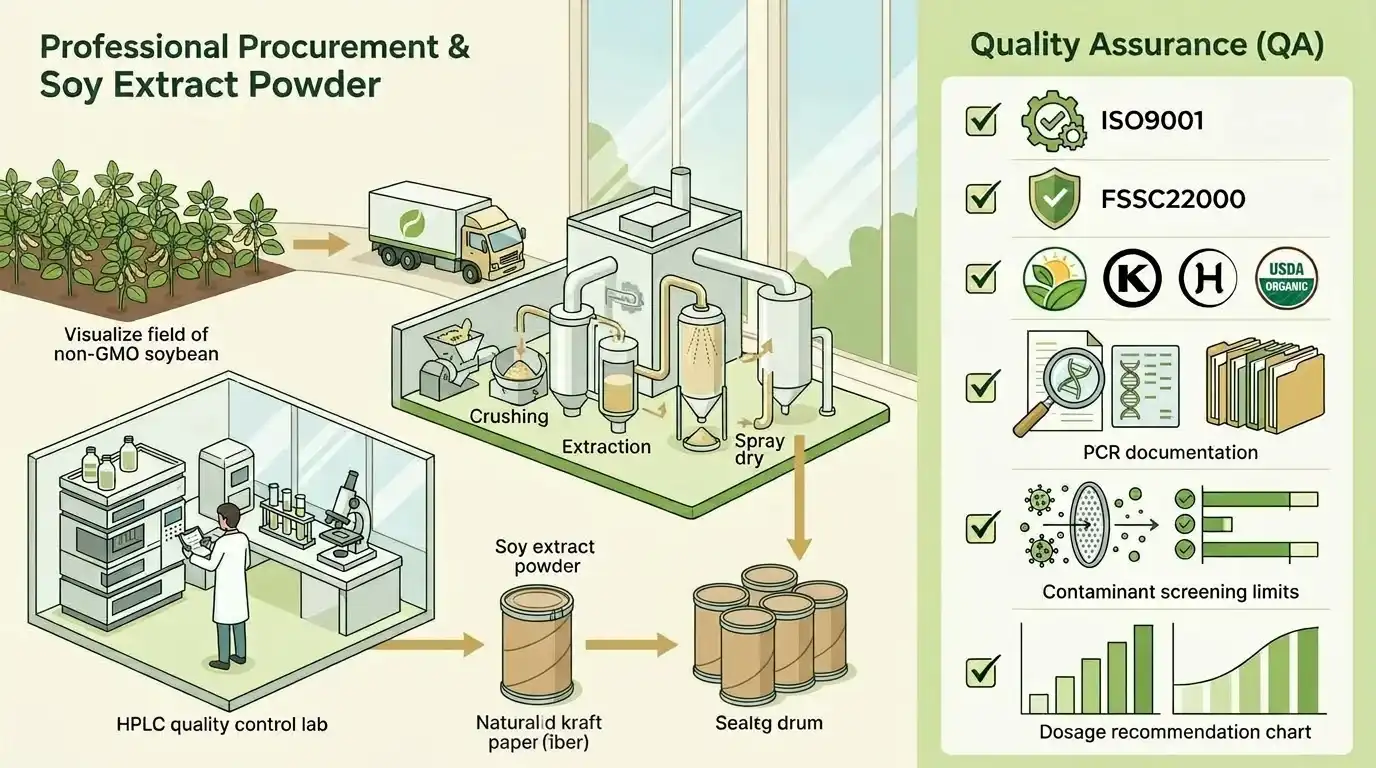
- Standardization transparency: Demand HPLC-certified isoflavone content with individual compound profiling (genistein, daidzein, glycitein ratios), not just total isoflavone claims.
- Non-GMO traceability: Require PCR-verified identity-preserved sourcing documentation with each batch to satisfy EU and organic market entry requirements.
- Certification coverage: ISO9001, FSSC22000, Kosher, and Halal certifications are the baseline for global market access; USDA Organic or EU Organic status adds labeling value for premium product lines.
- Contamination screening: Verify that suppliers screen for heavy metals (Pb <3 ppm, As <2 ppm, Hg <0.1 ppm), pesticide residues per USP <561>, and microbial limits, including zero tolerance for E. coli and Salmonella.
There should be full disclosure when it comes to standards. You should ask for HPLC-certified isoflavone content along with individual ingredient analysis (genistein, daidzein, and glycitein ratios), not just claims of total isoflavone content. For non-GMO traceability, each batch must have PCR-verified identity-preserved source documents in order to meet the rules for joining the EU and organic markets.
Coverage of certifications for Soy Extract Powder: To sell on the world market, you need ISO9001, FSSC22000, Kosher, and Halal approvals. Labels that say "USDA or EU Organic" are more valuable for high-end items.
Make sure the sellers you're buying from check for bacteria limits, herbicide residues (USP 561>), heavy metals (Pb <3 ppm, As <2 ppm, Hg <0.1 ppm), and heavy metals (Pb <3 ppm, As <2 ppm, Hg <0.1 ppm).
Comparing Soy Extract Powder Solutions for Different Application Needs
Soy-based products don't all work the same way. You can save a lot of money on reformulation rounds if you choose the right style for the features your product needs.
Soy Extract Powder vs. Soy Protein Isolate
Protein makes up about 90% of soy protein isolate. It's made to be used as a food boost in sports and as a meal replacement. Plant chemicals in Soy Extract Powder, which is set at 40% or 80% total isoflavones, are meant to improve health. Even though they can be used together, isoflavone extract will have better benefits on hormones, the heart, and the bones than protein isolate.
Organic vs. Conventional Grade Considerations
Organic soy isoflavone extract costs more for the raw materials, but in the U.S. clean-label market, the labeling return can be big. There is a 15–30% price difference between finished goods with USDA or EU Organic approval and those without it when they are sold in shops. Get organic-grade extract if your brand wants to sell natural foods or reach people in Europe. It's not just a nice thing to do; it's the smart thing to do.
Pure Extract vs. Blended Formulations
When formulators use pure standardized isoflavone extract, it's easy to keep track of active doses and follow the rules. Some health claims may be more general when soy isoflavones are mixed with calcium or red clover extract. However, it is harder to make sure that the mixture is safe. When a new product is released for the first time, it is much easier to follow the rules when the extract is pure and meets clear standards.
Best Practices and Dosage Guidelines for Effective Use of Soy Extract Powder
You need to know the right amount to use, the right way to combine it, and the truth about any problems that might come up in order to make something good with Soy Extract Powder.
Evidence-Based Dosage Recommendations
Isoflavone doses of 40 mg to 80 mg per day are commonly used in studies that show they are good for bone and heart health. Studies have shown that taking 40 to 160 mg of total isoflavones every day can help women deal with the signs of menopause. Based on the extract's standardization level, formulation teams should figure out the amount that works. One example is that a 40% isoflavone extract needs twice as much of an 80% concentrate to get the same dose.
Incorporation Techniques for Consistent Quality
It's easy for soy phytoestrogen powder to spread in liquids because it dissolves quickly in water. It can flow at 80 mesh, which lets it be packed quickly without bridging or sticking. This is useful for making pills and tablets. Before using the powder for drinking, mix it with a little water. This keeps it from clumping and makes sure it's spread out evenly. If you keep the item in its original, sealed box in a cool, dry, and dark place for 24 months, it will stay fresh.
Contraindications and Safety Considerations
Soy isoflavone extract is found in foods that people who are allergic to soy should not eat. The European Union (EU) and the U.S. Food and Drug Administration (FDA) both want signs on finished goods to have clear safety messages. If you have health issues that make hormones bother you, you should talk to your doctor before using. Formulators should include safety information in all product paperwork and COA packages so that they don't run into problems with rules in other countries.
Conclusion
Many modern plant-based products, including supplements for women's health, heart health food, and cosmetics, contain Soy Extract Powder as an ingredient. It has been tried in clinical situations, can be made to contain 20–80% isoflavones, and can be delivered in a number of different ways. This makes it a reliable active ingredient for businesses that want to reach customers who care about their health and are well-informed. If people want to buy something, they need to be given approved, documented, non-GMO products that can be fully tracked and have quick tech support.
FAQ
What is the difference between soy extract powder and soy lecithin?
It is mostly used to make things mix better. Soy lecithin is a mix of phospholipids. On the other hand, Soy Extract Powder has phytochemical health benefits and is tested for isoflavone content. They are not the same thing, and they are used for very different things in formulas.
Is soy isoflavone extract safe for long-term use?
Pills with soy isoflavones have been used in clinical tests for up to two years without any major side effects. Women who are sensitive to hormones or who are allergic to soy should talk to their doctor first.
How is non-GMO status verified?
PCR testing makes sure that none of the production batches have any DNA sequences that have been changed genetically. In addition to the standard COA, reputable suppliers also give PCR documentation that is specific to the batch.
What certifications should B2B buyers require?
At the very least, it should be ISO9001, FSSC22000, Kosher, or Halal. To sell your food in markets that require it to be organic, you should get USDA or EU organic certification and the paperwork that goes with it.
What is the standard lead time and packaging?
Every so often, World-Way sells soy extract in 25 kg drums. The wait time is about 10 days. Before you decide to buy a lot, you can get free samples to try.
Partner with World-Way — Your Trusted Soy Extract Powder Supplier
world-way biotech inc. has sold the best plant goods to over 500 companies in 60 nations since 1992. From non-GMO soybeans, our soy isoflavone extract comes. It also meets the requirements for ISO9001, FSSC22000, Kosher, and Halal. HPLC guidelines say that the amount must be between 20% and 80%. A COA, MSDS, non-GMO promises, and allergy statements are just some of the technical information that comes with every sale. You can email info@world-way.net or visit worldwaybio.com to get a free sample or talk to our technical team about your blend needs.
References
1. Messina, M. (2014). Soy foods, isoflavones, and the health of postmenopausal women. The American Journal of Clinical Nutrition, 100(Suppl 1), 423S–430S.
2. Bolca, S., Possemiers, S., & Bracke, M. (2012). Disposition of soy isoflavones in normal human breast tissue. The American Journal of Clinical Nutrition, 96(4), 912–920.
3. Gencel, V. B., Benjamin, M. M., Bahou, S. N., & Bhatt, D. L. (2012). Vascular effects of phytoestrogens and alternative menopausal hormone therapy in cardiovascular disease. Mini Reviews in Medicinal Chemistry, 12(2), 149–174.
4. Ricci, E., Cipriani, S., Chiaffarino, F., Malvezzi, M., & Parazzini, F. (2010). Soy isoflavones and bone mineral density in perimenopausal and postmenopausal women. Menopause, 17(5), 1080–1086.
5. Setchell, K. D. R., & Cassidy, A. (1999). Dietary isoflavones: Biological effects and relevance to human health. The Journal of Nutrition, 129(3), 758S–767S.
6. Zamora-Ros, R., Jiménez, C., Cleries, R., Agudo, A., & González, C. A. (2012). Dietary flavonoid and lignan intake and mortality in a Spanish cohort. Epidemiology, 23(6), 851–860.
Standard Disclaimer (DSHEA):
These statements have not been evaluated by the Food and Drug Administration.
This product is not intended to diagnose, treat, cure, or prevent any disease.

Send Inquiry
You may like