
What Advantages Does Coffee Extract Offer for Developing Premium Beverage and Food Products?
Sep 21, 2026
Coffee extract gives product developers a concentrated, standardized active ingredient that solves real formulation challenges. Derived from Coffea arabica or Robusta beans through controlled extraction, it delivers two key actives—caffeine and chlorogenic acid—in precise, measurable amounts. Whether you are building a functional RTD beverage, a weight-management supplement, or an antioxidant-rich confection, this ingredient provides consistent flavor, defined bioactivity, and verified safety data. For B2B teams managing large-scale production schedules, that combination of reliability and functional depth is genuinely difficult to replicate with raw coffee grounds or instant powder alone.
Understanding Coffee Extract and Its Core Benefits
Before you buy this item, it's helpful to know what makes it different from other materials made from coffee.
What Coffee Extract Actually Is?
Roasted coffee beans are processed through water-based or food-grade solvent extraction to produce Coffee Extract, a concentrated botanical material. This makes a dark brown, fine powder or liquid that has all the flavor and health benefits of the original bean, but it doesn't have the size, consistency, or short shelf life of ground coffee.
Key Active Compounds
Caffeine and chlorogenic acid (CGA) are the two main ingredients that make most products work. Caffeine helps you stay mentally and physically alert. Chlorogenic acid is an antioxidant polyphenol that has been linked by studies to stopping the intake of glucose and helping the metabolism of fat. The standardized extract from World-Way has chlorogenic acid levels of at least 50% (HPLC), caffeine levels ranging from 10% to 80%, and CGA extract levels of 5% to 10% or 50%+, based on the use.
How It Compares to Other Coffee Ingredients?
A full-spectrum Coffee Extract includes all of the bioactive and flavor compounds found in a roasted coffee bean, unlike caffeine pills, which only give one compound, or green coffee bean extract, which only contains unroasted beans. Because of this, it can be used in more types of products, like food, drinks, supplements, and cosmetics. This is especially helpful for product teams that want one ingredient that can be used in different ways.
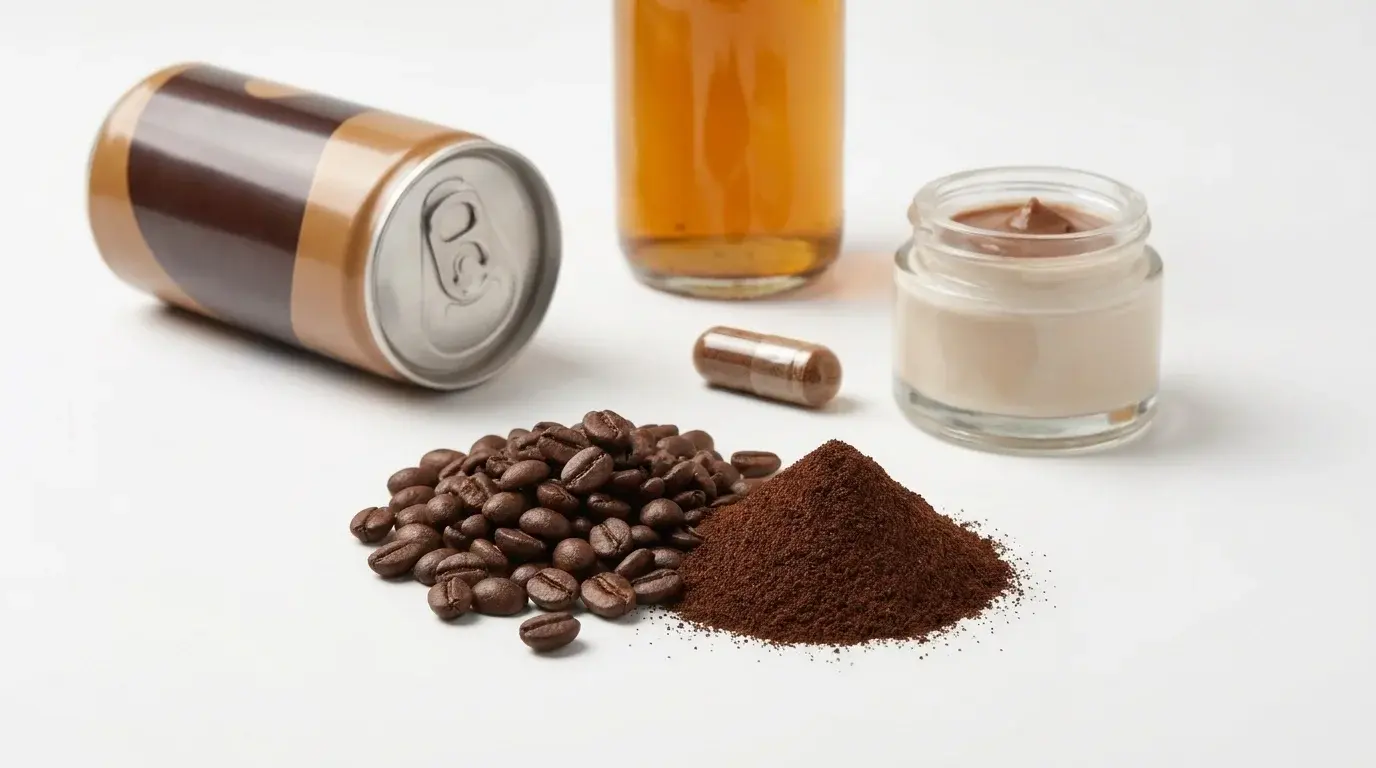
Advantages of Coffee Extract in Developing Premium Beverages
When it comes to drinks, the difference in performance between Coffee Extract and regular coffee ingredients is the clearest.
Flavor Consistency at Scale
Changing crops is one of the most difficult parts of making RTD coffee. That difference is taken away by a standard sample with known Total Dissolved Solids (TDS) and Brix readings. Every can of latte or nitro-brew starts with the same base taste of Coffee Extract. This saves the brand and lowers the number of QC rejections at production sites around the world.
Here are the main ways this ingredient improves the performance of beverages:
- Precise caffeine dosing: Caffeine content is verified by HPLC, allowing formulators to hit exact energy-claim thresholds required by FDA and EU regulations without reformulation risk.
- Application breadth: The extract integrates into energy drinks, flavored waters, tea blends, cold brew concentrates, and alcoholic mixers—formats where ground coffee simply cannot function.
- Shelf stability: The powder format (moisture ≤5.0%, ash ≤5.0%, water soluble, 95% pass 80 mesh) remains stable for 12–24 months under standard warehouse conditions, reducing spoilage loss and inventory pressure for procurement teams.
When procurement managers and R&D directors look at new ingredients, these benefits directly address the supply chain and quality control needs that they put first.
Regulatory Alignment Across Markets
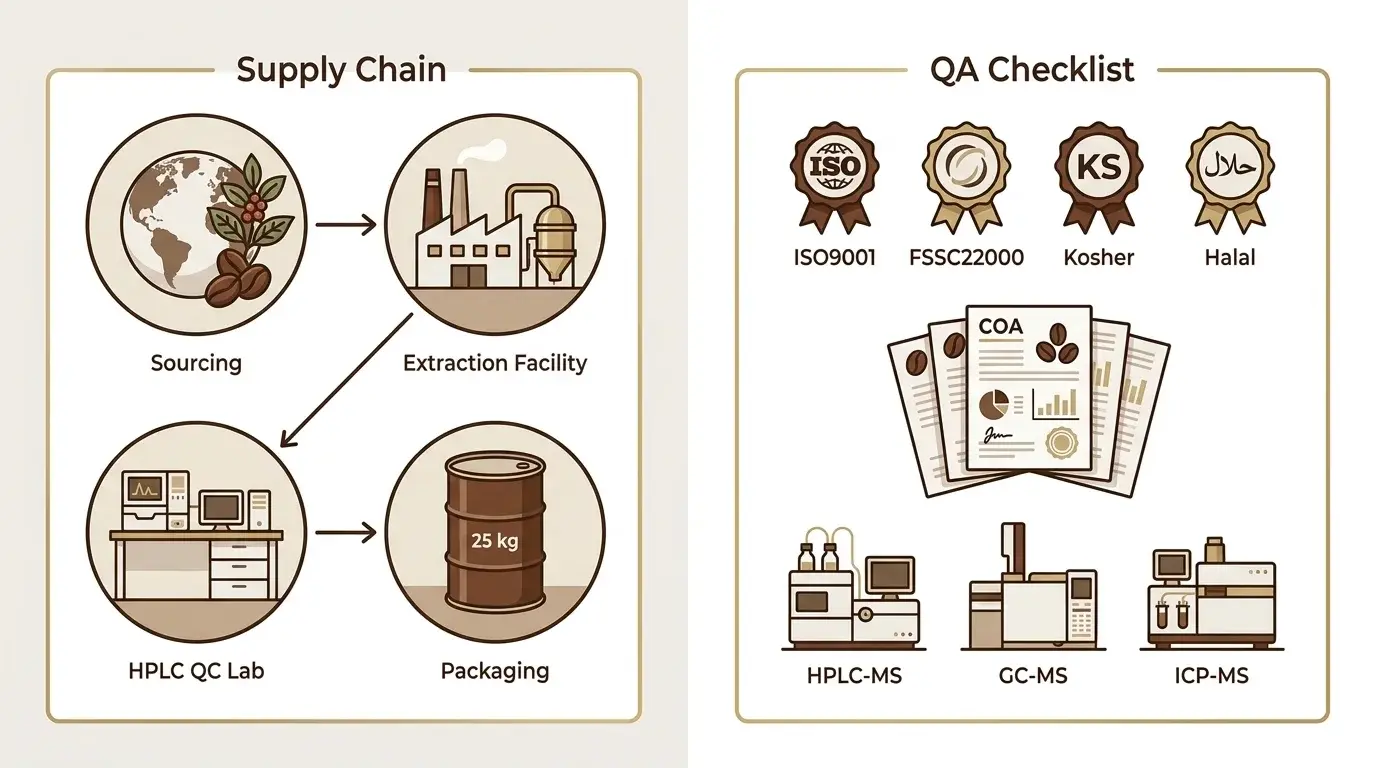
Meeting caffeine labeling requirements is different in the U.S., EU, and Asian markets. The extract comes with a certified specification sheet that includes statements about being ISO9001, FSSC22000, Kosher, Halal, and more. It also has a COA, an MSDS, non-GMO claims, and allergen statements. This means that regulatory affairs teams can move faster through market access reviews without having to wait for more supplier paperwork.
Advantages of Coffee Extract in Premium Food Products
The technical qualities of the extract make it better at controlling flavor in food production and allow for measurable functional promises.
Precision in Baked Goods and Confectionery
Ground coffee changes the amount of moisture in dough and fat mixtures and spreads out the particles unevenly. A fine powder that dissolves in water and has particles that are a certain size (95% pass 80 mesh) spreads out evenly in chocolate ganache, buttercreams, and cookie recipes. This makes the taste strength the same from the first production run to the ten-thousandth. This is very important for quality assurance managers who are in charge of high-volume lines.
Functional Health Claims in Nutraceuticals
At a quantity of ≥50%, chlorogenic acid supports claims that it can help with weight loss and antioxidants, which are becoming more and more important to customers. Published research backs up CGA's role in stopping glucose-6-phosphatase activity, which has to do with controlling blood sugar. When supplement companies are adding weight-loss or brain-health SKUs, having a botanical extract with confirmed biomarker levels makes both the product label and the science paperwork they send to stores or regulatory bodies stronger.
Cosmetic and Topical Applications
Vasoconstrictive effects of caffeine are well known in dermatology literature. This means that active ingredients derived from Coffee Extract can be used in topical formulations that target cellulite, puffiness, and skin firmness. Prestige makeup brands want a standard, low-moisture powder with a clean label that doesn't have any fake carriers or preservatives. This meets their standards for ingredient openness.
Procurement Insights for Coffee Extract: Choosing and Sourcing Premium Quality
It's not just a matter of buying something; choosing a supplier is a strategic move.
Certifications That Matter
ISO9001, FSSC22000, Kosher, and Halal are the must-haves for getting into the U.S. market, and World-Way has all of them. For clients who want to sell in the EU, they should ask for organic-certified paperwork and pesticide residue reports that meet EU MRL standards right away.
Evaluating Supplier Infrastructure
The most trustworthy suppliers control the supply chain that comes before them. World-Way gets Arabica and Robusta beans from all over the world through a network of suppliers. It also runs extraction facilities that can process more than 3,000 tons of plants every year and takes care of plantations that are bigger than 67 hectares. With that vertical structure, there are fewer reliances on third parties, and the quality of the raw materials stays more stable throughout the year.
Before you sign a supply deal, make sure of the following:
- Quality documentation package: Request COA, MSDS, allergen statement, non-GMO declaration, and the relevant organic certificates in one submission to evaluate supplier readiness.
- Sample and lead time: World-Way offers free samples with a 10-day lead time, which is realistic for trial order validation before committing to annual contract volumes.
- Analytical testing capability: Ask whether the supplier has in-house HPLC-MS, GC-MS, and ICP-MS equipment. This indicates the ability to self-certify specifications rather than outsourcing every batch test.
When procurement professionals check these factors early on, they can make supply agreements that will hold up when production pressure is high with Coffee Extract.
Best Practices for Using Coffee Extract in Product Development
It takes more than just adding this item to a recipe to get the most out of it.
Storage and Handling
Keep the powder out of direct sunlight and damp places in sealed 25 kg drums. Controlling the moisture is very important because the extract dissolves in water. Any humidity in the air will change how the extract flows and dissolves in later steps.
Formulation Balancing
When making energy drinks, you should aim for a total caffeine content that is between the legal limit for your target market and the size of the serving. When using CGA in food, start trial runs at the lower end of the suggested use range and move them up based on feedback from the sensory panel. This is because higher amounts of CGA can cause a slight astringency.
QA Integration
As a normal step in the intake process, batch-level HPLC testing of caffeine and chlorogenic acid amounts should be done. World-Way gives full analytical paperwork for each lot, which fits right into an incoming QC process so the buyer doesn't have to do any extra work in the lab.
Conclusion
Coffee Extract is used in high-end formulations because it provides three things at once: bioactivity that works, flavor that you can count on, and supply chain documentation that meets global regulatory standards. The standard active profile, which includes caffeine and chlorogenic acid at known concentrations, gives product teams a starting point that they can use again and again. This includes everything from ready-to-drink drinks to nutraceutical capsules to skin care products. When B2B buyers are in charge of annual contracts and launches in multiple markets, it is safer at every step of the supply chain to buy from a manufacturer that is vertically integrated and has certified quality systems.
FAQ
How is coffee extract different from instant coffee powder?
Instant coffee is brewed and spray-dried, optimized for flavor solubility. A botanical coffee extract is processed to standardize specific actives—caffeine or chlorogenic acid—at defined concentrations verified by HPLC. The extract is the right choice when a product requires a label claim or a consistent bioactive dose.
What caffeine levels are available?
World-Way offers caffeine standardization from 10% to 80%, plus CGA extract at 5%–10% and 50%+ formats. This range covers everything from low-stimulant functional foods to high-caffeine sports supplements.
Is the extract suitable for clean-label products?
Yes. The powder is produced without artificial carriers or preservatives and lists only the botanical source on the ingredient deck, which aligns with clean-label positioning in the U.S. and European markets.
What certifications does the product carry?
The extract holds ISO9001, FSSC22000, Kosher, and Halal certifications. Full documentation—COA, MSDS, non-GMO declaration, allergen statement—is available upon request.
What is the minimum order and lead time?
Standard packaging is 25 kg per drum. Free samples are available, and the lead time for production orders is 10 days.
Partner with World-Way for Reliable Coffee Extract Supply
Since 1992, world-way biotech inc. has sold plant products to more than 500 businesses in 60 different countries. We offer approved quality systems, a 10-day production wait time, and vertical integration as a Coffee Extract manufacturer. This means that we can give procurement and R&D teams the paperwork, stability, and pricing structure they need. Today, ask for your free sample and get in touch with our expert team at info@world-way.net or worldwaybio.com to begin the discussion.
References
1. Farah, A., & Donangelo, C. M. (2006). Phenolic compounds in coffee. Brazilian Journal of Plant Physiology, 18(1), 23–36.
2. Tajik, N., Tajik, M., Mack, I., & Enck, P. (2017). The potential effects of chlorogenic acid, the main phenolic component in coffee, on health. European Journal of Nutrition, 56(7), 2215–2244.
3. Temple, J. L., Bernard, C., Lipshultz, S. E., Czachor, J. D., Westphal, J. A., & Mestre, M. A. (2017). The safety of ingested caffeine: A comprehensive review. Frontiers in Psychiatry, 8, 80.
4. Cho, A. S., Jeon, S. M., Kim, M. J., Tak, J., Bae, I. S., Choi, M. S., & Park, Y. B. (2010). Chlorogenic acid exhibits anti-obesity properties and improves lipid metabolism in high-fat diet-induced obese mice. Food and Chemical Toxicology, 48(3), 937–943.
5. Ludwig, I. A., Clifford, M. N., Lean, M. E., Ashihara, H., & Crozier, A. (2014). Coffee: Biochemistry and potential impact on health. Food & Function, 5(8), 1695–1717.
6. International Food Information Council Foundation. (2020). Functional Foods: Consumer Attitudes, knowledge, and Behaviors Survey. IFIC Foundation.
Standard Disclaimer (DSHEA):
These statements have not been evaluated by the Food and Drug Administration.
This product is not intended to diagnose, treat, cure, or prevent any disease.

Send Inquiry
You may like