
Top Benefits of Aloevera Leaf Powder for Skin Health
Sep 20, 2026
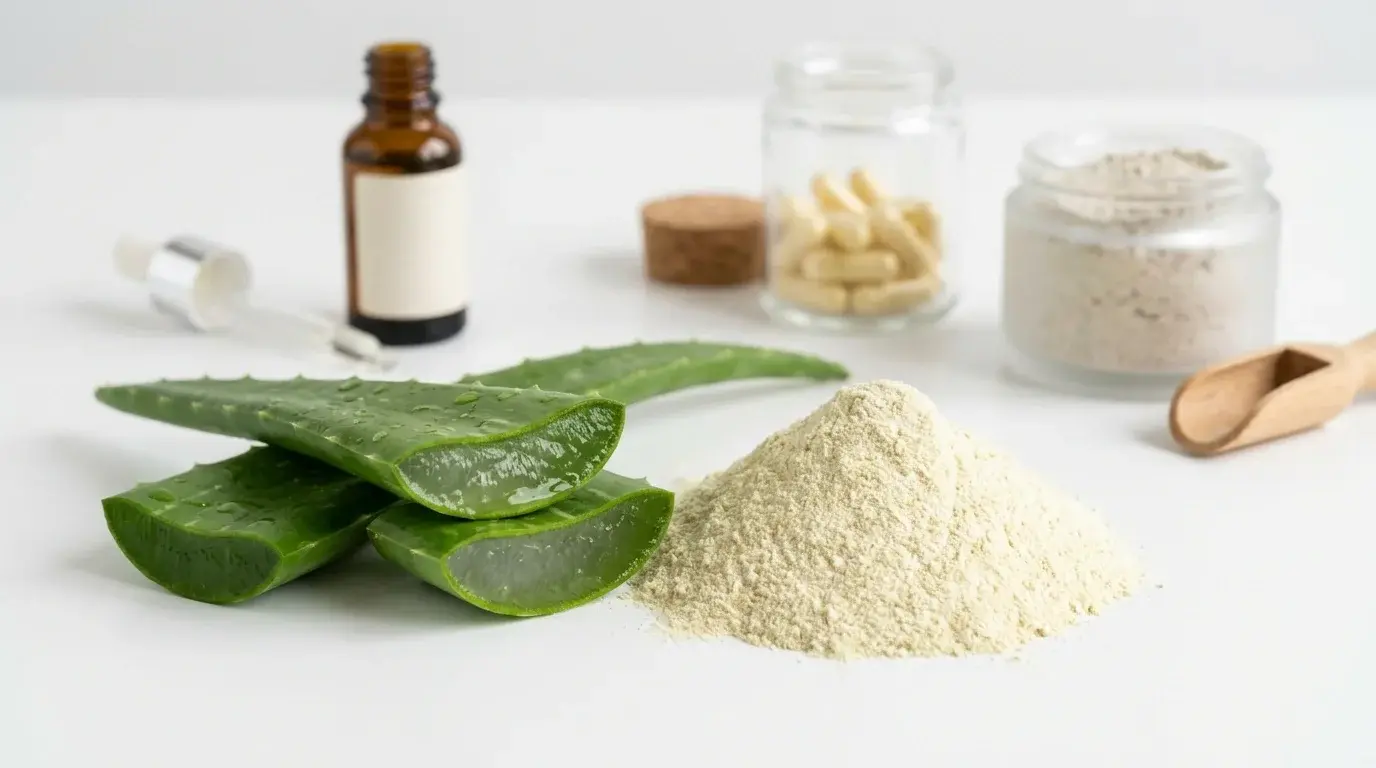
Aloevera Leaf Powder delivers a concentrated portfolio of bioactive compounds—acemannan, aloe polysaccharides, vitamins, and antioxidants—that address core skin health challenges at the formulation level. Derived from Aloe barbadensis Mill. leaves and processed through freeze- or spray-drying, this fine, light yellowish-white powder offers superior stability over liquid gel alternatives. For B2B manufacturers, OEM clients, and procurement specialists, it represents a scalable, clinically relevant ingredient with measurable skin benefits ranging from deep hydration and anti-inflammatory action to wound repair and UV protection.
Understanding Aloe Vera Leaf Powder and Its Skin Health Properties
Aloevera Leaf Powder is not just juice that has been dried out. It is a carefully designed phytochemical matrix that keeps more than 200 nutritionally active ingredients in a form that is stable at room temperature and dissolves in water. These ingredients include vitamins C and E, zinc, flavonoids, and long-chain polysaccharides.
What Makes the Powder Different from Gel and Juice
The powder form fixes three major problems that happen a lot in the supply chains of liquid aloe: high shipping costs, unstable microbes, and changing bioactive concentrations. With a 200:1 concentration ratio, 200 kg of raw leaf material makes 1 kg of finished powder, which means that each gram of finished powder has a lot more potency. World-Way's Aloevera Leaf Powder has a polysaccharide specification of ≥10%, a mesh size of 95% passing through 80 mesh, moisture ≤5.0%, and ash ≤5.0%. This ensures that the powder is consistent from batch to batch, which is important for large-scale production.
Organic vs. Standard: What Procurement Teams Should Know
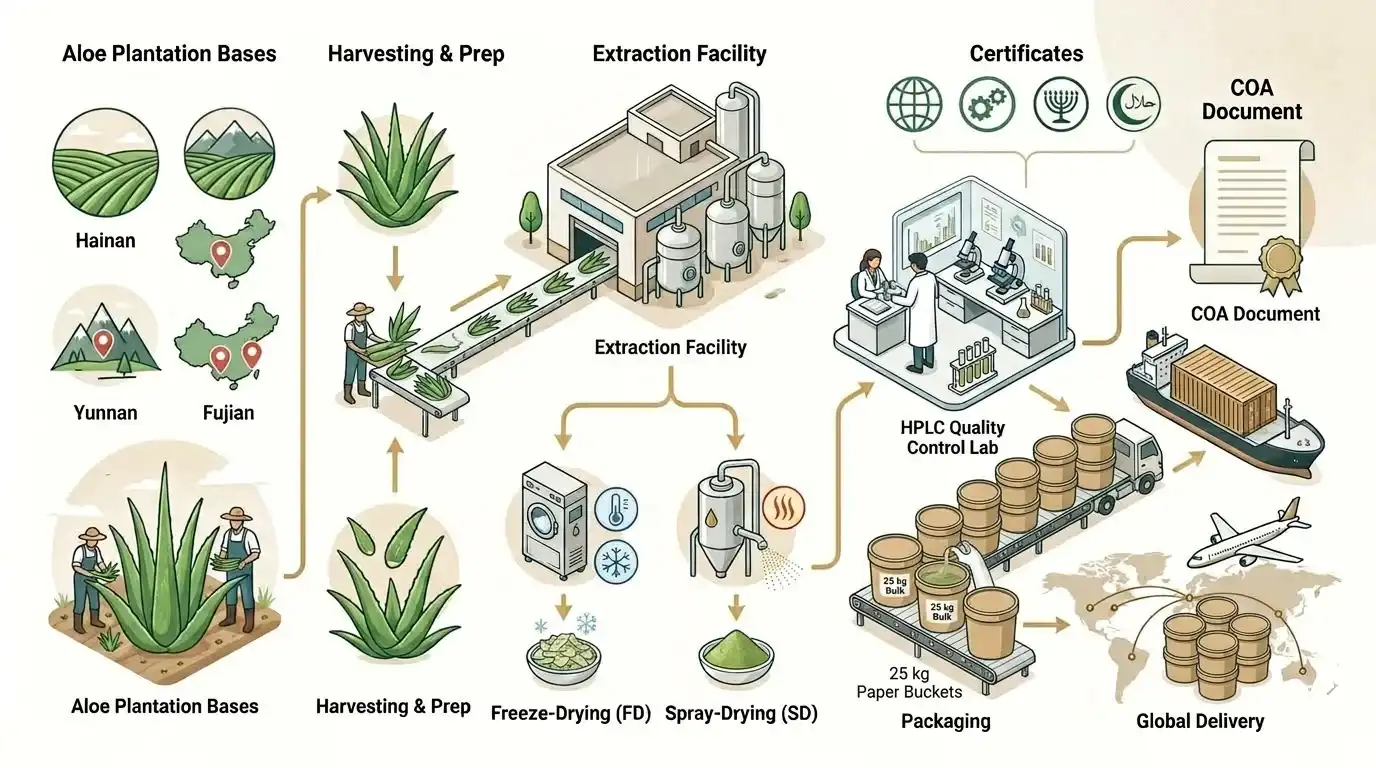
Organic-certified powder is purer because it doesn't contain any agrochemicals that were used during production. This is very important in EU and US markets with strict compliance standards. World-Way gets its aloe plants from farms in Hainan, Yunnan, and Fujian, which are known for having the best growing conditions. If you ask, you can get organic approval. The product has certifications for ISO9001, FSSC22000, Kosher, and Halal, which help it get into markets around the world with a variety of rules.
Top 7 Benefits of Aloe Vera Leaf Powder for Skin Health
There is a lot of research that shows that aloe-based products are good for your skin. In addition to looking good, Aloevera Leaf Powder polysaccharides, especially acemannan, help skin cells grow and heal, which means that the powder has many uses besides just looking good.
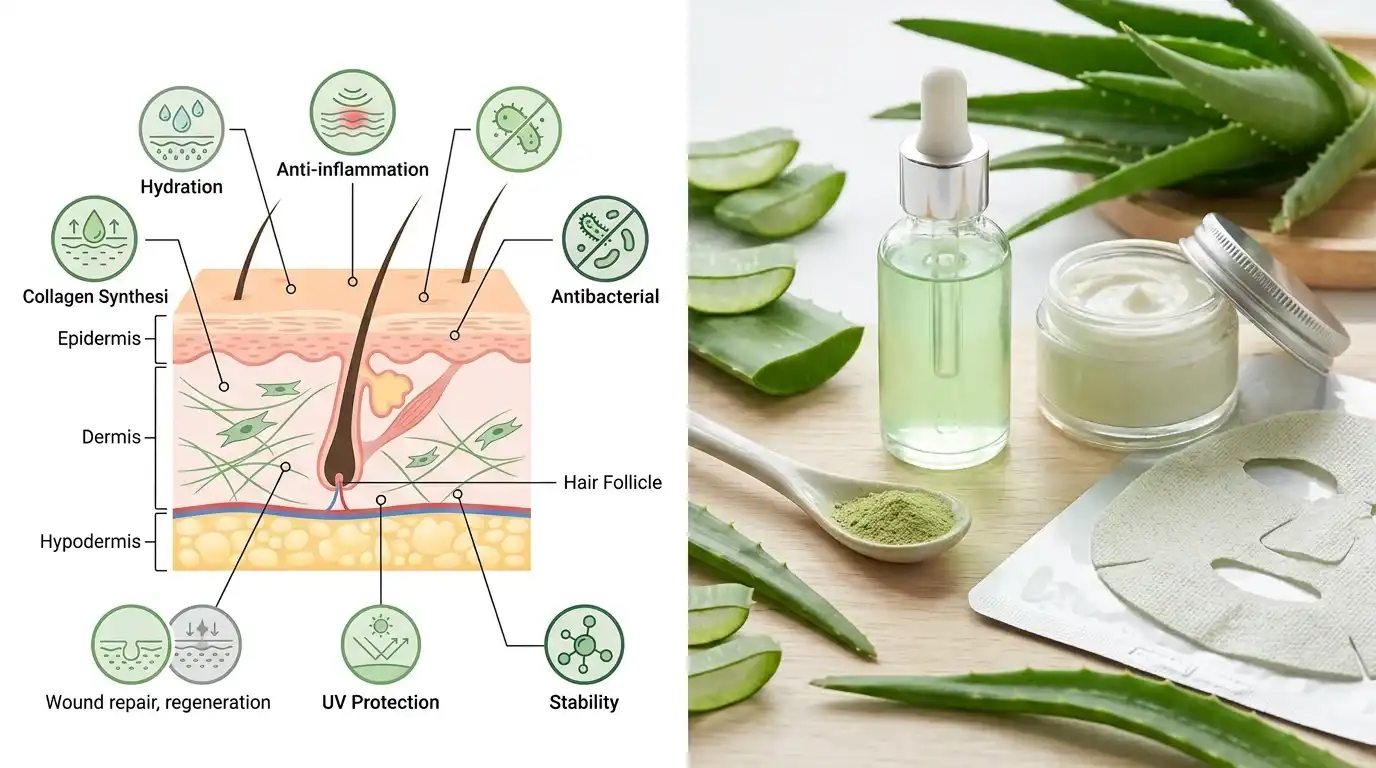
This ingredient is a smart choice for formulators because it has seven clinically relevant health benefits for the skin:
- Deep Hydration: Acemannan sticks to the skin's surface and keeps water in, lowering transepidermal water loss (TEWL). Studies in the Journal of Dermatological Treatment show that acemannan-based formulations improve measures of skin hydration within four weeks of being applied to the skin.
- Anti-Inflammatory Action: Anthraquinone derivatives and C-glucosyl chromone chemicals found in aloe products stop the production of prostaglandins, which reduces redness and irritation. Because of this, the powder is especially useful in formulas for skin types that are sensitive or reacting.
- Collagen Synthesis Support: Aloe sterol causes skin fibroblasts to make more collagen and hyaluronic acid, which was shown in a clinical study released in 2009 in the Annals of Dermatology. This means that this ingredient is useful in anti-aging products.
- Antibacterial and Acne-Reducing Properties: The ingredients aloin and aloe-emodin in World-Way's product work against Staphylococcus aureus and Propionibacterium acnes, which are the main bacteria that cause inflammatory acne lesions.
- Wound Healing and Scar Reduction: Acemannan speeds up re-epithelialization and changes the activity of macrophages, which helps wounds heal faster in burn treatments and rehab products after surgery.
- UV Damage Mitigation: Antioxidants, such as flavonoids and vitamins C and E, cancel out reactive oxygen species that are made by UV light, which lowers oxidative cell damage.
- Formulation Stability and Shelf Life Extension: Because dry powders don't need complex preservative systems like water-based solutions do, formulation chemistry is easier, and production costs are lower overall.
All of these benefits make Aloevera Leaf Powder a valuable, multipurpose ingredient that meets both efficiency claims for consumers and the practical needs of back-end formulation. This is a big plus for both buying managers and R&D directors.
How to Use Aloevera Leaf Powder in Skincare Formulations
To use this ingredient effectively, you need to carefully control the percentage. When used on the skin, inclusion rates can be anywhere from 1% to 5% by weight, depending on the type of product being used. For example, serums tend to use lower concentrations for better appearance, while repair creams and sheet masks can handle higher loading.
Recommended Formulation Pairings
The Aloevera Leaf Powder from World-Way dissolves completely in water and forms a clear solution. This means that it can be used with a lot of different makeup bases. It works well with hyaluronic acid to make the humectant benefits stronger, niacinamide to make things brighter, and centella asiatica extract to make scar-reduction formulas. The pH range of 3.5 to 5.0 in a 1% water solution of the powder matches well with the skin's natural acid mantle, so finished products don't need to be pH-adjusted as much.
Storage and Handling for B2B Buyers
Because it absorbs water, the powder needs to be kept in drums that are sealed and kept out of direct sunlight and humidity. World-Way sells the product in 25 kg drums and has a 10-day wait time. Before placing a large order, customers can get free samples to test the product. The stability of the polysaccharide chains that give bioactivity is directly maintained by the right way to store them.
Comparing Aloe Vera Leaf Powder with Other Aloe Vera Forms
When looking at different types of ingredient shapes for mass production, the Aloevera Leaf Powder format always does better than gel and juice on important buying factors. Liquid aloe needs to be shipped in a cold chain, has a shorter shelf life, and contains microbes that require more preservatives. Spray-dried and freeze-dried powders get around these problems and give a concentration benefit of 100:1 or 200:1.
Pure inner-leaf powder, which comes only from the gel matrix, has more acemannan and dissolves almost completely in water, which makes it the best choice for supplement-grade uses. Whole-leaf powder keeps more fiber compounds and anthraquinones, which gives it more beauty uses, such as better film-forming and healing properties. The format that procurement teams choose should depend on the type of final product, the amount of caffeine that can legally be in food or drink, and the target consumer's preferences.
Procurement Guide for Aloe Vera Leaf Powder: Ensuring Quality and Reliability
In this area, sourcing choices are based on four bases that can't be changed: scientific proof, supply chain tracking, legal paperwork, and the ability to customize. Suppliers who don't own the crop infrastructure or have confirmed extraction capacity cause supply uncertainty that puts production schedules at real risk.
world-way biotech inc. was established in 1992 and is based in Changsha, Hunan. It has more than 67 hectares of controlled cultivation grounds and can process more than 3,000 tons of botanical raw materials every year. Freeze-drying and spray-drying are done at the company's extraction facility, and each step of the production process is standardized using HPLC. With every shipment, technical paperwork like COAs, MSDSs, non-GMO declarations, allergen statements, and regulatory dossiers are sent along. This makes it easy to register Aloevera Leaf Powder products on the market in North America, Europe, and other places.
Conclusion
Aloevera Leaf Powder is an important part of current skin care products. It has been shown to be effective at hydrating, reducing inflammation, and repairing cells. This, along with the fact that it stays stable in dry form and can be used in a variety of formulations, makes it a great choice for companies that want to make reputable, science-based product lines. This concentrated botanical extract should be seriously considered by buying teams that want to find an ingredient that meets both legal requirements and customer expectations.
FAQ
What is the standard polysaccharide content in quality aloe vera powder?
The carbohydrate percentage of premium-grade Aloevera Leaf Powder should be at least 10%, and higher-specification grades should have up to 50%. As standard, World-Way's product meets a polysaccharide level of at least 10%.
How does the powder format affect aloin levels for cosmetic applications?
The amount of aloin in leaves depends on how they were processed and where they came from. International safety standards say that aloin levels must stay below 10 ppm for uses where it is eaten. Powders used for cosmetics may have higher amounts of anthraquinone, which helps fight inflammation and bacteria.
What certifications should a B2B buyer require from an aloe powder supplier?
Certifications like ISO9001, FSSC22000, Kosher, and Halal are needed at the very least. Having a USDA or EU Organic certification makes it easier to get your high-end products on the market. To be sure of active chemical concentrations, batch testing results that have been checked by HPLC are necessary.
Can the powder be used in anhydrous formulations?
Its dry, powdered base that mixes easily into anhydrous products like powder masks, solid serums, and pressed makeup, and the preservative doesn't need to be changed.
Partner with World-Way for Premium Aloevera Leaf Powder Supply
World-Way Biotech Inc. is a reliable source for Aloevera Leaf Powder. They have been extracting plants for over 30 years, own farm bases, and make their products in a way that is FSSC22000/ISO9001 approved. We give away free samples, have 10-day wait times, can work with OEMs, and provide full regulatory paperwork. Get in touch with our technical team to talk about custom specifications, bulk pricing, and help with formulations. Email us at info@world-way.net right now to ask for your sample.
References
1. Surjushe, A., Vasani, R., & Saple, D. G. (2008). Aloe vera: A short review. Indian Journal of Dermatology, 53(4), 163–166.
2. Tanaka, M., Misawa, E., Ito, Y., et al. (2015). Effects of plant sterols derived from aloe vera gel on human skin. Annals of Dermatology, 27(1), 74–77.
3. Hamman, J. H. (2008). Composition and applications of aloe vera leaf gel. Molecules, 13(8), 1599–1616.
4. Hęś, M., Dziedzic, K., Górecka, D., et al. (2019). Aloe vera as a functional ingredient in foods. CyTA – Journal of Food, 17(1), 305–316.
5. Eshun, K., & He, Q. (2004). Aloe vera: A valuable ingredient for the food, pharmaceutical, and cosmetic industries. Critical Reviews in Food Science and Nutrition, 44(2), 91–96.
6. Dal'Belo, S. E., Gaspar, L. R., & Maia Campos, P. M. B. G. (2006). Moisturizing effect of cosmetic formulations containing aloe vera extract. Skin Research and Technology, 12(4), 241–246.
Standard Disclaimer (DSHEA):
These statements have not been evaluated by the Food and Drug Administration.
This product is not intended to diagnose, treat, cure, or prevent any disease.

Send Inquiry
You may like