
How Can Coffee Extract Help Manufacturers Achieve Consistent Flavor Profiles Across Different Applications?
Oct 15, 2026
Coffee extract gives manufacturers a reliable, standardized tool for delivering consistent flavor across product lines. Derived from Coffea arabica or Robusta beans through controlled water-based or solvent-assisted extraction, it captures key actives — primarily caffeine and chlorogenic acid — in a stable, measurable form. Unlike raw coffee ingredients, a standardized coffee extract eliminates batch-to-batch variation, allowing R&D teams to dose precisely and QA teams to validate results with confidence. Whether used in functional beverages, baked goods, sports supplements, or cosmetic formulations, it maintains its sensory and bioactive profile throughout production.

Understanding Coffee Extract and Its Role in Flavor Consistency
What Makes Coffee Extract Different from Traditional Ingredients?
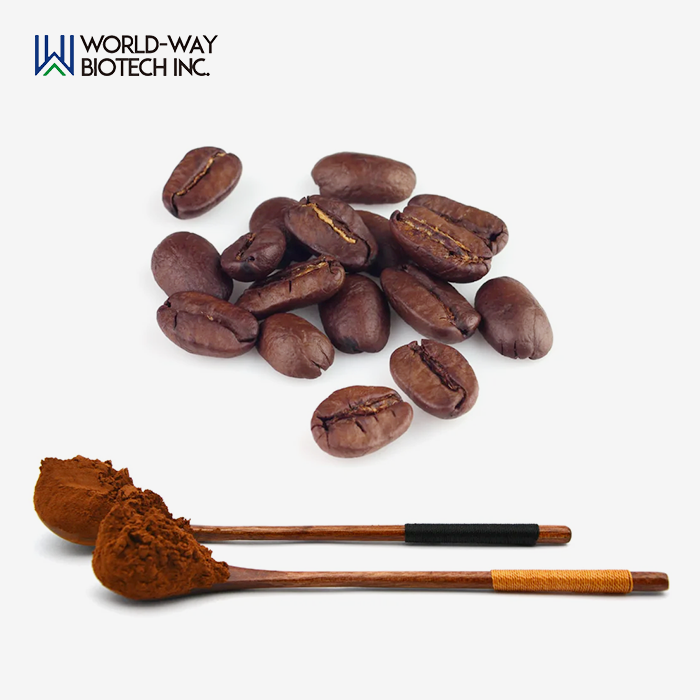
Coffee Extract is a concentrated ingredient that is made by extracting volatile aromatics, soluble solids, and bioactive compounds over several stages. The end result is a fine, dark brown powder that dissolves easily in both hot and cold systems. It has a mesh size of 95% passing 80 mesh and is water-soluble. Standards say that wetness levels must be below 5% and ash levels must be below 5%. This makes sure that the physical properties stay the same from batch to batch.
Key Actives That Drive Flavor and Function
World-Way's Coffee Extract from Coffea arabica L. has between 10% and 80% caffeine and between 5% and 20% chlorogenic acid (CGA). These chemicals do more than just add bitterness or brightness; they also change the finished product's oxidative stability, aftertaste, and how it works. The main guideline gives chlorogenic acid ≥50% (HPLC), which is a quality standard marker that is often used in the food and supplement businesses.
Why Solubility and Particle Size Matter in Production?
There is a lot at stake when it comes to water solubility. An insoluble ingredient changes the texture, causes sedimentation, and loses raw materials in high-speed beverage production or RTD formulas. Because 95% of World-Way's Coffee Extract passes through 80 mesh and dissolves completely in water, it can be used in systems that use water without any extra steps of processing. This cuts down on line downtime and increases batch yield.
Challenges in Achieving Consistent Flavor Profiles with Traditional Coffee Ingredients
Variability from Bean Origin and Roast Level
There are big differences in the raw coffee beans from different harvests, regions, and roast profiles. When manufacturers use ground coffee or regular instant powder, they can't be sure of the CGA and caffeine levels, which affects both the flavor and the functional claims on the labels. Even if a seller only has one location, they may still send out different lots if growing or processing conditions change from season to season.
Storage Degradation and Shelf Life Risks
Ground coffee and Coffee Extract grinds are especially likely to lose their flavor, oxidize, and absorb water over time. These changes not only hurt the way things feel, but they also make it harder to say that caffeine or antioxidants are healthy. For companies that keep ingredients in stock for 6 to 12 months before buying more, this decline presents a real quality control risk.
Complexity in Quality Control Documentation
A lot of the time, traditional coffee products don't come with regulatory dossiers, certificate-level microbiological tests, or HPLC-validated active content data. This lack of paperwork slows down the process of making new products for brands that want to sell in the US, EU, or other regulated markets. It also raises the risk of not following the rules during import review or label substantiation audits.

How Coffee Extract Facilitates Consistency Across Different Applications?
Standardized Coffee Extract locks in the active ingredients before they are added to a recipe, so there is less variation at the source. This lets product makers start from the same place every time, no matter what kind of application it is.
Here are the main areas where Coffee Extract performs consistently well:
Functional drinks and ready-to-drink (RTD) products: Formulators can meet label claims without overdosing when they know the exact amounts of caffeine and CGA. A 50%+ CGA extract dissolved at set usage rates gives every production run the same antioxidant profile. This helps with clean label requirements and functional positioning.
- Functional beverages and RTD products: Precise CGA and caffeine levels allow formulators to meet label claims without over-dosing. A 50%+ CGA extract dissolved at defined usage rates produces the same antioxidant profile across every production run, supporting clean-label compliance and functional positioning.
- Sports nutrition and supplement capsules: World-Way's 50%+ caffeine extract is suited for pre-workout and cognitive support formats where precise stimulant dosing is essential. HPLC-verified content means QA teams can cross-reference batch COAs against finished product testing with confidence.
- Baked goods and confectionery: The fine powder format (dark brown, 80 mesh) disperses evenly in dry blending steps, preventing uneven flavor distribution that commonly affects products made with ground coffee or liquid concentrates.
- Cosmetics and topical formulations: Chlorogenic acid's antioxidant activity is documented in peer-reviewed research. Standardized CGA content enables cosmetic formulators to make evidence-supported claims about skin protection and anti-aging benefits.
All of these application benefits come from the same main thing: uniformity that is backed up by scientific testing. This is why the purchasing departments of supplement brands and global food companies always choose extract-form products over common coffee materials.

Comparing Coffee Extract Solutions for Procurement Decisions
Extract vs. Concentrate vs. Powder
Each format is used for a different type of manufacturing. While liquid concentrate makes it easier to make a lot of RTDs, it can be hard to store. Instant coffee powder is cheap, but it has less active ingredient and more variation. For functional and flavor-forward uses where documentation and accuracy are essential, standardized Coffee Extract in powder form—especially at 50%+ CGA or high-caffeine specifications—provides the most trustworthy input.
Organic vs. Conventional Positioning
Although it costs more, USDA Organic and EU Organic-compliant finished products are now available thanks to organic-certified Coffee Extract. This certification is a must for brands making high-end supplement or wellness lines; it's a shelf requirement in many retail channels. World-Way has certifications for ISO9001, FSSC22000, Kosher, and Halal, and they also offer organic options to support a wide range of market positioning.
Evaluating Suppliers on Technical and Supply Criteria
The choice to buy something should be based on more than just price. Some important things to look for in a supplier are whether they offer HPLC-validated COAs for each batch, whether their production capacity can handle the annual contract volumes (World-Way ships 25 kg drums with a 10-day lead time), and whether they can provide full regulatory documentation, such as MSDS, allergen statements, and Non-GMO declarations, on request.
Maximizing Benefits and Mitigating Risks When Using Coffee Extract
Storage and Handling for Shelf-Life Protection
Coffee Extract powder should be kept in drums with lids that are out of the way of heat, light, and dust. The product stays stable in a normal building with a moisture level of less than 5%, but being exposed to moisture speeds up the breakdown of CGA. World-Way packages come in 25 kg drums and are made for business storage and transport.
Regulatory and Safety Considerations
In the US, pill and food labels must list how much caffeine they contain because of FDA rules. For EU exports, certain rules have to be followed about the amounts of chlorogenic acid and caffeine in functional foods. Working with a supplier who gives you technical documents that are in line with the rules from the start, like a COA, MSDS, Halal, or Kosher certificate, makes it easier to get into the market.
Formulation Development and R&D Support
The technical team at World-Way helps with formulation development, from choosing the right ingredients to testing them in real-world situations. You can get free samples, and with a 10-day lead time, R&D teams can go from testing an idea to making a pilot batch without having to wait for long buying delays. This help is especially useful for companies that are releasing new lines of products with short development times.

Conclusion
Coffee Extract is useful for companies that need to make sure that different kinds of products have the same taste and function. It is a more reliable ingredient choice than commodity coffee materials because it has standardized active content, clean physical specs, and proof of regulatory compliance. From CGA-rich antioxidant extracts to high-caffeine sports nutrition grades, everything that World-Way sells is made to be bought in bulk by professionals. This is a good place to start for R&D leaders and product managers who need to be sure of both the technical side of things and the stability of the supply chain.
FAQ
What is the shelf life of coffee extract powder?
Properly stored coffee extract powder typically maintains quality for 24 months. Keep the drum sealed, away from direct light and humidity. Once opened, reseal tightly after each use.
Is coffee extract safe for both food and cosmetic applications?
Yes. Standardized coffee extract with verified CGA and caffeine content is used across food, supplement, and topical cosmetic applications. Kosher and Halal certifications confirm it meets broad formulation requirements.
How does bulk purchasing affect pricing and availability?
World-Way ships in 25kg/drum units with a 10-day lead time. For long-term procurement contracts, volume pricing is available. Contact the sourcing team directly to discuss annual supply agreements.
Does coffee extract require special labeling in the US?
In the US, caffeine content must appear on supplement facts panels. CGA can be listed as an antioxidant compound. World-Way provides full technical documentation to support compliant label development.
Can the CGA or caffeine percentage be customized?
World-Way offers multiple standardization levels — including 5%–10% CGA extract, 50%+ CGA, and 10%–80% caffeine — allowing product developers to select the specification that matches their application and dosing targets.
Partner with World-Way for Reliable Coffee Extract Supply
Since 1992, world-way biotech inc. has helped over 500 clients around the world by providing verified and approved Coffee Extract to companies that make supplements, foods, and cosmetics. Our supply chain is vertically integrated, which means that we get all of our materials from the ground up and then extract the end product. This keeps quality high and prices low. Our team is ready to help you find a Coffee Extract provider, whether you need it for a line of useful drinks or to buy in bulk for yearly contracts. Visit worldwaybio.com or email info@world-way.net to get a free sample or talk about your needs right away.
References
1. Farah, A., & Donangelo, C. M. (2006). Phenolic compounds in coffee. Brazilian Journal of Plant Physiology, 18(1), 23–36.
2. Higdon, J. V., & Frei, B. (2006). Coffee and health: A review of recent human research. Critical Reviews in Food Science and Nutrition, 46(2), 101–123.
3. Ludwig, I. A., Clifford, M. N., Lean, M. E. J., Ashihara, H., & Crozier, A. (2014). Coffee: Biochemistry and potential impact on health. Food & Function, 5(8), 1695–1717.
4. Somporn, C., Kamtuo, A., Theerakulpisut, P., & Siriamornpun, S. (2011). Effects of roasting degree on radical scavenging activity, phenolics, and volatile compounds of Arabica coffee beans. Journal of the Science of Food and Agriculture, 91(6), 1101–1110.
5. Niseteo, T., Komes, D., Belščak-Cvitanović, A., Horžić, D., & Budeč, M. (2012). Bioactive composition and antioxidant potential of different commonly consumed coffee brews affected by their preparation technique and milk addition. Food Chemistry, 134(4), 1870–1877.
6. Perrone, D., Farah, A., & Donangelo, C. M. (2012). Influence of coffee roasting on the incorporation of phenolic compounds into melanoidins and their relationship with antioxidant activity of the brew. Journal of Agricultural and Food Chemistry, 60(17), 4265–4275.
Standard Disclaimer (DSHEA):
These statements have not been evaluated by the Food and Drug Administration.
This product is not intended to diagnose, treat, cure, or prevent any disease.

Send Inquiry
Related Industry Knowledge
- Can Astragalus Extract Support Antioxidant and Skin-Conditioning Cosmetic Formulations?
- How Can Buyers Evaluate Soy Extract Powder Quality for Large Scale Food Manufacturing?
- How Can Coffee Extract Help Manufacturers Achieve Consistent Flavor Profiles Across Different Applications?
- What Benefits Can Black Elderberry Extract Bring to Botanical Beverage Formulation Projects?
- Bulk Coffee Extract Supports Customized Formulations for Ready-to-Drink Coffee and Specialty Beverage Brands
- Melilotus Extract Provides Botanical Ingredient Options for Specialty Formulations and Natural Product Development
- Soy Extract Powder Supports Plant-Based Ingredient Solutions for Food, Beverage, and Nutrition Product Manufacturers
- Bulk Corn Leaf Extract Supports Sustainable Plant-Based Ingredient Sourcing for Global Manufacturers
- Coffee Extract Creates Versatile Flavor and Aroma Solutions for Beverage, Bakery, and Food Product Development
- Discover the Natural Power of Organic Apple Extract