
Coffee Extract Creates Versatile Flavor and Aroma Solutions for Beverage, Bakery, and Food Product Development
Sep 29, 2026
Coffee extract has become one of the most versatile functional ingredients in modern food and beverage manufacturing. Derived from Coffea arabica or Coffea robusta beans through controlled water-based or solvent-assisted extraction, it delivers standardized flavor, aroma, and bioactive compounds in a shelf-stable powder or liquid format. For R&D teams and procurement managers working across RTD beverages, bakery, and functional food categories, a quality-standardized coffee extract solves three persistent production problems: flavor inconsistency, logistical complexity, and processing inefficiency at scale.
Understanding Coffee Extract: Composition, Benefits, and Uses
What Is Coffee Extract, Technically Speaking?
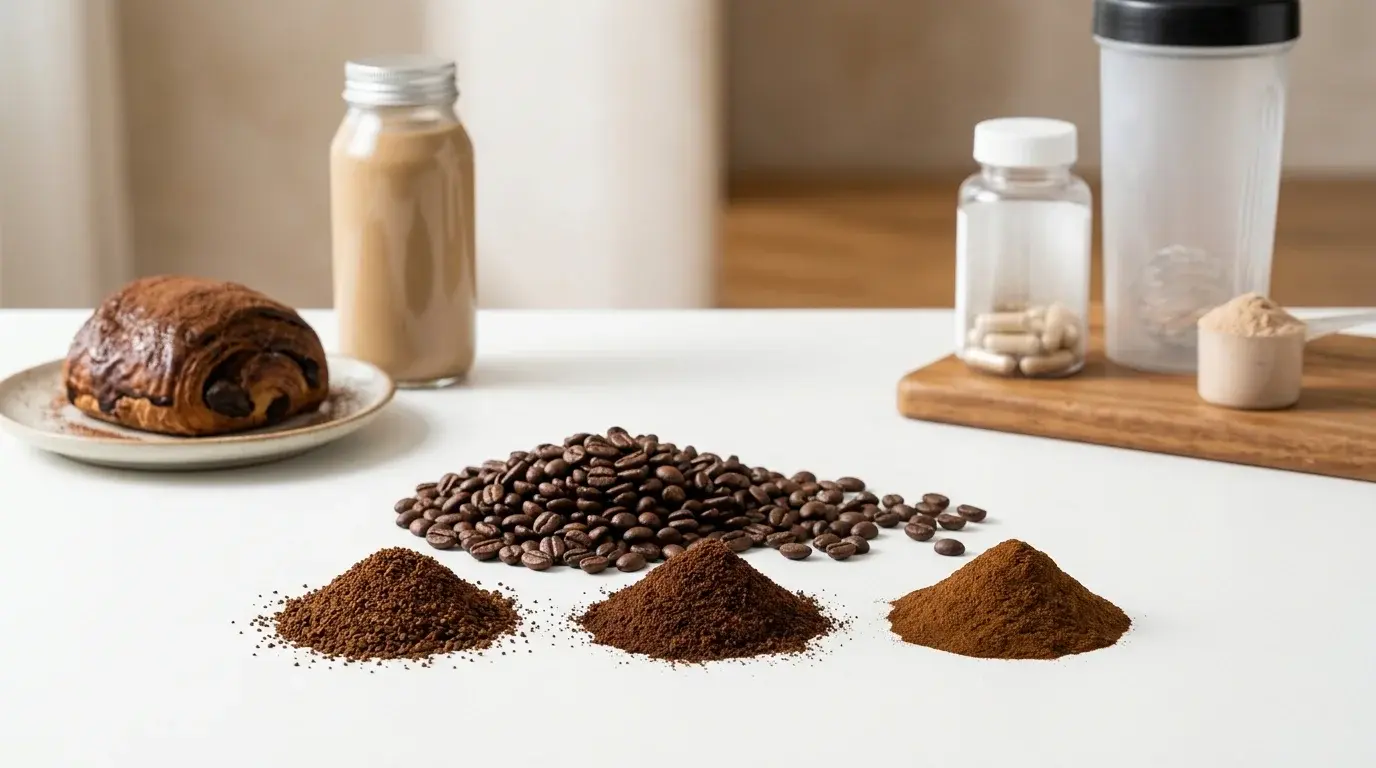
Coffee Extract is a pure flavor that was made to fully capture the taste and health benefits of roasted coffee beans. Unlike instant coffee or brewed concentrate, industrial-grade extracts are made with set levels of Total Dissolved Solids (TDS), which makes sure that each batch is the same. World-Way's coffee bean extract comes in the form of a fine, dark brown powder that contains at least 50% chlorogenic acid (HPLC) in its highest pure grade. It also passes 95% through an 80-mesh screen, which means it can be directly added to pill, capsule, and powder blend forms.
Key Bioactive Compounds and Health Relevance
Caffeine and chlorogenic acid (CGA) are the two main chemicals that make coffee-derived extract work. Depending on the specification, the caffeine content can be anywhere from 10% to 80%. This makes it useful for a wide range of uses, from mild functional drinks to high-caffeine sports supplements. CGA is a well-known pigment that, based on the grade, can be anywhere from 5% to 50% or more. It stops glucose-6-phosphatase from working, which changes how glucose is absorbed. A 2020 review article in Nutrients confirmed CGA's role in controlling blood sugar and burning fat, which helps with weight loss and metabolic health.
Format Options and Application Range
World-Way has three main types of CGA powder: instant coffee powder, 5% to 10% CGA extract for functional food and drink use, and 50% or more high-purity CGA powder for medical and nutritional uses. There are ISO9001, FSSC22000, Kosher, and Halal certificates on each version. Maintaining the moisture level at ≤5.0% and the ash level at ≤5.0% ensures stable and clean label compliance. It can be used in ready-to-drink coffee drinks, baked goods, candy coatings, brain-healthy dietary supplements, and sports nutrition products that help burn fat.
How to Choose the Right Coffee Extract for Product Development?
Matching Specifications to Product Category
Before you can choose the right grade, you need to know what your final product needs to do. Solubility and pH stability (goal range 4.7–5.5) are the most important things for RTD drinks. When used in bakeries, the most important things are heat stability at baking temperatures and fat-matrix compatibility. Standardized CGA content at ≥50% (HPLC-verified) is the right level for nutraceutical capsules or weight management products. Most of the time, flavor differences at scale are caused by Coffee Extract specifications that don't match up with processing conditions.
Quality Parameters Procurement Teams Must Verify
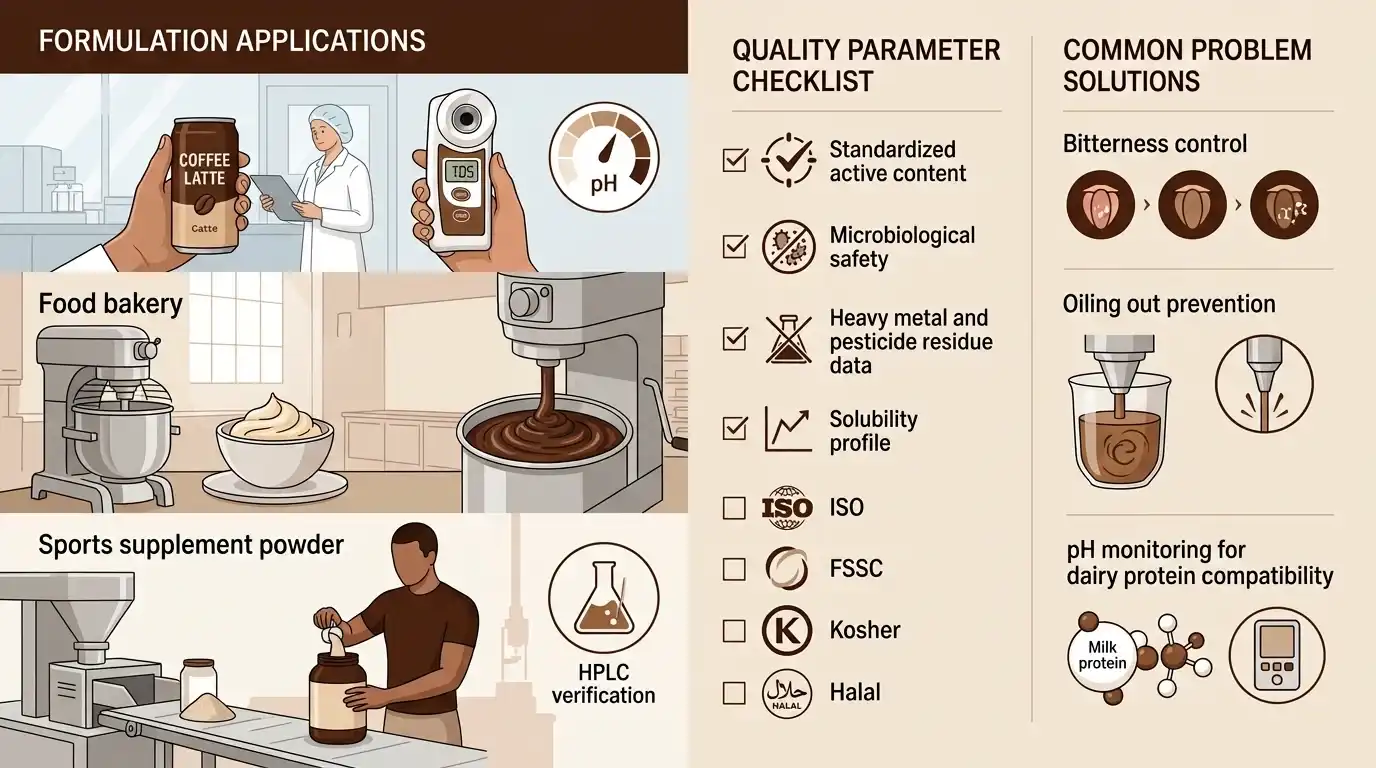
Before choosing a seller, procurement managers should ask for paperwork in a number of specialized areas. Here are the most important quality standards to check for Coffee Extract:
- Standardized active content: caffeine and CGA amounts per lot, COA confirmed by HPLC.
- Microbiological safety: The microbiological safety test results for APC, yeast/mold, and Salmonella are shown for each lot.
- Heavy metal and pesticide residue data: Following EU MRLs and FDA rules.
- Solubility profile: Tested to see if it dissolves in water at both low and high processing temperatures.
- Certifications: ISO9001, FSSC22000, Kosher, and Halal; all of these can be gotten from World-Way with a 10-day lead time and free samples when asked for.
These factors work together to show if a source can consistently meet the terms of long-term, yearly contracts for goods and services.
Organic, Regular, and Processing Method Comparisons
For EU and US market access, organic-certified coffee extract has additional regulatory documentation needs. Even though they aren't certified organic, regular grades still meet FSSC22000 food safety standards and give you more price options. Low-temperature extraction makes cold-brew-like extracts that have a smoother, less acidic profile that works well for premium RTD applications. More volatile aromatic molecules are kept by hot-water extraction, which works better for baking and candy mixtures that value top-note complexity.
Integrating Coffee Extracts into Beverage, Bakery, and Food Formulations
Dosage and Incorporation Principles
The right dose depends on both the effect you want to achieve and the legal caffeine limits in the people you want to reach. For functional RTD drinks, a CGA-standardized Coffee Extract at 200–400 mg per serve is in line with recommended therapeutic doses for supporting metabolism. Lower amounts of 0.1% to 0.5% by weight give baked goods a coffee flavor that is easy to recognize without being too sweet. Before adding powdered extract to fat-containing media, always mix it first in a small amount of warm water to keep it from sticking and distributing flavors unevenly.
Real-World Application Cases
Coffee extract works in different types of products in different ways. Knowing these differences helps formulations work better. Take a look at these three documented use cases:
- RTD canned latte: high-CGA extract at 30 to 50 Brix TDS was used as the main flavor base, and rapid shelf-life tests showed that it would not settle under nitrogen pressure or for 12 months.
- Industrial bakery: In an industrial kitchen, the extract is mixed into buttercream and chocolate ganache. The emulsifying qualities of the native coffee surfactants make sure that the flavors are spread out evenly without breaking up the fat structure.
- Sports supplement powder: 50%+ CGA extract mixed with protein base; HPLC-verified active content supports claims on label for antioxidant support and fat metabolism support that are in line with regulations.
These examples show that the same base ingredient can be used in different processing conditions as long as the extraction factors are right for the job.
Solving Common Formulation Challenges
Bitterness can be controlled at higher inclusion rates by covering it up with natural flavorings or matching it with sweets that go well with it. "Oiling out" can happen in dairy-based drinks if the coffee lipids aren't properly combined. This can be fixed by choosing Coffee Extract made with optimal surfactant retention and suggesting blending pressures between 150 and 200 bar. Because extracts with a pH below 4.7 may denature dairy proteins in cold-filled formats, it's important to keep an eye on the pH when ingredients interact with proteins and starches.
Market Trends and Future Prospects in Coffee Extract Usage
Clean-Label and Organic Demand Growth
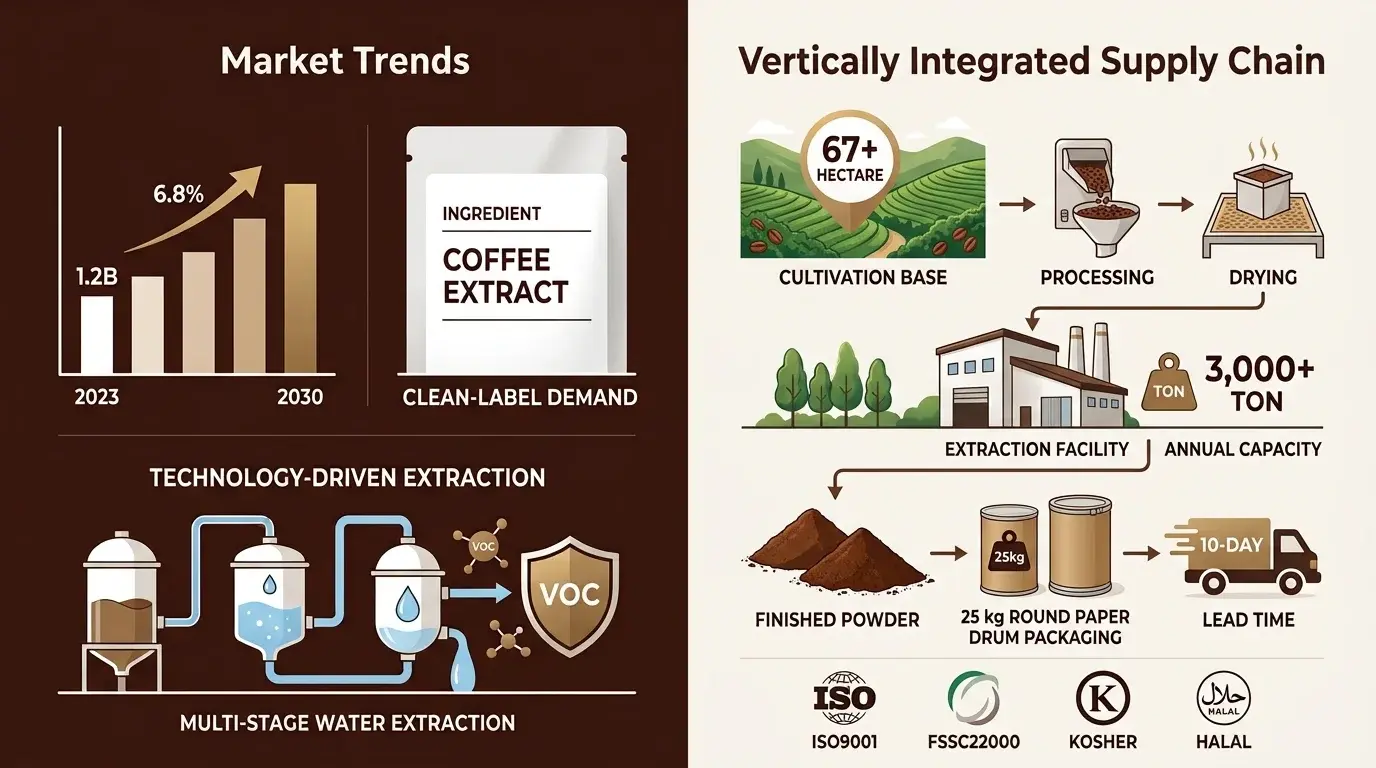
Grand View Research (2023) says that the global Coffee Extract market was worth about USD 1.2 billion in 2023 and will continue to grow at a compound annual growth rate (CAGR) of 6.8% until 2030. This is mostly due to the demand for clean-label functional beverages. More and more, consumers and government agencies are looking closely at ingredient lists. This is pushing companies to make extracts that don't use artificial carriers like maltodextrin or synthetic preservatives. In the ingredient lists for World-Way's extract grades, only "Coffee Extract" or "Coffee Concentrate" are listed, which meets the requirements for clean label positioning.
Technology-Driven Extraction Advances
Leading suppliers now use multi-stage water extraction that keeps volatile organic compounds (VOCs) safe as standard. This "First-Extract" method keeps delicate chemical molecules that are normally lost during evaporation. For buying teams that are looking for high-end drinks, including "First-Extract" or "single-pass" extraction in the criteria for qualifying suppliers is directly linked to higher organoleptic scores on customer sensory panels.
Strategic Procurement Positioning
Vertically integrated buying, which includes everything from the planting to the extraction to the finished powder, makes it easier for buyers to track down products and keep prices stable. World-Way runs more than 67 hectares of managed cultivation sites and an extraction plant that can process more than 3,000 tons of raw material every year. This gives long-term contract buyers the supply consistency they need. With a standard 10-day lead time, this integrated structure helps OEM and private label customers get new products on the market quickly.
Conclusion
When defined and sourced correctly, Coffee Extract provides consistent taste, useful bioactives, and regulatory compliance in a variety of food, drink, and supplement uses. The best way to make sure your formulation works well in the long term is to choose a supplier whose standardization has been checked by HPLC, whose production is vertically integrated, and whose clean labels are followed. From 5% to 10% CGA grades to 50%+ high-purity powder, World-Way's products meet all of the needs of business applications. All of them are certified by ISO9001, FSSC22000, Kosher, and Halal.
FAQ
What is the difference between coffee extract and coffee concentrate?
Coffee concentrate is coffee that has been diluted. Coffee Extract is a specially made ingredient that has a controlled physical profile, a standard TDS, and known amounts of caffeine and CGA. Extract is much more consistent from batch to batch, and it works well for large-scale production where concentrate would cause variation.
What caffeine level should I specify for a functional beverage?
By HPLC, World-Way has grades with 10% to 80% caffeine. For most functional RTD drinks aimed at adults in the US, a 10%–20% caffeine grade with the right amount of caffeine stays within the FDA's widely accepted safe consumption guidance of 400 mg of caffeine per day for healthy adults.
Can coffee extract be used in low-sugar or keto-aligned products?
Yes. The extract itself doesn't add many carbohydrates. Because it is water-soluble and doesn't need a carrier, it can be easily added to low-sugar and keto products without changing the macronutrient profile.
What is the shelf life of coffee extract powder?
Our powder form from World-Way can be kept for 24 months in sealed, moisture-proof packaging below 25°C. After being opened, liquid formats usually have a shelf life of 12 to 18 months when kept in the fridge.
Partner With World-Way for Your Next Coffee Extract Project
World-Way is one of the most reliable places for food, drink, and supplement companies around the world to get Coffee Extract. The process of buying is easy because there are free samples, a 10-day wait time, and full technical paperwork (COA, MSDS, allergen statements, and Non-GMO declarations) that can be sent upon request. To get product specs and start your preparation work right away, email our team at info@world-way.net or go to worldwaybio.com.
References
1. Farah, A. (2012). Coffee Constituents. In Coffee: Emerging Health Effects and Disease Prevention. Wiley-Blackwell.
2. Grand View Research. (2023). Coffee Extract Market Size, Share & Trends Analysis Report. Grand View Research.
3. Tajik, N., et al. (2017). The potential effects of chlorogenic acid, the main phenolic component in coffee, on health. European Journal of Nutrition, 56(7), 2215–2244.
4. Ludwig, I. A., et al. (2014). Variations in caffeine and chlorogenic acid contents of coffees. Food & Function, 5(8), 1718–1726.
5. Onakpoya, I., et al. (2011). The use of green coffee extract as a weight loss supplement: A systematic review and meta-analysis. Gastroenterology Research and Practice, 2011, 382852.
6. Nutrients Journal. (2020). Chlorogenic Acids and Effects on Glycemic Regulation: A Meta-Analysis of Randomized Controlled Trials. MDPI Nutrients, 12(5).
Standard Disclaimer (DSHEA):
These statements have not been evaluated by the Food and Drug Administration.
This product is not intended to diagnose, treat, cure, or prevent any disease.

Send Inquiry
You may like