
Bulk Corn Leaf Extract Supports Sustainable Plant-Based Ingredient Sourcing for Global Manufacturers
Sep 29, 2026
Corn leaf extract is gaining serious traction as a sustainable, plant-based ingredient across the supplement, functional food, and cosmetic industries. Derived from the dried leaves of Zea mays L., this botanical extract carries a concentrated profile of flavonoids, phenolic acids, and polysaccharides that support metabolic health and antioxidant activity. For B2B procurement teams sourcing at scale, it represents a traceable, eco-conscious raw material with real formulation potential. World-Way Biotech's Zea mays leaf extract delivers this value in a standardized, certified format designed for global manufacturing demands.
Understanding Corn Leaf Extract: Composition, Benefits, and Applications
What Is It Made From?
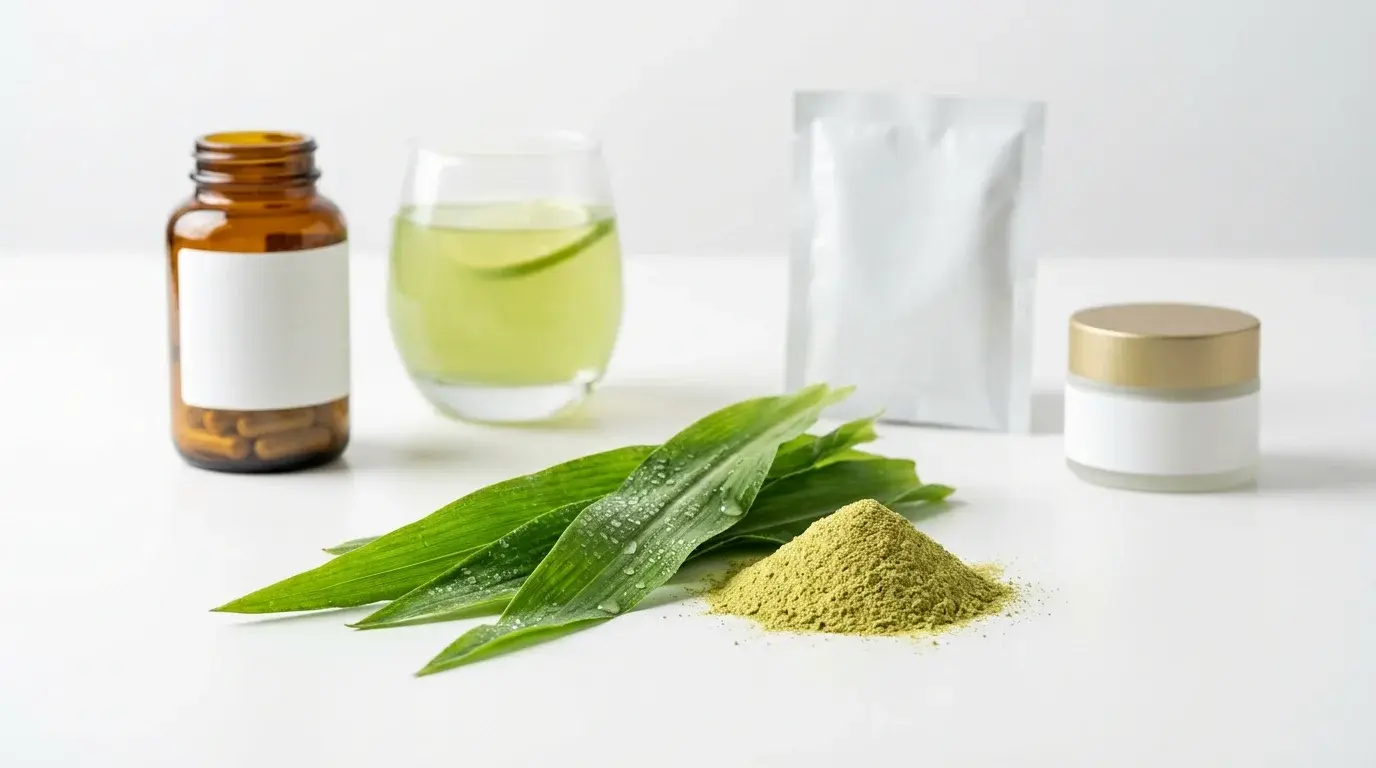
A green, eco-friendly process is used to make World-Way's maize leaf extract from the dried leaves of Zea mays L. The fine greenish-yellow powder that is made goes through an 80-mesh screen 95% of the time, keeps its wetness level at ≤5%, and its ash level at ≤5%. It mixes well with water-based mixtures in many different types of products because it is fully water-soluble.
Key Bioactive Compounds
There are phenolic acids like caffeic acid, chlorogenic acid, and ferulic acid in the extract, as well as flavonoids like luteolin, apigenin, and corn flavone. These chemicals are linked to the ability to dilute, lower blood pressure, lower blood sugar, and fight free radicals. The profile can be customized to meet the needs of different formulations because it comes in 5:1–10:1 ratio extracts or is standardized to 5%–15% flavonoid content.
Primary Application Areas
The leaf extract of Zea mays is used in many functional drinks, food supplements for metabolic health, and nutraceutical mixes. Because it is an antioxidant and has a lot of phenolic acids, it can also be used in cosmetics where natural anti-inflammatory properties are a benefit.
Bulk Procurement Challenges and Solutions for Corn Leaf Extract
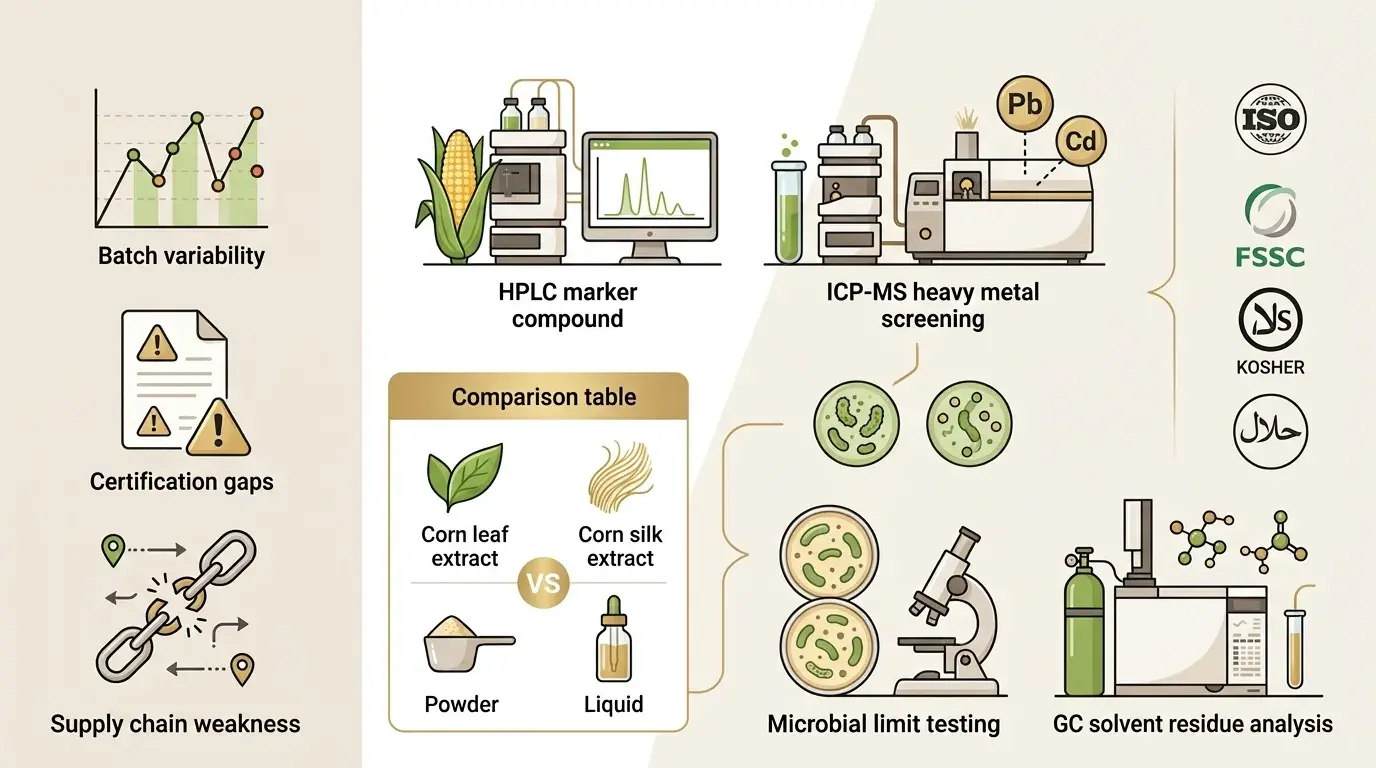
There are real risks when you buy a lot of botanical products. Inconsistencies between batches, gaps in licensing, and a weak supply chain can all throw off production schedules. Manufacturers need more than just a low price. They also need quality that can be proven and a supply that they can count on.
Managing Quality Variability
For consistency from batch to batch, you need standard extraction methods backed up by HPLC measurements of marker compounds. World-Way uses strict in-house tests, such as ICP-MS heavy metal screening, microbe limit testing, and GC residue solvent analysis, to make sure that every lot meets the requirements.
Navigating Certification Requirements
Different compliance systems are needed for different areas around the world. The maize leaf extract from World-Way is certified as ISO9001, FSSC22000, Kosher, and Halal. Every order of Corn Leaf Extract comes with full technical paperwork, including a COA, MSDS, Non-GMO declarations, and allergen statements. This makes it easier for sourcing and quality assurance teams to follow the rules.
Logistics and Trial Options
The buying process is set up to be quick and easy, with a 10-day wait time, 25kg/drum packing, and free samples available. Trial orders let you check the quality before signing an annual contract, which is what most medium- to large supplement brands and ingredient distributors do when they want to get their hands on new botanical ingredients.
Comparing Corn Leaf Extract to Other Corn-Derived Extracts and Plant Extracts
Corn Leaf vs. Corn Silk Extract
Most people know about corn silk extract, which is a plant extract that comes from corn and is mostly used to help with diuretics. On the other hand, Corn Leaf Extract has a wider range of flavonoids and phenolic acids. Because it has a higher ORAC value, which means it has more antioxidant power, it works better in formulas that target oxidative stress and metabolic function.
Powder vs. Liquid Form
The powder form has big practical benefits for making a lot of things. World-Way's fine greenish-yellow powder stays stable for 24 months as long as it is kept sealed, cool, and out of the light. It mixes well in water-based systems without the need for emulsifiers, which makes mixing easier for companies that make supplements and drinks.
Organic vs. Standard Grade
Organic plant products are more expensive, but brands in North America and Europe are buying more and more of them. When deciding between standard and organic grades, procurement teams should think about formulation positioning and the needs of the target market. This is because the choice has a direct effect on labeling claims and regulatory submissions.
Why Choose Bulk Corn Leaf Extract from Trusted Suppliers?
Not all botanical extract suppliers offer the same level of unity between getting raw materials and making finished products. A plant extract's quality and ability to be tracked start long before it gets to the vessel used for extraction.
World-Way Biotech has been in business since 1992 and has over 67 hectares of owned cultivation bases, the ability to process more than 3,000 tons of plant material each year, and an R&D team of 42 people. Here are the main benefits this system gives you when it comes to sourcing Corn Leaf Extract:
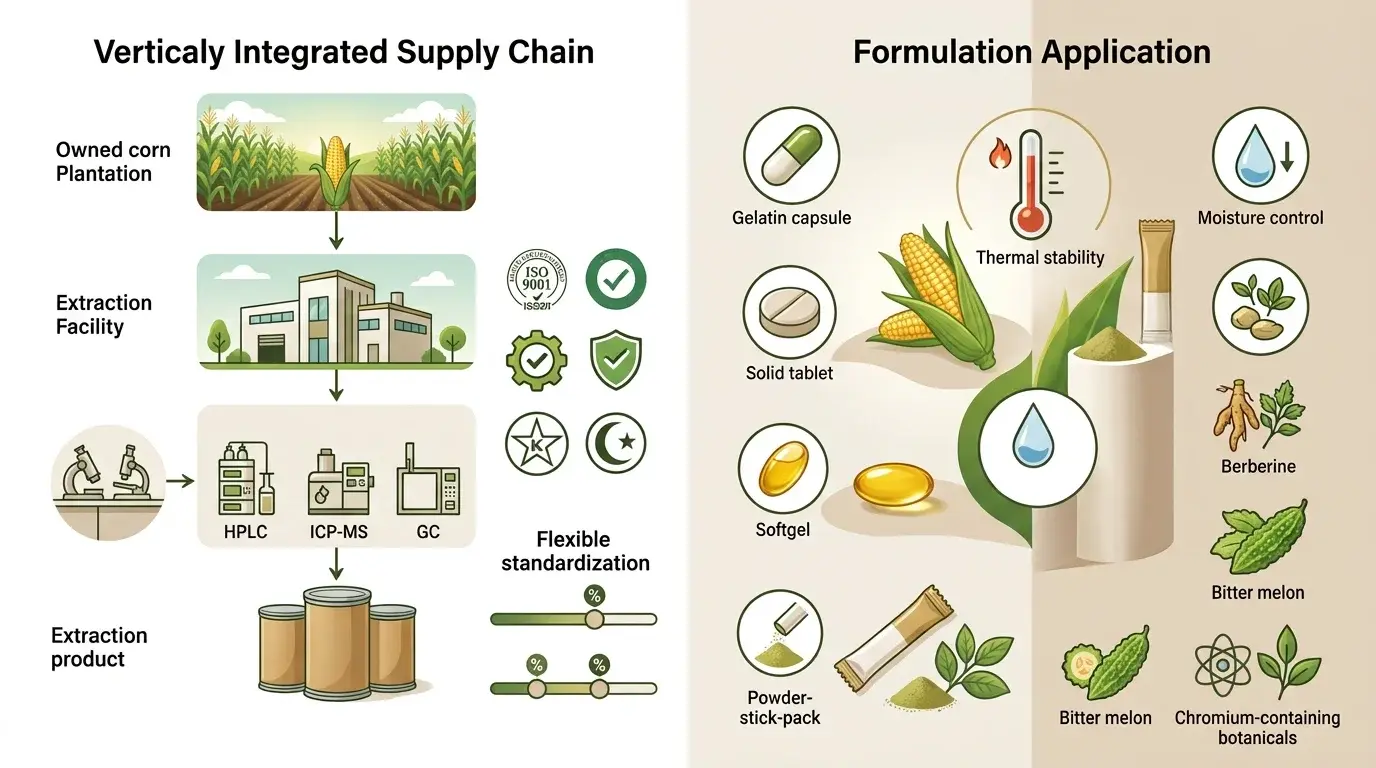
- Vertical integration from plantation to production — World-Way manages its own planting bases, which means raw material quality is controlled at the origin, not just at the factory gate. This directly reduces the risk of contamination and variability that comes from open-market botanical sourcing.
- Flexible standardization options — The extract is available in 5:1–10:1 ratios and 5%–15% flavonoid concentrations, with custom extraction parameters available for OEM and private label projects. R&D teams can specify the bioactive profile they need rather than accepting a fixed product.
- Full regulatory documentation package — Every shipment includes COA, MSDS, allergen statements, Non-GMO declarations, and applicable organic certificates. This documentation chain is built to support regulatory submissions in the US, EU, and beyond.
These benefits directly address the risks that procurement managers face when they have to scale up programs that use plant ingredients. A Zea mays leaf extract provider that is fully integrated takes out a lot of third-party risk from the supply chain.
Practical Guide: How to Use Bulk Corn Leaf Extract in Product Formulation?
Recommended Use in Supplements
When used as a food aid to support metabolic health, the extract works well in capsule and tablet forms. Because it dissolves in water, it can also be used in liquid, softgel, and stick-pack forms. Formulators usually work within a dosage range that matches the standardization values for flavonoids. As part of the buying process, World-Way's technical team gives formulation advice.
Stability and Processing Conditions
For short-term processing, the extract stays bioactive at temperatures up to 80°C, so it can be pasteurized and used in standard granulation methods. Controlling the moisture level at ≤5.0% makes sure that the food will stay stable for a long time without cooling under normal storage conditions.
Blending with Complementary Botanicals
Other plants that are good for your metabolism, like berberine, bitter melon, and chromium-containing plants, go well with maize leaf extract. Its phenolic acid content, especially chlorogenic acid and ferulic acid, works well with supplements that are meant to help control blood sugar and protect against free radicals, which are two topics that people in the US supplement market are very interested in.
Conclusion
Manufacturers of supplements, functional foods, and cosmetics can use Corn Leaf Extract, which comes from plants that are grown in a way that doesn't harm the environment. The profile of flavonoids and phenolic acids supports a trustworthy metabolic health positioning, and the standard extraction and full certification documents meet the safety needs of global markets. The combined supply model at World-Way Biotech includes both owned cultivation bases and certified production. This gives procurement workers a source that can meet both short-term buying needs and long-term product development goals.
FAQ
What certifications does World-Way's corn leaf extract carry?
The item is certified as ISO9001, FSSC22000, Kosher, and Halal. For regulatory submissions, full technical documentation, such as COA, MSDS, and Non-GMO declarations, can be sent upon request.
What is the lead time and minimum order quantity?
World-Way has a lead time of 10 days and usually packages things in 25 kg drums. You can get free samples to check the quality before you order in bulk.
Is the extract suitable for functional food and beverage applications?
Yes. The extract dissolves in water and stays solid when heated for a short time up to 80°C. This makes it good for functional teas, antioxidant drinks, and foods that have been strengthened.
How is batch consistency controlled?
Each batch goes through HPLC testing for flavonoid markers, ICP-MS testing for heavy metals, microbial limit analysis, and GC testing to make sure there is no residual solvent. These rules are in line with ISO22000 and GMP guidelines for making things.
Can World-Way support OEM and private label projects?
Yes. For brands that are making their own lines of plant ingredients, the company offers full OEM/private label services, as well as adjustable extraction parameters and custom standardization levels.
Request a Sample From World-Way's Corn Leaf Extract Supplier Team
World-Way Biotech gives purchasing teams a straight route from evaluating samples to signing an annual contract, without the usual delays that come with finding plant ingredients. World-Way is a fully integrated Zea mays leaf extract producer with 30 years of experience. They offer certified quality, technical documents, and flexible customization for Corn Leaf Extract, all in one supply relationship. You can email the team at info@world-way.net or go to worldwaybio.com to get a free sample and talk about the formulation needs that are unique to your product line.
References
1. Ferreres, F. et al. "Flavonoid Profile of Zea mays Aerial Parts." Journal of Agricultural and Food Chemistry, 2011.
2. Lim, T.K. "Zea mays." Edible Medicinal and Non-Medicinal Plants, Springer, 2013.
3. Quispe, C., et al. "Phenolic Compounds in Corn (Zea mays L.) and Their Antioxidant Activity." Food Chemistry, 2019.
4. Svensson, L., et al. "Chlorogenic Acid and Ferulic Acid in Plant-Based Ingredient Applications." Food & Function, 2021.
5. Grand View Research. "Botanical Extract Market Size, Share & Trends Analysis Report." Grand View Research Industry Report, 2023.
6. Codex Alimentarius Commission. "Guidelines for the Production, Processing, Labelling and Marketing of Organically Produced Foods." FAO/WHO, 2022.
Standard Disclaimer (DSHEA):
These statements have not been evaluated by the Food and Drug Administration.
This product is not intended to diagnose, treat, cure, or prevent any disease.

Send Inquiry
You may like