
Can Astragalus Extract Support Antioxidant and Skin-Conditioning Cosmetic Formulations?
Oct 22, 2026
Yes — astragalus extract genuinely belongs in modern cosmetic formulations. Derived from the dried roots of Astragalus membranaceus, this botanical ingredient delivers measurable antioxidant activity and skin-conditioning benefits backed by published research. Its key bioactives — astragalus polysaccharides and astragaloside IV — work at the cellular level to neutralize oxidative stress and reinforce the skin barrier. For R&D directors and product development managers sourcing functional botanicals, Astragalus Extract offers a science-grounded option that satisfies both performance expectations and clean-label demands in the US and global markets.
Understanding Astragalus Extract and Its Core Benefits for Cosmetics
What It Is and Where It Comes From
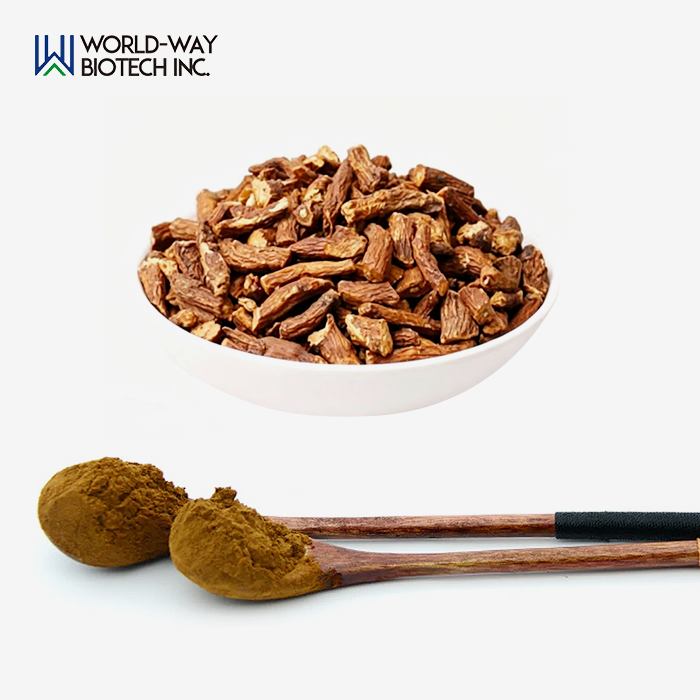
Astragalus Extract comes from the root of Astragalus membranaceus (Fisch.) Bunge, a plant used for centuries in East Asian herbal traditions. World-Way sources its roots from premium growing regions — Shanxi, Inner Mongolia, and Gansu — where soil conditions produce roots with higher active compound concentrations. The extract appears as a light yellow to pale brown fine powder, 95% passing 80 mesh, with moisture ≤5.0% and ash ≤5.0%, ensuring consistent quality batch after batch.

Core Bioactive Compounds
Three compound classes drive the cosmetic value of this botanical ingredient:
- Astragalus polysaccharides (20%–70%): Fully water-soluble, these carbohydrate chains support skin barrier integrity and moisture retention. Their solubility makes them easy to incorporate into aqueous-based serums, toners, and sheet masks.
- Astragaloside IV (5%–20%): A triterpene saponin with documented antioxidant and anti-inflammatory properties. Research published in Phytomedicine links it to fibroblast activation and collagen synthesis support.
- Flavonoids and saponins: Secondary bioactives that contribute to overall free radical scavenging capacity in finished formulations.
Extraction and Standardization
World-Way applies precision aqueous and ethanol extraction processes to deliver standardized specifications: Astragalosides 1–10% (HPLC) and polysaccharide content verified by UV-Vis. Ethanol-only extraction ensures minimal solvent residues, meeting clean-label standards. The extract is non-GMO and compliant with ISO9001 and FSSC22000 quality systems, giving quality assurance managers the documentation traceability they require.
How Astragalus Extract Functions as an Antioxidant in Cosmetics
The Free Radical Mechanism
UV light and pollutants in the air can cause oxidative stress. In this case, reactive oxygen species are formed. These species break down the skin's proteins and fats. Flavonoids and astragalus polysaccharides help keep these radicals stable. This stops the oxidation chain reaction before it does any damage to cells. Studies in the journal Food Chemistry show that parts of astragalus that are controlled are very good at getting rid of DPPH radicals. This method does work because the amounts found are good enough to be used in cosmetics.
Synergy With Other Antioxidants
Bioactives in Astragalus Extract can complement other antioxidants rather than interfere with them. When combined with vitamin C or green tea polyphenols, the polysaccharides in Astragalus Extract may help improve formulation stability and reduce the risk of premature degradation. This makes Astragalus Extract a promising ingredient for multi-active serums, where maintaining the potency of different ingredients during storage is essential. For manufacturers developing premium skincare products, incorporating Astragalus Extract may help support antioxidant performance and formulation stability throughout the product's intended shelf life. When targeting a 24-month shelf life, formulators should evaluate Astragalus Extract alongside other active ingredients through compatibility testing, accelerated stability studies, and real-time storage tests to confirm that the finished product maintains its quality and effectiveness.
Dosage and Formulation Stability
You can find that a concentration range of 0.5% to 2.0% (polysaccharide-standardized extract) works well for creams and serums in a lot of beauty books. The extract can be used in short-term heating steps that are used to make liquid cosmetics as long as it doesn't get too hot. Because it dissolves so easily in water, it is easy to add right to the water phase. This helps the people who are formulating the process.
Astragalus Extract as a Skin-Conditioning Agent: Formulation Insights
Hydration and Barrier Function
The polysaccharide fraction in astragalus root extract behaves as a film-forming humectant, drawing moisture to the stratum corneum and reinforcing the lipid barrier. This mechanism is directly relevant to formulations targeting dry skin, sensitive skin, and post-procedure recovery products. Published data in the International Journal of Cosmetic Science supports measurable improvements in transepidermal water loss (TEWL) when polysaccharide-rich botanical extracts are applied topically.
Anti-Irritation and Skin Resilience
Astragaloside IV moderates inflammatory cytokine activity in skin tissue, which translates into reduced redness and sensitivity in topical applications. This makes the extract well-suited for formulations marketed to sensitive skin consumers — a segment with strong growth in the US market. When paired with ingredients like niacinamide or panthenol, the anti-irritation effect compounds without negating the primary conditioning claim.
Formulation Flexibility and Compatibility
World-Way's extract integrates across multiple cosmetic formats. Here are the primary application formats where it performs reliably:
- Sheet masks and gel masks: High polysaccharide content supports a viscous, film-forming texture that extends contact time and ingredient delivery.
- Serums and ampoules: Water-soluble grades disperse cleanly in low-viscosity aqueous systems, maintaining product clarity.
- Creams and moisturizers: Work effectively in the water phase of O/W emulsions alongside glycerin, hyaluronic acid, and ceramide complexes.
These application options give product development teams real flexibility when building SKU portfolios across different price tiers and skin concern categories.

Sourcing High-Quality Astragalus Extract for Cosmetic Manufacturing
Supplier Evaluation Criteria
Not all of the chemicals in plants that do something give you the same amount. When a business sells astragalus, the people in charge of buying it should make sure that HPLC checks each batch's specs, not just what is written in the catalog. It is Kosher, Halal, ISO9001, and FSSC22000 certified, so it is safe. Heavy metals (Pb <3.0 ppm, As <2.0 ppm, Hg <0.1 ppm), herbicide leftovers (EC 396/2005), and bacteria (TPC <1,000 cfu/g, no E. coli or Salmonella) have not been found in it.
Supply Chain Reliability
It is controlled from the very top of the World-Way supply chain, all the way down to the Phytoway extraction center, which can handle more than 3,000 tons of material every year. The company owns more than 67 hectares of plantation land. When you have more than one provider, you don't have to worry about the risks that come with having only one. This is important for many types of makeup ingredients. Gansu, Shanxi, and Inner Mongolia are where the raw materials come from. Astragalus grows well in this soil. Most of the time, it takes 10 days, and each drum weighs 25 kg. You can try them out for free to see how good they are.
OEM and Private Label Capabilities
World-Way provides flexible OEM services to help brands develop customized botanical ingredients that meet their specific formulation and market requirements. For businesses sourcing Astragalus Extract, the company offers adjustable extraction parameters and customizable standardization levels to support different cosmetic applications. Its technical team includes 42 research and development professionals, five of whom hold doctoral degrees, providing expertise in ingredient development, process optimization, and quality control. Whether a brand needs Astragalus Extract for moisturizing serums, anti-aging formulations, or antioxidant skincare products, these customization options can help align the ingredient's specifications with the intended application. World-Way also assists manufacturers preparing regulatory documentation for cosmetics intended for the EU and US markets, including certificates of analysis (COAs), material safety data sheets (MSDSs), non-GMO statements, and allergen statements. By offering tailored Astragalus Extract specifications alongside supporting documentation, World-Way helps brands streamline supplier qualification and product development. For companies seeking a reliable Astragalus Extract supplier, this combination of OEM flexibility, technical expertise, and documentation support can simplify sourcing and facilitate the development of differentiated skincare products.
Safety, Regulatory, and Market Trends for This Ingredient
Safety Profile
A new study from dermatology says that the amounts of astragalus ingredients used in makeup are not likely to cause problems. Still, it's smart to test new things on a small part of skin first, even if they are made for sensitive skin. GC-MS is used to check every batch that World-Way makes to make sure there are no solvents or PAHs left over. This tells teams in charge of quality control what they need to know about safety before they add a new ingredient.
Regulatory Landscape in the US and EU
The US has rules about the use of plant extracts in cosmetics. These are found in 21 CFR. Astragalus membranaceus root extract is what the labels must say because that's what the INCI says. As per EU law EC 1223/2009, there must be proof that the ingredients are safe. This is a standard piece of technology that comes with World-Way. If you ask, you can get verified organic versions of names that say they are USDA Organic or EU Organic.
Market Growth Signals
From a report from 2023 by Grand View Research, we know that the world market for cosmetics with plant extracts will reach $4.2 billion by 2028. Herbal antioxidants are a part of this market that will grow the most quickly. When beauty brands change their recipes to meet "clean beauty" standards, astragalus root extract is a good ingredient to use. This is because customers want active ingredients that come from plants and have been studied in depth.

Conclusion
Astragalus Extract is known to be good for the skin and to fight free radicals. So it can be used in products because it lowers oxidant damage, keeps skin moist, and soothes red, itchy skin. It can be used in many cosmetics, from serums to hybrid creams, because it contains astragaloside IV and a water-soluble polysaccharide fraction. People in the US and around the world who are making skincare lines based on science should use this plant-based ingredient. It comes with clear instructions, a stable supply chain, and all the necessary papers from the government to back it up.
FAQ
Is astragalus root extract suitable for all skin types?
Yes. Published safety reviews indicate good tolerability across normal, dry, sensitive, and combination skin types at standard cosmetic concentrations (0.5%–2.0%). Its anti-inflammatory properties make it particularly appropriate for reactive or sensitized skin.
How does astragalus compare to ginseng extract in cosmetics?
Both are adaptogenic botanicals with antioxidant activity. Astragalus polysaccharides offer stronger film-forming and humectant properties, making them more effective in hydration-focused formulations. Ginseng ginsenosides, by contrast, are better documented for microcirculation support. They can be combined effectively in anti-aging products.
What is the typical shelf life in finished cosmetic products?
When incorporated at recommended concentrations and stored per standard cosmetic conditions (cool, dry, away from light), astragalus extract contributes to a formulated product shelf life of up to 24 months, consistent with general botanical extract stability data.
Can this ingredient meet Halal and Kosher requirements?
Yes. World-Way's Astragalus Extract carries both Kosher and Halal certifications, supporting market access in regions where these standards are required by retail buyers or regulatory bodies.
Partner With World-Way for Certified Astragalus Extract Supply
Plant-based goods from world-way biotech inc. have been sold to more than 500 businesses in 60 countries since 1992. It is made by World-Way, a company that is certified by ISO9001, FSSC22000, Kosher, and Halal. Try them out for free to see if they're right for you. For bulk sales of 25 kg/drum, you have to wait 10 days. You can learn more about the World-Way team or get in touch with them at info@world-way.net or worldwaybio.com. You can also try our Astragalus Extract that has been standardized.
References
1. Wang, D., et al. "Antioxidant activities of polysaccharides from Astragalus membranaceus." Food Chemistry, 2012.
2. Liu, P., et al. "Astragaloside IV inhibits inflammatory response and promotes dermal fibroblast proliferation." Phytomedicine, 2014.
3. Zhang, J., et al. "Skin barrier function and hydration effects of plant polysaccharides in topical formulations." International Journal of Cosmetic Science, 2018.
4. Grand View Research. "Botanical Extracts Market Size, Share & Trends Analysis Report." Grand View Research, 2023.
5. Shao, B. M., et al. "A study on the immune receptors for polysaccharides from the roots of Astragalus membranaceus." Biochemical and Biophysical Research Communications, 2004.
6. European Commission. "Regulation (EC) No 1223/2009 of the European Parliament on cosmetic products." Official Journal of the European Union, 2009.
Standard Disclaimer (DSHEA):
These statements have not been evaluated by the Food and Drug Administration.
This product is not intended to diagnose, treat, cure, or prevent any disease.

Send Inquiry
Related Industry Knowledge
- Can Astragalus Extract Support Antioxidant and Skin-Conditioning Cosmetic Formulations?
- How Can Buyers Evaluate Soy Extract Powder Quality for Large Scale Food Manufacturing?
- What Benefits Can Black Elderberry Extract Bring to Botanical Beverage Formulation Projects?
- Melilotus Extract Provides Botanical Ingredient Options for Specialty Formulations and Natural Product Development
- What Applications Can Melilotus Extract Support in Botanical Ingredient Manufacturing?
- Corn Leaf Extract Expands Botanical Ingredient Options for Functional Food and Beverage Formulations
- 10 Surprising Health Benefits of Aloe vera Leaf Powder
- How Does Hibiscus Extract Support Women’s Health?
- Schisandra Extract Powder: The Age-Defying Secret
- Exploring the Wonders of Aloe vera Leaf Powder