How Do Manufacturers Use Beet Root Powder in Beverage Formulations?
Sep 15, 2026
Manufacturers integrate beet root powder into beverage formulations primarily to deliver standardized bioactive compounds — dietary nitrates, betalains, and betaine — within a water-soluble, shelf-stable format. Derived from Beta vulgaris L., this purple-red fine powder dissolves cleanly into liquid matrices, making it technically compatible with juice blends, functional waters, pre-workout drinks, and RTD wellness shots. Its dual role as a natural colorant and functional ingredient gives product developers a clean-label advantage that raw vegetable ingredients simply cannot replicate at commercial scale.
Understanding Beet Root Powder as a Beverage Ingredient
In 2023, the global market for functional drinks was worth more than

How Do Manufacturers Use Beet Root Powder in Beverage Formulations?
Sep 15, 2026
Manufacturers integrate beet root powder into beverage formulations primarily to deliver standardized bioactive compounds — dietary nitrates, betalains, and betaine — within a water-soluble, shelf-stable format. Derived from Beta vulgaris L., this purple-red fine powder dissolves cleanly into liquid matrices, making it technically compatible with juice blends, functional waters, pre-workout drinks, and RTD wellness shots. Its dual role as a natural colorant and functional ingredient gives product developers a clean-label advantage that raw vegetable ingredients simply cannot replicate at commercial scale.
Understanding Beet Root Powder as a Beverage Ingredient
In 2023, the global market for functional drinks was worth more than $180 billion. Nitrate-based performance drinks were one of the fastest-growing groups of this market. Beet Root Powder is a perfect fit for this path because it combines high nutritional value with a wide range of processing options.
Where It Fits Across Beverage Categories
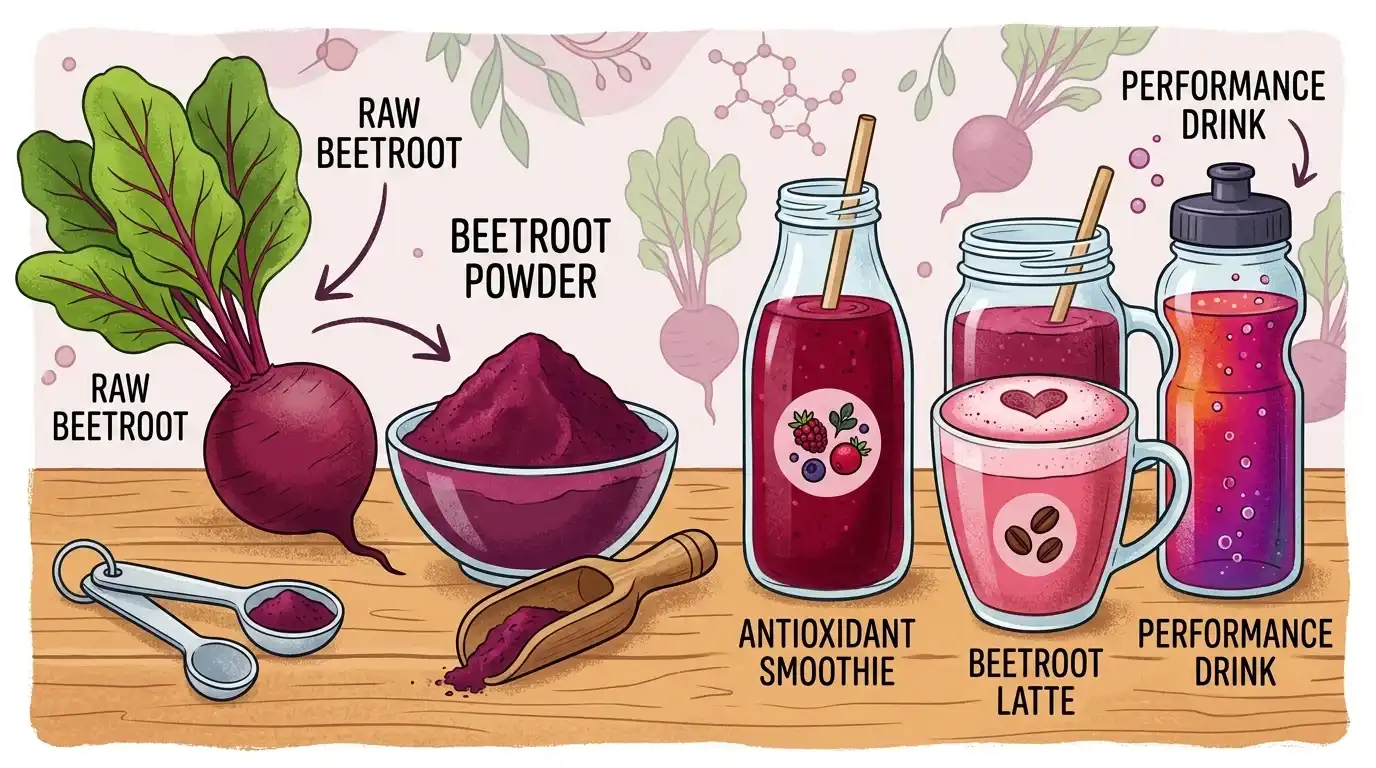
Beet Root Powder can be used in a lot of different kinds of products. Its natural nitrates help blood vessels widen, and oxygen get to working muscles better during activity. Its deep magenta color, betacyanin, is used as a natural red dye in wellness shots and cold-pressed juice mixes instead of manmade Red 40. Electrolyte drinks that are keto-friendly and functional waters like it because it has a low glucose index and a clean nutritional profile.
Positioning for compliance is important here. World-Way's Beet Root Powder has been certified as ISO9001, FSSC22000, Kosher, and Halal. This means it can be sold in a wide range of global markets, even ones that need vegan, gluten-free, or religiously compliant labels. Brands that want to start in North America, the EU, and the Middle East at the same time will have a lot less trouble with regulations thanks to these qualifications.
The Technical Process: How Manufacturers Incorporate It in Beverages
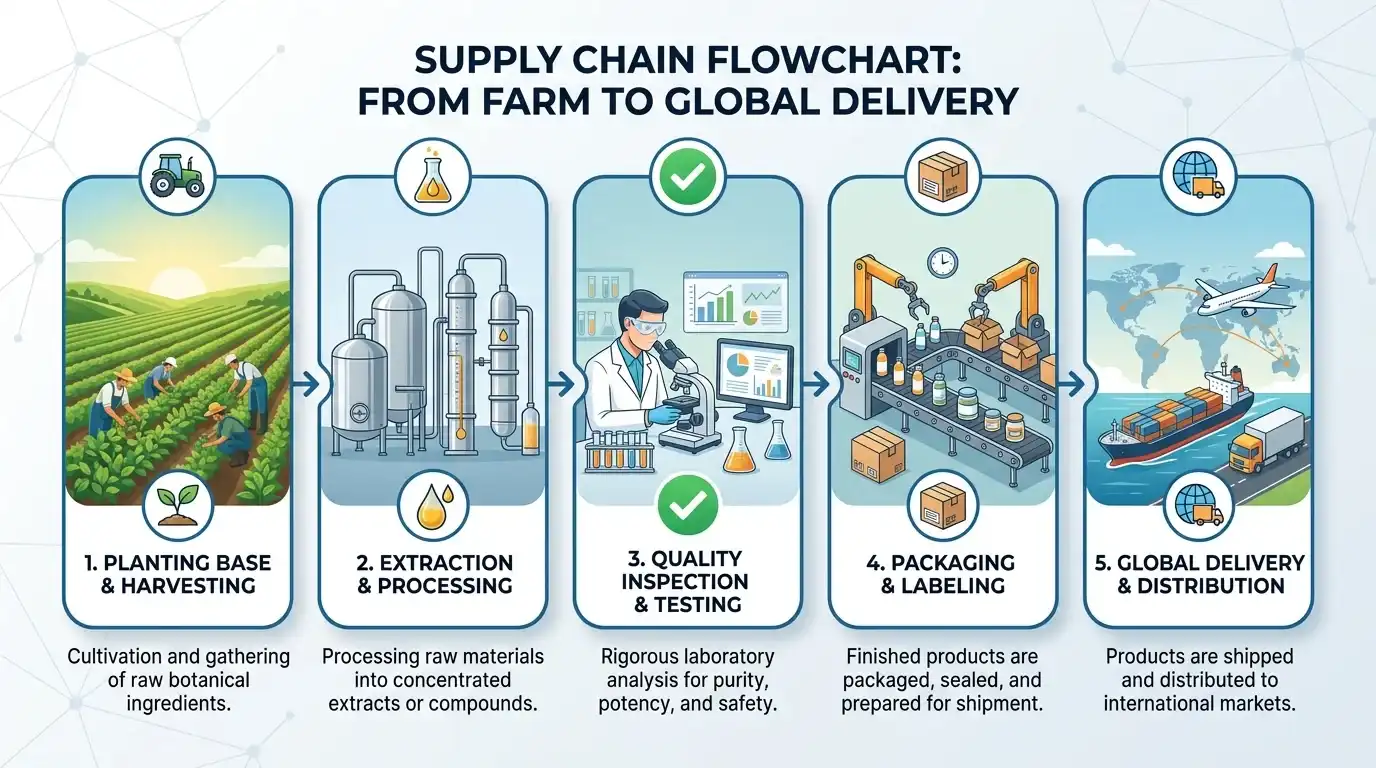
The discipline of sourcing determines whether a finished beverage works consistently or not from batch to batch. World-Way gets its Beet Root Powder from three of China's best growing areas: Heilongjiang, Inner Mongolia, and Xinjiang. These areas are known for having the right mix of soil and temperature conditions for betalain and nitrate buildup.
Dosage and Solubility Best Practices
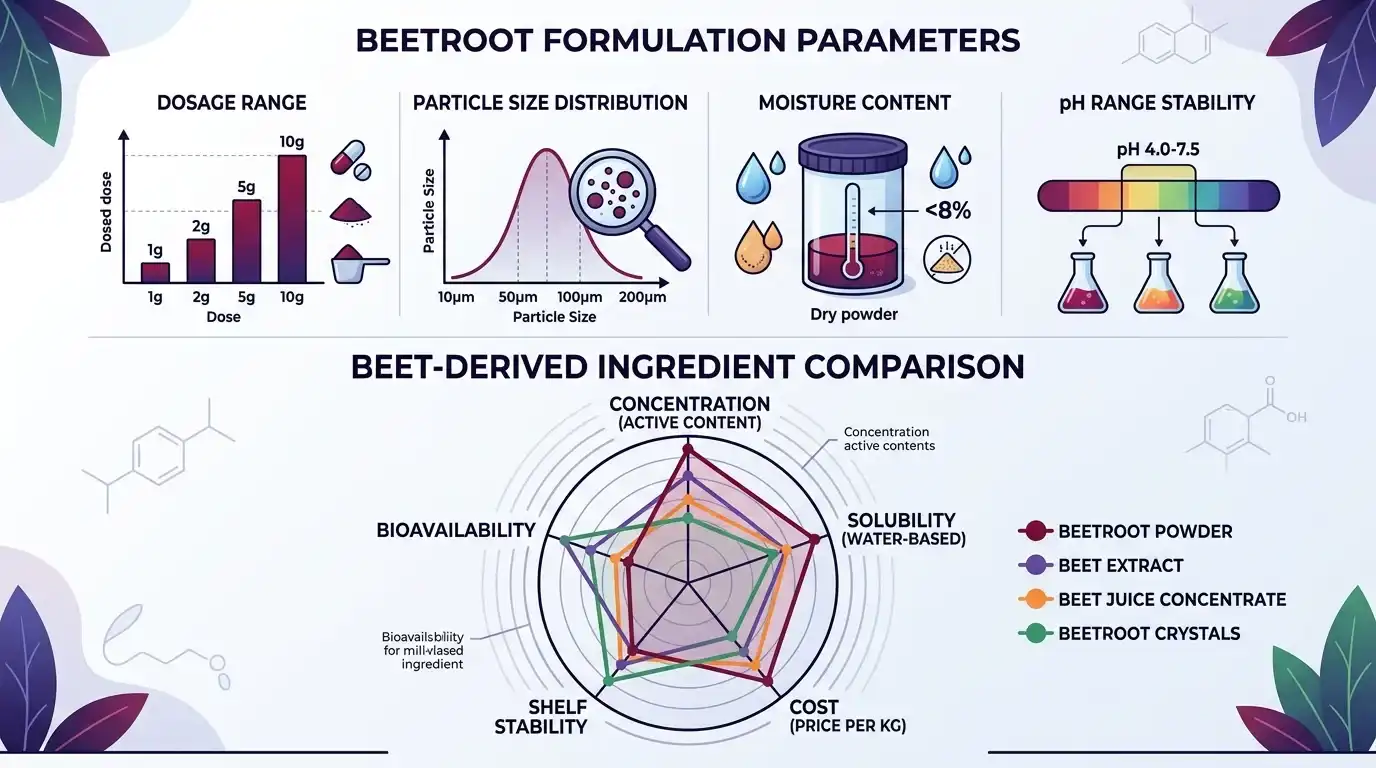
Teams that work on new drinks usually stick to a dose range of 500 mg to 3,000 mg per serving for nitrate-based uses. World-Way's Beet Root Powder, which is standardized to Betalains ≥1%, goes through an 80-mesh screen 95% of the time. This lets the liquid move quickly through it without any visible sedimentation. Controlling the wetness level at ≤5.0% and the ash level at ≤5.0% makes sure that the physical quality of each batch is the same, which is very important for fast beverage filling lines.
Addressing Color Retention and Taste
Betacyanin colors are sensitive to pH and will always look reddish-purple in a slightly acidic setting (pH 4–6). This trait naturally helps formulators who work with sparkling water bases or citrus-forward profiles. To get rid of the earthy taste that comes from whole-root materials, Beet Root Powder juice powder forms that are treated through vacuum evaporation greatly lower the amount of geosmin present. This makes the sensory profile cleaner and more suitable for everyday drinks. The different forms that World-Way offers—juice powder, betacyanin extract, betaine extract, and raw powder—give sourcing teams a lot of freedom in how they formulate their products.
Advantages of Using Beet Root Powder in Beverage Products
There are more business reasons to use this ingredient than just nutritional marketing claims. Mid-sized to big supplement brands and Beet Root Powder makers usually look at ingredients based on three factors that affect each other: how well they work, how easy they are to defend in court, and how much they cost to get.
Here are the core functional and commercial advantages that make this ingredient compelling:
• Cardiovascular and blood health positioning: Focusing on heart health and blood flow: natural nitrates help blood vessels widen through the nitrate-nitrite-nitric oxide route, which has been extensively studied and documented in peer-reviewed literature. Betaine helps break down homocysteine, which is good for the liver and for making red blood cells. This means that labels can make more claims about cardiovascular and general wellness.
• Natural colorant utility: Betacyanin is a natural colorant that can be used in a variety of ways. It gives food a steady deep red color even when it's processed at low temperatures and in cold conditions. It can be used instead of manufactured dyes in plant-based beverages without drawing the attention of regulators in clean-label markets.
• Cost-competitive bulk procurement: World-Way's vertically integrated approach, which includes owned plantation sites and a 3,000-ton annual processing capacity, means that prices stay stable even when product prices change. The 25 kg/drum packaging format can be used for both small-scale tests and large-scale annual contracts.
All of these benefits make it possible for Beet Root Powder companies to release new goods with different health claims while keeping costs low. The 10-day wait time and free samples make product development even faster, which is especially helpful for R&D teams that have to meet tight start dates.
Comparative Analysis: Beet Root Powder Versus Other Beet-Derived Ingredients
People who work in procurement often compare uniform powder to Beet Root Powder concentrate or encapsulated vitamin forms. Before signing a long-term sourcing deal, you should think about the pros and cons of each one.
Powder vs. Juice Concentrate
Three to five times as much nitrate is in Beet Root Powder juice powder as in whole-root powder, and it dissolves better in cold water (>95%), so it's the best choice for ready-to-mix beverage applications. Because it has less of a lower unit cost and keeps more of the fiber content, whole-root powder is a better choice for adding to bulk foods. Most companies that make functional drinks that are aimed at performance or heart health find that standardized juice powder or betacyanin extract gives them better bioavailability per gram.
Organic Certification and Quality Perception
In the U.S. market, USDA Organic certification increases customer trust and supports higher prices on the store. Some of World-Way's products are organically certified, and its FSSC22000 certification, which is a globally recognized GFSI-benchmarked food safety standard, gives multinational ingredient distributors and co-manufacturers the audit trail they need to make sure that new suppliers are trustworthy.
Future Trends and Innovations in Beet Root Powder Beverage Applications
The direction of this group of ingredients points to two changes that will happen at the same time: new delivery formats and more openness in the supply chain. Encapsulated betalains are becoming more popular in high-shear processing areas where colors that aren't protected break down when mixed. Adaptogens like ashwagandha and recovery ingredients like tart cherry extract are being paired in ready-to-drink drinks aimed at the sports recovery market. World-Way supports this market with its Cerisflora™ tart cherry ingredient.
The way that R&D and procurement teams choose ingredient sources is also changing because of digital buying platforms. Before getting in touch, buyers now expect to be able to access COA databases, MSDS documents, allergen statements, and non-GMO declarations online. Suppliers who put money into clear technical infrastructure get qualified more quickly. To meet this level easily, World-Way keeps full regulatory dossiers and documentation support.
Conclusion
Beet Root Powder is no longer just a novelty when it comes to making drinks. It works as a natural colorant, has a proven nitrate-to-nitric oxide mechanism, and is compatible with clean labels. This makes it a good investment for brands in the sports nutrition, cardiovascular wellness, and functional beverage markets. When you buy ingredients from a company that owns its own cultivation bases, has certified quality systems, and offers responsive technical support, you avoid the two biggest risks in the process: inconsistent quality and missing documentation. With the right provider relationship, you can take care of the basics, like effectiveness, compliance, and supply reliability.
FAQ
Is beet root extract safe to use in beverages at commercial dosages?
Yes. The FDA and EFSA say that dietary nitrates from Beet Root Powder are safe as long as they are not exceeded in certain amounts. The extract from World-Way is certified Kosher, Halal, and FSSC22000-compliant. Full allergen statements and non-GMO documentation are available upon request.
How does beet extract powder compare nutritionally to beet juice?
Dietary nitrates are 3–5 times more concentrated in Beet Root Powder juice powder than in whole-root powder, and it dissolves more easily in water. Whole-root powder keeps more of the fiber and costs less per kilogram, so it's better for adding to food than making useful drinks with precise doses.
What certifications should procurement teams require?
At the very least, FSSC22000 or HACCP for food safety, ISO9001 for quality control, and Kosher or Halal for entry to markets around the world. For clean label placement in the U.S., USDA Organic approval adds a lot of business value.
What is the typical lead time and minimum order for World-Way's beet extract?
The lead time is ten days. Standard shipping is 25 kg per drum. Qualified buyers can get free samples to test the recipe before committing to buying in bulk.
Partner with World-Way for Premium Beet Root Powder Supply
World-Way Biotech has been making Beet Root Powder for over 30 years and has ISO9001 and FSSC22000 certifications for its extract. They offer free samples, full scientific documentation, and 10-day wait times. Our team is ready to help you with OEM formulations or long-term bulk supply deals. Email us at info@world-way.net to get a sample and talk about your needs for making drinks right away.
References
1. Lundberg, J. O., Weitzberg, E., & Gladwin, M. T. — Nature Reviews Drug Discovery, 2008.
2. Jones, A. M. — "Dietary Nitrate and Physical Performance." Annual Review of Nutrition, 2014.
3. Clifford, T., et al. — "The Potential Benefits of Red Beetroot Supplementation in Health and Disease." Nutrients, 2015.
4. Siervo, M., et al. — "Inorganic Nitrate and Beetroot Juice Supplementation Reduces Blood Pressure in Adults." Journal of Nutrition, 2013.
5. Domínguez, R., et al. — "Effects of Beetroot Juice Supplementation on Cardiorespiratory Endurance in Athletes." Nutrients, 2017.
6. Wruss, J., et al. — "Compositional Characteristics of Commercial Beetroot Products and Beetroot Juice Prepared from Seven Cultivars." Food Chemistry, 2015.
Standard Disclaimer (DSHEA):
These statements have not been evaluated by the Food and Drug Administration.
This product is not intended to diagnose, treat, cure, or prevent any disease.

Send Inquiry
You may like
Related Industry Knowledge
Where It Fits Across Beverage Categories
Beet Root Powder can be used in a lot of different kinds of products. Its natural nitrates help blood vessels widen, and oxygen get to working muscles better during activity. Its deep magenta color, betacyanin, is used as a natural red dye in wellness shots and cold-pressed juice mixes instead of manmade Red 40. Electrolyte drinks that are keto-friendly and functional waters like it because it has a low glucose index and a clean nutritional profile.
Positioning for compliance is important here. World-Way's Beet Root Powder has been certified as ISO9001, FSSC22000, Kosher, and Halal. This means it can be sold in a wide range of global markets, even ones that need vegan, gluten-free, or religiously compliant labels. Brands that want to start in North America, the EU, and the Middle East at the same time will have a lot less trouble with regulations thanks to these qualifications.
The Technical Process: How Manufacturers Incorporate It in Beverages
The discipline of sourcing determines whether a finished beverage works consistently or not from batch to batch. World-Way gets its Beet Root Powder from three of China's best growing areas: Heilongjiang, Inner Mongolia, and Xinjiang. These areas are known for having the right mix of soil and temperature conditions for betalain and nitrate buildup.
Dosage and Solubility Best Practices
Teams that work on new drinks usually stick to a dose range of 500 mg to 3,000 mg per serving for nitrate-based uses. World-Way's Beet Root Powder, which is standardized to Betalains ≥1%, goes through an 80-mesh screen 95% of the time. This lets the liquid move quickly through it without any visible sedimentation. Controlling the wetness level at ≤5.0% and the ash level at ≤5.0% makes sure that the physical quality of each batch is the same, which is very important for fast beverage filling lines.
Addressing Color Retention and Taste
Betacyanin colors are sensitive to pH and will always look reddish-purple in a slightly acidic setting (pH 4–6). This trait naturally helps formulators who work with sparkling water bases or citrus-forward profiles. To get rid of the earthy taste that comes from whole-root materials, Beet Root Powder juice powder forms that are treated through vacuum evaporation greatly lower the amount of geosmin present. This makes the sensory profile cleaner and more suitable for everyday drinks. The different forms that World-Way offers—juice powder, betacyanin extract, betaine extract, and raw powder—give sourcing teams a lot of freedom in how they formulate their products.
Advantages of Using Beet Root Powder in Beverage Products
There are more business reasons to use this ingredient than just nutritional marketing claims. Mid-sized to big supplement brands and Beet Root Powder makers usually look at ingredients based on three factors that affect each other: how well they work, how easy they are to defend in court, and how much they cost to get.
Here are the core functional and commercial advantages that make this ingredient compelling:
• Cardiovascular and blood health positioning: Focusing on heart health and blood flow: natural nitrates help blood vessels widen through the nitrate-nitrite-nitric oxide route, which has been extensively studied and documented in peer-reviewed literature. Betaine helps break down homocysteine, which is good for the liver and for making red blood cells. This means that labels can make more claims about cardiovascular and general wellness.
• Natural colorant utility: Betacyanin is a natural colorant that can be used in a variety of ways. It gives food a steady deep red color even when it's processed at low temperatures and in cold conditions. It can be used instead of manufactured dyes in plant-based beverages without drawing the attention of regulators in clean-label markets.
• Cost-competitive bulk procurement: World-Way's vertically integrated approach, which includes owned plantation sites and a 3,000-ton annual processing capacity, means that prices stay stable even when product prices change. The 25 kg/drum packaging format can be used for both small-scale tests and large-scale annual contracts.
All of these benefits make it possible for Beet Root Powder companies to release new goods with different health claims while keeping costs low. The 10-day wait time and free samples make product development even faster, which is especially helpful for R&D teams that have to meet tight start dates.
Comparative Analysis: Beet Root Powder Versus Other Beet-Derived Ingredients
People who work in procurement often compare uniform powder to Beet Root Powder concentrate or encapsulated vitamin forms. Before signing a long-term sourcing deal, you should think about the pros and cons of each one.
Powder vs. Juice Concentrate
Three to five times as much nitrate is in Beet Root Powder juice powder as in whole-root powder, and it dissolves better in cold water (>95%), so it's the best choice for ready-to-mix beverage applications. Because it has less of a lower unit cost and keeps more of the fiber content, whole-root powder is a better choice for adding to bulk foods. Most companies that make functional drinks that are aimed at performance or heart health find that standardized juice powder or betacyanin extract gives them better bioavailability per gram.
Organic Certification and Quality Perception
In the U.S. market, USDA Organic certification increases customer trust and supports higher prices on the store. Some of World-Way's products are organically certified, and its FSSC22000 certification, which is a globally recognized GFSI-benchmarked food safety standard, gives multinational ingredient distributors and co-manufacturers the audit trail they need to make sure that new suppliers are trustworthy.
Future Trends and Innovations in Beet Root Powder Beverage Applications
The direction of this group of ingredients points to two changes that will happen at the same time: new delivery formats and more openness in the supply chain. Encapsulated betalains are becoming more popular in high-shear processing areas where colors that aren't protected break down when mixed. Adaptogens like ashwagandha and recovery ingredients like tart cherry extract are being paired in ready-to-drink drinks aimed at the sports recovery market. World-Way supports this market with its Cerisflora™ tart cherry ingredient.
The way that R&D and procurement teams choose ingredient sources is also changing because of digital buying platforms. Before getting in touch, buyers now expect to be able to access COA databases, MSDS documents, allergen statements, and non-GMO declarations online. Suppliers who put money into clear technical infrastructure get qualified more quickly. To meet this level easily, World-Way keeps full regulatory dossiers and documentation support.
Conclusion
Beet Root Powder is no longer just a novelty when it comes to making drinks. It works as a natural colorant, has a proven nitrate-to-nitric oxide mechanism, and is compatible with clean labels. This makes it a good investment for brands in the sports nutrition, cardiovascular wellness, and functional beverage markets. When you buy ingredients from a company that owns its own cultivation bases, has certified quality systems, and offers responsive technical support, you avoid the two biggest risks in the process: inconsistent quality and missing documentation. With the right provider relationship, you can take care of the basics, like effectiveness, compliance, and supply reliability.
FAQ
Is beet root extract safe to use in beverages at commercial dosages?
Yes. The FDA and EFSA say that dietary nitrates from Beet Root Powder are safe as long as they are not exceeded in certain amounts. The extract from World-Way is certified Kosher, Halal, and FSSC22000-compliant. Full allergen statements and non-GMO documentation are available upon request.
How does beet extract powder compare nutritionally to beet juice?
Dietary nitrates are 3–5 times more concentrated in Beet Root Powder juice powder than in whole-root powder, and it dissolves more easily in water. Whole-root powder keeps more of the fiber and costs less per kilogram, so it's better for adding to food than making useful drinks with precise doses.
What certifications should procurement teams require?
At the very least, FSSC22000 or HACCP for food safety, ISO9001 for quality control, and Kosher or Halal for entry to markets around the world. For clean label placement in the U.S., USDA Organic approval adds a lot of business value.
What is the typical lead time and minimum order for World-Way's beet extract?
The lead time is ten days. Standard shipping is 25 kg per drum. Qualified buyers can get free samples to test the recipe before committing to buying in bulk.
Partner with World-Way for Premium Beet Root Powder Supply
World-Way Biotech has been making Beet Root Powder for over 30 years and has ISO9001 and FSSC22000 certifications for its extract. They offer free samples, full scientific documentation, and 10-day wait times. Our team is ready to help you with OEM formulations or long-term bulk supply deals. Email us at info@world-way.net to get a sample and talk about your needs for making drinks right away.
References
1. Lundberg, J. O., Weitzberg, E., & Gladwin, M. T. — Nature Reviews Drug Discovery, 2008.
2. Jones, A. M. — "Dietary Nitrate and Physical Performance." Annual Review of Nutrition, 2014.
3. Clifford, T., et al. — "The Potential Benefits of Red Beetroot Supplementation in Health and Disease." Nutrients, 2015.
4. Siervo, M., et al. — "Inorganic Nitrate and Beetroot Juice Supplementation Reduces Blood Pressure in Adults." Journal of Nutrition, 2013.
5. Domínguez, R., et al. — "Effects of Beetroot Juice Supplementation on Cardiorespiratory Endurance in Athletes." Nutrients, 2017.
6. Wruss, J., et al. — "Compositional Characteristics of Commercial Beetroot Products and Beetroot Juice Prepared from Seven Cultivars." Food Chemistry, 2015.
Standard Disclaimer (DSHEA):
These statements have not been evaluated by the Food and Drug Administration.
This product is not intended to diagnose, treat, cure, or prevent any disease.
Send Inquiry
You may like