
Barley Grass Extract: Benefits, Uses & Types Explained
Sep 16, 2026
Barley grass extract is one of the most nutrient-dense botanical ingredients available to formulators today. Derived from the young leaves of Hordeum vulgare L. harvested at the jointing stage, this concentrated green ingredient delivers a broad spectrum of chlorophyll, SOD enzymes, vitamins, and minerals in a shelf-stable, water-soluble powder. Whether you're developing functional beverages, immune-support capsules, or beauty-from-within formulations, understanding its composition, applications, and sourcing dynamics is essential for making confident procurement decisions.
Understanding Barley Grass Composition & Health Benefits
What Goes Into a High-Quality Extract?
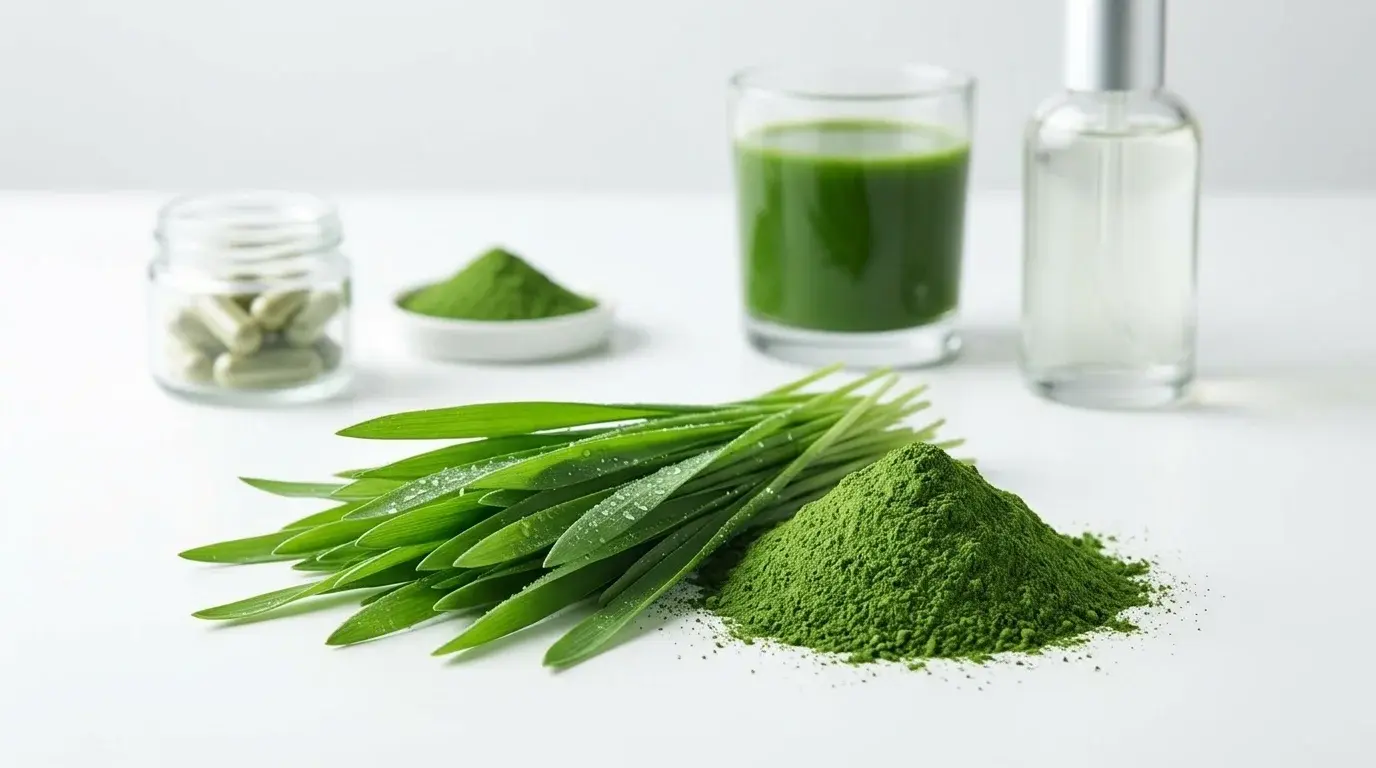
Barley Grass Extract from World-Way is made from fresh barley plants that have been freeze-dried and spray-dried at low temperatures. Standard milling kills bioactives that are sensitive to heat, but this method keeps them. Fine emerald-green powder (95% passes 80 mesh), with less than 5% moisture and less than 5% ash, is what is left over. It is put in 25 kg drums.
Some important bioactive ingredients include:
- Chlorophyll (1%–3%): This is the pigment that gives the extract its bright green color. It also helps the liver work and keeps the acid-base balance in the body.
- Superoxide Dismutase (SOD, >150 units/g): A strong antioxidant enzyme that gets rid of free radicals at the cellular level. This is one of the main benefits of high-end antioxidant products.
- Vitamins A, C, E, and B-complex: Together, these elements help the defense system, keep the skin healthy, and provide energy.
- Minerals — Ca, Fe, Mg, K: These are important structural and electrolyte minerals that keep bones healthy and the heart working well.
- β-glucan: A type of soluble fiber that has been linked to lowering cholesterol and boosting the immune system.
These nutrients don't work by themselves. Flavonoids like saponarin and lutonarin work together with SOD to give the extract its antioxidant and anti-inflammatory properties. According to a study published in the journal Food Chemistry in 2018, saponarin, a flavonoid that is only found in young barley leaves, protects the liver and fights free radicals in a big way.
For people who make health goods, Barley Grass Extract's alkaline profile meets the need for pH-balancing products, which is a growing market segment in the U.S. functional nutrition market.
Comparing Barley Grass Extract With Other Superfood Ingredients
Where Does It Stand Against Wheatgrass, Spirulina, and Chlorella?
Purchasing managers often compare https://www.worldwaybio.com/immune-anti-inflammatory-antioxidant/barley-grass-extracthttps://www.worldwaybio.com/immune-anti-inflammatory-antioxidant/barley-grass-extractto other green ingredients that are on the market. Each has its own profile:
- Wheatgrass and Barley Grass Extract both have about the same amount of chlorophyll, but Barley Grass Extract has much more SOD activity and β-glucan, which makes it a better immunity and antioxidant choice.
- Spirulina is the better choice for uses that need a lot of protein because it has more protein (60–70%) and phycocyanin. Barley Grass Extract is better at alkalizing and has more fiber than spirulina.
- Chlorella is prized for its ability to detoxify because of Chlorella Growth Factor (CGF), but it has a stronger taste that makes it harder to make drinks that taste good.
Barley Grass Extract is the best base ingredient for RTD drinks, meal replacements, and enzyme powder mixes because it dissolves easily and has a mild, slightly sweet taste.
Certified Organic Barley Grass Extract is more expensive than ordinary Barley Grass Extract, but it gives you access to USDA-certified and EU Organic product lines, where claims on the package directly affect your decision to buy. Some of World-Way's goods are certified as FSSC22000, Kosher, or Halal, and all batches are managed according to ISO9001 quality standards.
Barley Grass Extract Applications Across Industries
From Nutraceuticals to Skincare
One of this ingredient's best commercial qualities is that it can be used in many different ways. Here are the main types of applications that are currently driving purchase volume:
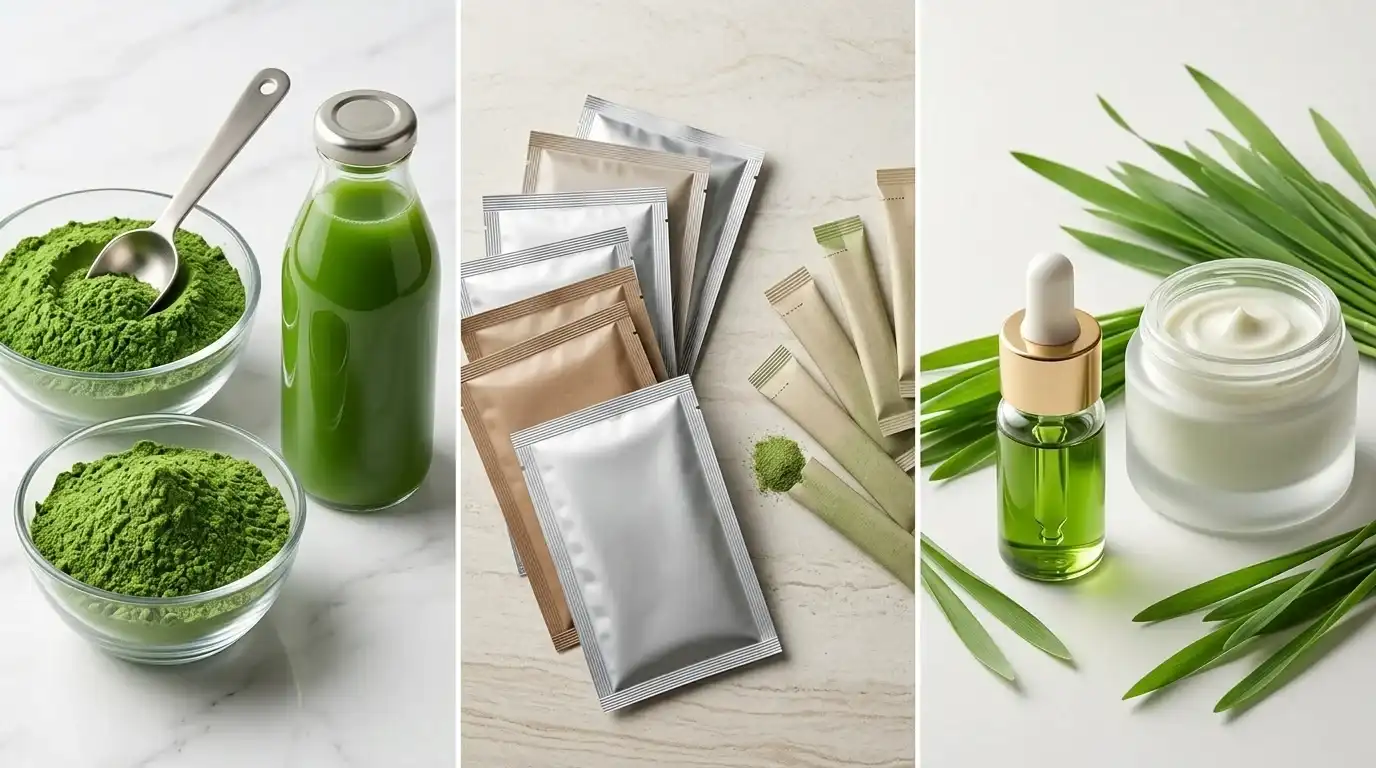
- Solid beverage and RTM blends: The extract dissolves in 95–100% water, which gets rid of the scratchy taste that comes with whole-leaf powders. Along with spirulina and wheatgrass, it mixes easily into green superfood blends.
- Meal replacements and enzyme powders: The extract comes in 10:1 and 50:1 concentrated forms and delivers high levels of phytochemicals in small dosage forms, which lowers the number of capsules needed and makes it easier for customers to follow through.
- Topical cosmeceuticals and oral beauty formulations: The high chlorophyll and SOD content fights oxidative stress pathways that cause skin to age. More and more, "beauty from within" brands use this ingredient in their liquid collagen shots and beauty products that are based on veggies.
- Functional foods and beverages: β-glucan and B-vitamin content backs up claims of digestive health; this is a regulated category that is becoming more popular in the U.S. market.
The extract is also more stable in water solutions with a normal pH, which is important for the shelf life of RTD product lines. SOD activity, on the other hand, is sensitive to heat and breaks down above 60°C. For this reason, goods that claim to have enzymatic activity should only come in cold-fill or powder blending forms.
Purchasing Guide: Sourcing This Ingredient at Scale
What B2B Buyers Should Evaluate
Decisions about where to get ingredients in bulk are based on more than just price per kilogram. A dependable provider must show uniformity in both the standardization of bioactive substances and the regulatory paperwork.
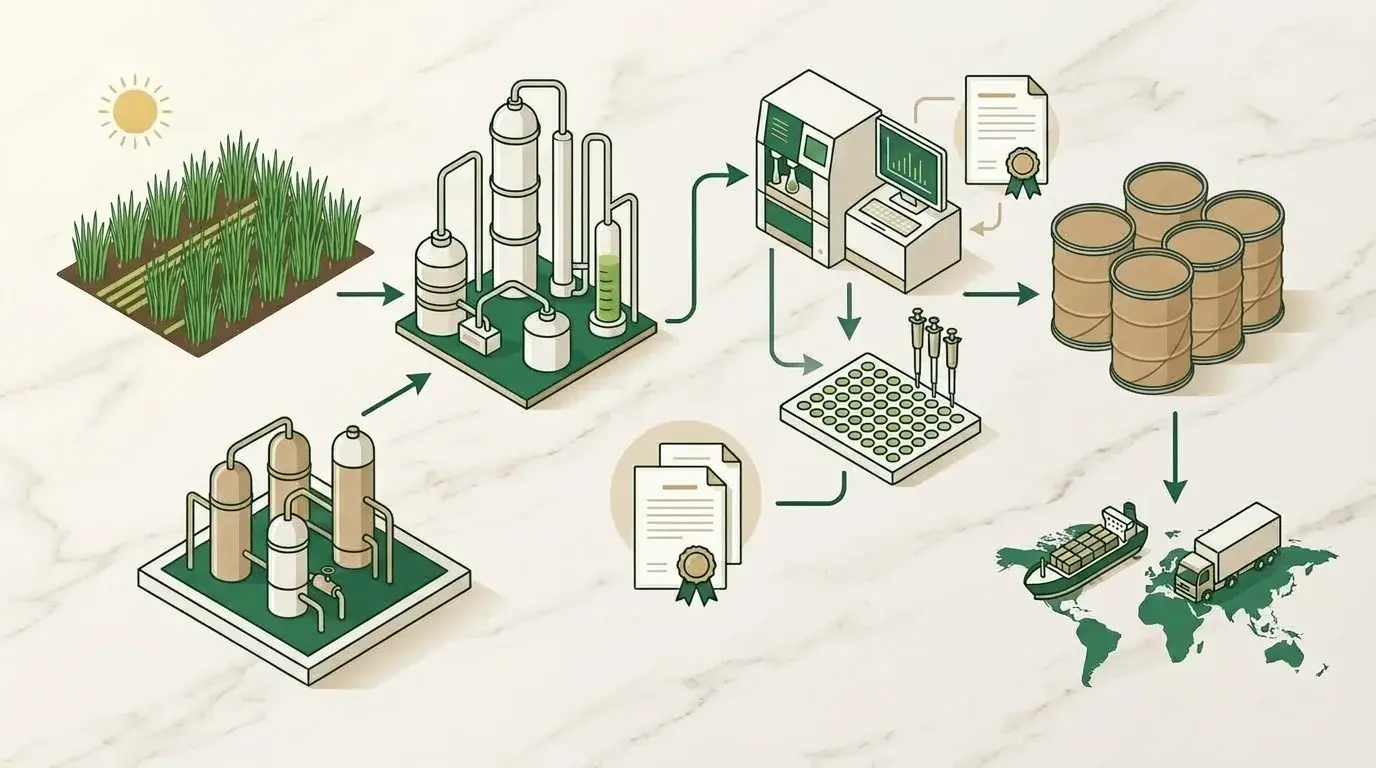
Established in 1992 in Changsha, Hunan, world-way biotech inc. has a fully integrated supply chain that includes its own 67-hectare plantation bases and a 3,000-ton-per-year extraction facility with HPLC-MS, GC-MS, and ICP-MS analytical equipment. When they are in charge of global market compliance, procurement managers and QA leaders need this level of traceability.
When a business-to-business client is looking at Barley Grass Extract suppliers, they should always ask for the following paperwork:
- One Certificate of Analysis (COA) for each lot
- Statement on allergens and MSDS
- Declaration of non-GMO
- ELISA test results (<20 ppm) to confirm gluten status
- Organic certificates that can be used
World-Way's normal packaging is 25 kg/drum, and they offer free samples for trial purposes. The lead time is 10 days. The product has been approved as ISO9001, FSSC22000, Kosher, and Halal, which are the most important standards for U.S., European, and Middle Eastern markets.
Conclusion
In the market for ingredients worldwide, Barley Grass Extract holds a flexible and scientifically sound place. Its well-balanced biological profile includes chlorophyll, SOD, β-glucan, vitamins, and minerals, which makes it useful for a wide range of products, from immune boosters to functional drinks and skin care mixtures. This extract is a good investment for formulators, product developers, and procurement managers who want a standard, multi-certified green ingredient that is easy to get and comes with good technical support. From planting to production, World-Way uses a combined method that makes sure the quality is the same in every batch and every market.
FAQ
Does barley grass extract contain gluten?
Pure extract from the leaf stage, before the grain forms, is theoretically free of gluten. Buyers should ask for ELISA test results (detection limit <20 ppm) for each batch to make sure that there was no cross-contamination during processing or harvesting.
Which extract concentration is right for capsule applications?
The 50:1 compressed form gives you the phytochemicals of a much bigger raw leaf volume in a 500mg capsule. This makes it perfect for high-density detox or antioxidant-support SKUs where the number of pills can make people less likely to follow through.
Will SOD activity survive thermal processing?
Proteins make up SOD, and they break down above 60°C. Enzymes will stop working in foods that need to be pasteurized with heat. It is best to use cold-fill manufacturing or dry blending when SOD claims are part of how the product is positioned.
What is the shelf life of the powder form?
The extract stays stable for 24 months if it is kept below 25°C in containers lined with AL foil and the relative humidity is below 45%. Because it absorbs water, it needs to be stored in a controlled setting.
How does the 10:1 ratio compare to raw powder?
A 10:1 extract takes 10 parts of raw leaf and turns them into 1 part of extract, leaving behind the insoluble cellulose. This makes final formulas easier to mix, more bioavailable, and more consistent in dose.
Partner With World-Way for Premium Barley Grass Extract Supply
World-Way Biotech Inc. is a reliable company that makes Barley Grass Extract for nutrition brands, food companies, and cosmetics companies in more than 60 countries. We can help you start your next product because our production is vertically integrated, we have multi-market certifications, our lead time is 10 days, and we offer free samples. To talk about formulation needs, unique specs, or bulk prices, email our expert team at info@world-way.net.
References
1. Zeng, Y. et al. "Antioxidant and hepatoprotective activities of saponarin from young barley leaves." Food Chemistry, 2018.
2. Paulíčková, I. et al. "Evaluation of barley grass as a functional food component." Czech Journal of Food Sciences, 2007.
3. Ehrenbergerová, J. et al. "Effect of growth conditions on the content of GABA and other amino acids in barley sprouts." Plant Foods for Human Nutrition, 2008.
4. Yu, Y. M. et al. "The flavonoids of the young green barley leaves inhibit production and secretion of interleukin-1β from lipopolysaccharide-stimulated murine macrophages." Journal of Nutritional Biochemistry, 2002.
5. Kanauchi, O. et al. "Modulation of intestinal environment by long-term administration of germinated barley foodstuff." International Journal of Molecular Medicine, 2003.
6. Kamiya, T. et al. "SOD-like activity of barley grass extract on oxidative stress response." Bioscience, Biotechnology, and Biochemistry, 2012.
Standard Disclaimer (DSHEA):
These statements have not been evaluated by the Food and Drug Administration.
This product is not intended to diagnose, treat, cure, or prevent any disease.

Send Inquiry
You may like