
What Should Buyers Check When Sourcing Black Elderberry Extract in Bulk?
Sep 21, 2026
When sourcing black elderberry extract in bulk, buyers should evaluate anthocyanin standardization levels, extraction method integrity, supplier certifications (ISO9001, FSSC22000, Kosher, Halal), third-party testing documentation, and supply chain traceability. Verifying COA accuracy, heavy metal compliance, microbial safety, and MOQ flexibility are equally critical. Procurement professionals must also assess a supplier's botanical sourcing practices, manufacturing capacity, and regulatory support capabilities to ensure consistent quality, regulatory market access, and long-term supply stability across international distribution channels.
Understanding Elderberry Extract and Its Growing Market Demand
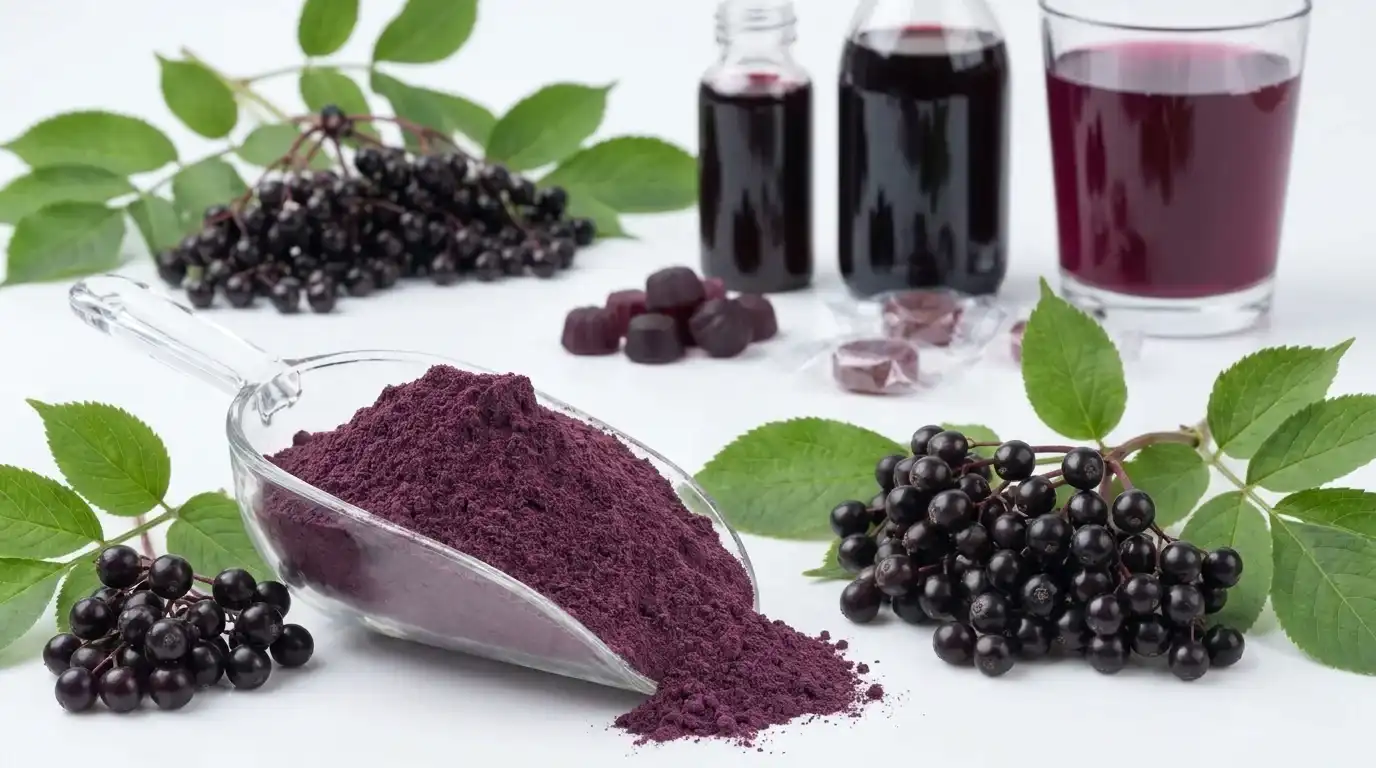
Black Elderberry Extract comes from the deep purple fruit of the Sambucus nigra L. plant and is used a lot in nutraceuticals, pharmaceuticals, and functional foods. It has a lot of anthocyanins, especially cyanidin-3-glucoside and cyanidin-3-sambubioside, which are known to have antibacterial and protective properties. A study released in the Journal of International Medical Research (2016) showed that standardized elderberry extract shortened the length of flu by four days on average compared to a placebo. This further supports the scientific validity of using elderberry extract to support the immune system.
Why Extract Form Outperforms Raw Berry Preparations
Standardized dry extract powder always works better than raw fruit juice or syrup in professional formulation settings when it comes to strength, shelf life, and accuracy of doses. A fine, deep purple powder that has been standardized to anthocyanins ≥5% via HPLC gives formulators a reliable medicinal window by getting rid of extra sugars and fibers that make encapsulation and pill compression harder. R&D teams can target specific bioactivity thresholds across multiple delivery formats, such as gummies, lozenges, cough syrups, and immune beverages, with products that come in 4:1 or 10:1 ratio extracts or as standardized 5%–15% anthocyanin powders.
The world market for elderberry supplements keeps growing, and after the pandemic, demand is still very high in North America. When it comes to B2B procurement, experts who know about these differences between product forms are much better able to choose the right standard for their needs.
Key Quality Parameters Every Bulk Buyer Must Verify
Quality control is a must when buying large amounts of plants. One tampered shipment can throw off production plans, lead to regulatory violations, or hurt a brand's image. The following things should be looked at by buying teams before they issue a purchase order for Black Elderberry Extract.
Here are the main signs of quality that tell the difference between high-end materials and cheap ones:
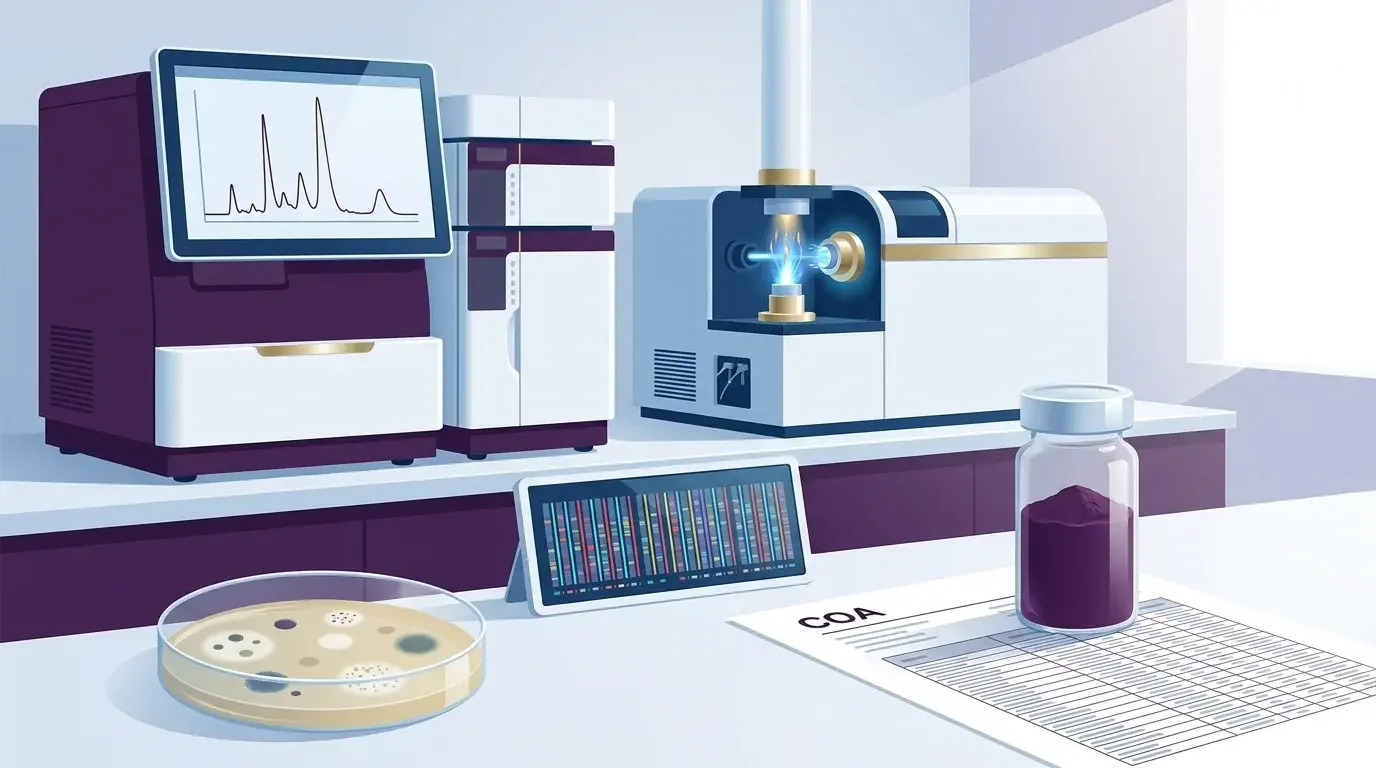
- Anthocyanin Standardization: Check the anthocyanin level using HPLC. The best material has at least 5% anthocyanins, less than 5% moisture, less than 5% ash, and 95% passage through an 80-mesh screen. These are the specs that directly affect how well it dissolves and how stable the final product is.
- Extraction Method Integrity: High-heat methods damage thermolabile pigments more than cold-press and alcohol extraction methods. Low-temperature vacuum evaporation during concentration stops the pyranium ring from breaking down even more in anthocyanins.
- Adulterant Detection: HPLC-DAD fingerprints and DNA barcoding are needed to tell the real thing from cheaper alternatives like black rice or mulberry extract, which is known to be a source of adulteration in the food market.
- Contaminant Screening: ICP-MS heavy metal tests (Pb, As, Cd, and Hg) must meet the standards set by both California Prop 65 and the EU. Standard requirements include microbial testing for E. coli, Salmonella, and Total Plate Count, as well as pesticide residue panels that cover more than 500 compounds.
- Solvent Residue Compliance: For medicine and food supplement uses, GC testing is needed to make sure that the amount of ethanol is within the limits set by USP <467>.
These checks make sure that the purity of the formulations further down the line is maintained and that each batch provides consistent defensive support. If buyers skip this step, they often don't find problems until after expensive production runs.
How to Evaluate Supplier Credibility and Manufacturing Capability
It takes more than looking through a product list to find a reputable Black Elderberry Extract maker. A reliable supplier has a manufacturing infrastructure that can be checked, clear quality management, and the technical skills to meet the complex needs of global procurement.
Certifications That Signal Genuine Compliance
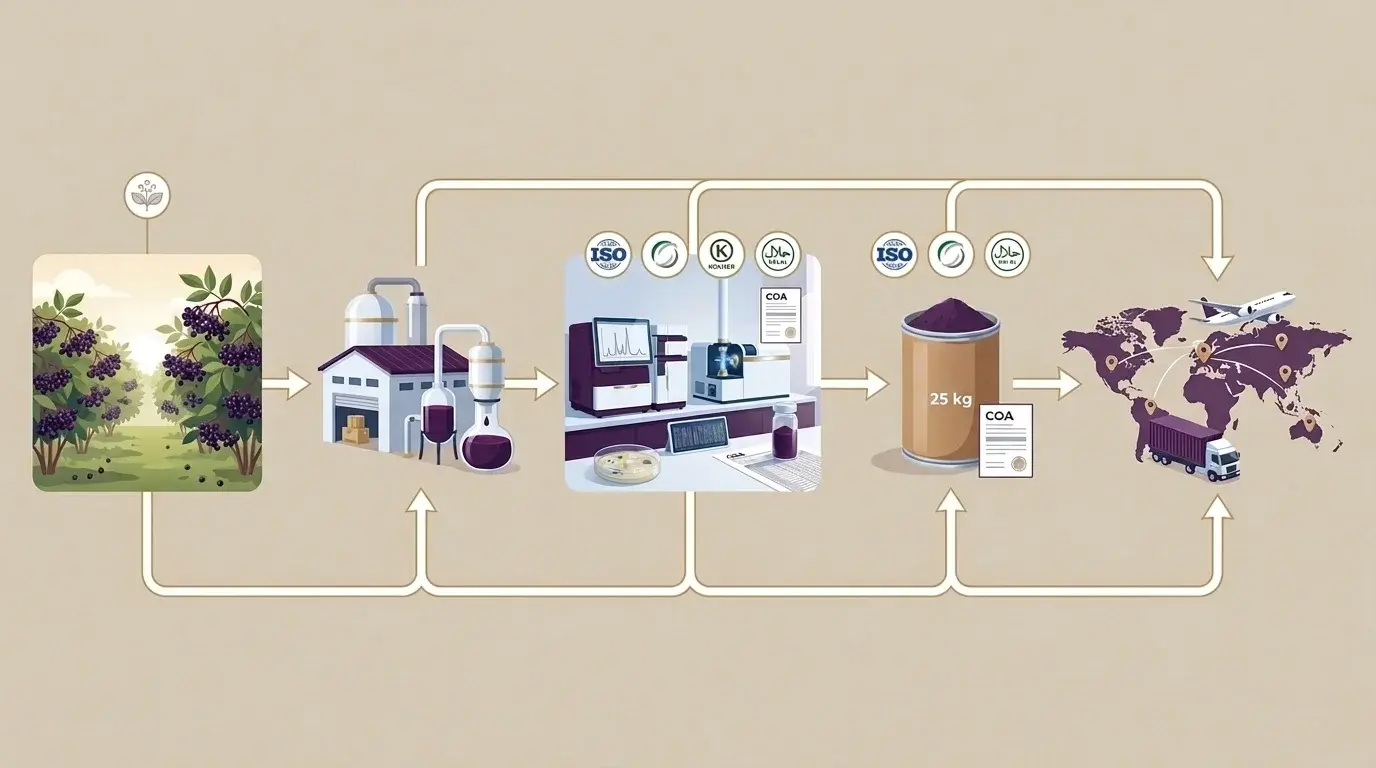
ISO9001, FSSC22000, Kosher, and Halal are some of the internationally known standards that show how committed a supplier is to systematic quality management and legal access in multiple markets. Being a GFSI-benchmarked standard, FSSC22000 in particular shows strong food safety management that meets the audit needs of big US store chains and nutraceutical brands.
Vertical Integration as a Supply Stability Indicator
Suppliers who own cultivation bases and run integrated extraction facilities lower the risk and variability of the raw materials in the supply chain. With plantation-to-production tracking, the amount of anthocyanin can be improved during cultivation by choosing the right varieties and knowing when to collect them, instead of having to be fixed later on. This means that COA results will be more consistent across all annual procurement cycles.
Technical Documentation as a Trust Signal
A reliable seller gives you all the necessary paperwork right away, including the COA, MSDS, allergen statements, non-GMO statements, and, if needed, organic licenses. Suppliers that work with controlled markets in North America and Europe also keep regulatory dossiers that help their clients get new products registered faster.
Pricing, MOQ, and Logistics—What Bulk Buyers Need to Know
The price of Black Elderberry Extract powder depends on the level of anthocyanin standardization, the status of the organic certification, and the extract ratio. Higher-specification material, like 15% anthocyanin powder instead of 5%, costs a lot more. This is because it requires more raw materials and more time to analyze them.
Understanding the total cost of buying is more than just knowing the unit price. The buyers should think about the MOQ, the dependability of the wait time, and the packaging design. A standard packing unit of 25 kg/drum with double-layer PE protection is good for manufacturing bulk pharmaceuticals and supplements. It strikes a good balance between keeping the goods safe and making it easy to move them around in the storeroom. With a lead time of 10 days for standard specifications, inventory planning can be done quickly and without having to keep too much safety stock on hand.
Long-term supply contracts and volume-based pricing agreements usually lead to more competitive per-kilogram rates and more flexible scheduling for production. Formulators can test for compatibility and stability without risking any money by asking for a free sample before placing a full order. This is a common practice in the industry, and reputable suppliers are happy to accommodate it.
Matching Product Specifications to Your Formulation Strategy
The choice of where to get your product should be based on its clinical positioning, target regulatory market, and formulation design. A medicinal cough syrup meant for the EU needs a different amount of anthocyanin than an immune support candy that is meant for the US retail market.
Companies that focus on research and development (R&D) find it most helpful when suppliers offer OEM and private label manufacturing services along with Black Elderberry Extract extraction parameters that can be changed. These parameters include particle size specifications, standardization levels, and solubility profiles. This formulation relationship approach speeds up the time it takes to start a product and makes it easier to coordinate with many ingredient suppliers.
Finding the right balance between how much an ingredient costs and how reliable a seller is is the basis of a long-term buying strategy. Before going big, trial orders make sure that each batch is consistent, and long-term partnerships with technically skilled suppliers lower the cost of qualification for future procurement cycles.
Conclusion
To confidently buy bulk Black Elderberry Extract, you need a structured evaluation method that looks at things like analytical quality, supplier trustworthiness, regulatory paperwork, and compatibility with formulations. A good buying choice is based on standardizing anthocyanins, being clear about the extraction method, having a certified production infrastructure, and having flexible supply terms. When buyers put these factors first, they set up their brands so that their products always work well and they can stay competitive in the market.
FAQ
What anthocyanin level should premium black elderberry extract contain?
Premium material is typically standardized to 5%–15% anthocyanins via HPLC. Specifications of ≥5% represent a commercially viable entry point for immune support applications, while 10%–15% is preferred for high-potency pharmaceutical and clinical-grade formulations.
How can buyers confirm botanical authenticity in bulk shipments?
HPLC-DAD fingerprinting combined with DNA barcoding reliably distinguishes authentic Sambucus nigra from common adulterants. Requesting these test reports as part of the COA package is a standard best practice for procurement professionals.
Is sambunigrin a safety concern in professional-grade extract?
Professional extraction processes incorporating heat treatment effectively neutralize sambunigrin, the cyanogenic glycoside naturally present in raw elderberries. Certified suppliers document this neutralization within their safety data sheets.
What storage conditions prevent caking in elderberry powder?
Due to its hygroscopic nature, the powder should be stored in double-layer PE-lined fiber drums at temperatures below 25°C and relative humidity under 60%. Proper storage preserves anthocyanin stability and prevents clumping throughout the shelf life.
Partner With World-way for Certified Elderberry Extract Supply
world-way biotech inc. has served global supplement and pharmaceutical manufacturers since 1992, delivering ISO9001- and FSSC22000-certified ingredients to clients across 60+ countries. As a trusted black elderberry extract supplier, World-way offers free samples, a 10-day lead time, flexible standardization from 5%–15% anthocyanins, and full regulatory documentation support. Reach the procurement team directly at info@world-way.net to request specifications or initiate a sourcing conversation today.
References
1. Zakay-Rones, Z. et al. — Journal of International Medical Research, 2004.
2. Tiralongo, E. et al. — Nutrients, 2016.
3. Hawkins, J. et al. — Complementary Medicine Research, 2019.
4. Kinoshita, E. et al. — Phytochemistry, 2012.
5. United States Pharmacopeia — USP Dietary Supplements Compendium, 2023.
6. European Medicines Agency — Assessment Report on Sambucus nigra L., EMA/HMPC, 2014.
Standard Disclaimer (DSHEA):
These statements have not been evaluated by the Food and Drug Administration.
This product is not intended to diagnose, treat, cure, or prevent any disease.

Send Inquiry
You may like