

Horsetail Extract Powder for Hair Care Formulations: Botanical Support for Scalp and Hair Products
This article provides a comprehensive guide to Horsetail Extract Powder (Equisetum arvense L.) as a silica-rich botanical ingredient for professional hair care formulations. Standardized to silica ≥5% (with a silicic acid ≥7% grade available), this greenish-brown fine powder delivers plant-based organic silica and flavonoids—including isoquercitrin—directly to scalp and hair product matrices. The article explains the botanical profile of Equisetum arvense, a plant over 300 million years old that stores abundant organic silicic acid in its above-ground stems, and details how bioavailable orthosilicic acid supports keratin structure, collagen cross-linking around the dermal papilla, and follicle resilience. Scalp health and follicle support mechanisms are covered, along with safety parameters (moisture ≤5%, ash ≤5%, 95% pass 80 mesh, thiaminase elimination through controlled heat extraction) and recommended inclusion levels of 1%–3% for cosmetic applications. Formulation guidance addresses water-soluble incorporation into shampoos, scalp tonics, and leave-in conditioners, addition to the water phase below 60°C for emulsified products, and pH stability across 4.5–7.0. Comparative insights distinguish horsetail from nettle leaf, bamboo extract, and saw palmetto based on silica concentration and bioavailability. A procurement section outlines quality indicators, heavy metal limits (Pb <3.0 ppm, As <2.0 ppm, Hg <0.1 ppm), certifications (ISO9001, FSSC22000, Kosher, Halal), vertical integration with 67+ hectares of plantation bases and 3,000+ ton annual processing capacity, 25 kg drum packaging with 10-day lead times, free samples, and OEM/private label customization with 10:1 and 20:1 ratios. Effectiveness mechanisms are supported by a 2016 Journal of Dermatological Treatment study showing stronger, glossier hair after 90 days of silica-rich plant extract supplementation, and formulation risk management covers moisture sensitivity, double-lined polyethylene bag packaging, storage below 25°C, and thiaminase verification. Future trends include growing consumer demand for plant-based silica, emerging synergistic formulations with biotin, zinc, and vitamin C, and sustainability and sourcing transparency as procurement requirements.VIEW MORE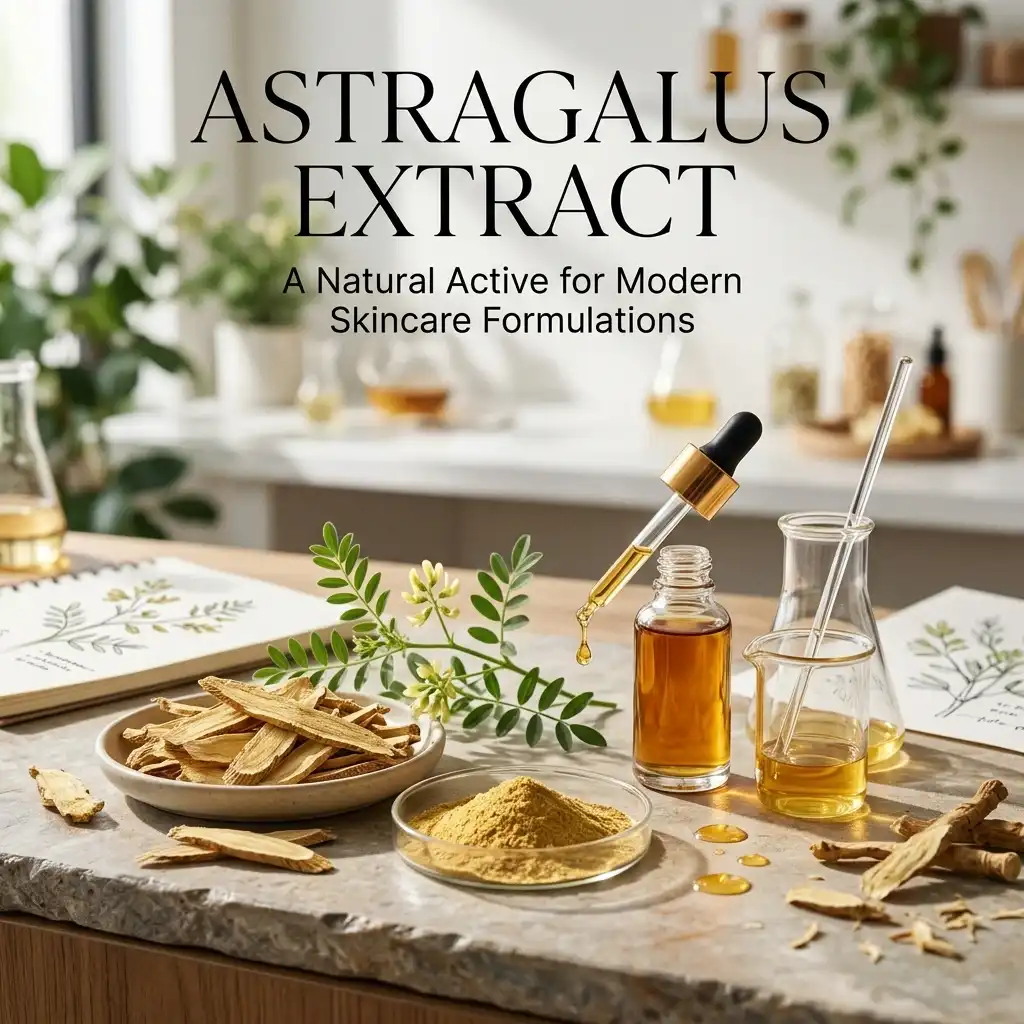 This article provides a comprehensive guide to Astragalus Extract (Astragalus membranaceus Fisch. Bunge) as a plant-based active for modern skincare formulations. Derived from the plant's roots and rich in polysaccharides (20%–70%), astragalosides (1%–10% by HPLC), flavonoids, and saponins, the extract supports skin barrier function, fights oxidative stress, and modulates inflammatory pathways. The article explains the roles of each compound class: polysaccharides for hydration and natural moisturizing factor support, astragalosides—particularly astragaloside IV—for antioxidant defense and telomere-linked anti-aging positioning, and flavonoids for skin immunity modulation in sensitive, acne-prone, or stressed skin. Scientific evidence is detailed, including in vitro studies showing polysaccharides reduce UV-induced oxidative damage in keratinocytes and animal models demonstrating improved skin hydration, elasticity, and reduced transepidermal water loss at 1%–5% extract concentrations, along with comparisons to ginseng and echinacea and safety data confirming tolerability at topical concentrations. Formulation guidance covers powder versus liquid extract selection, concentration ranges (1%–5%, with up to 10% astragaloside IV for anti-aging claims), thermal stability up to 80°C, and emulsification or encapsulation needs for high-purity astragaloside IV. A procurement section outlines quality benchmarks (ISO9001, FSSC22000, Kosher, Halal, HPTLC fingerprint, HPLC and UV-Vis verification, heavy metal limits, pesticide residue compliance per EC 396/2005, microbiological limits), supply chain transparency from Shanxi, Inner Mongolia, and Gansu with 67+ hectares of plantations, and documentation support with 25 kg drum packaging and 10-day lead times. Future trends include advanced delivery systems (liposomes and nanoparticles), synergistic botanical pairings with niacinamide, hyaluronic acid, and bakuchiol, and market positioning for OEMs and distributors in clean beauty channels, along with a FAQ covering topical safety, ginseng comparison, certifications, packaging, and clear serum compatibility.VIEW MORE

Isatis Root Extract in Cleansing Products: Applications for Natural Soap and Personal Care Brands
This article provides a practical guide to Isatis Root Extract (Isatis tinctoria) as a science-backed botanical active for natural soaps and personal care products, paired with complementary Horsetail Extract Powder (Equisetum arvense). Isatis Root Extract contains indican, alkaloids, and polyphenolic flavonoids that deliver antibacterial, anti-inflammatory, and antioxidant activity by disrupting bacterial cell membranes and inhibiting inflammatory cytokine production. The article explains how it differs from Horsetail Extract—Isatis Root addresses surface bacteria and inflammation, while Horsetail supports skin structure through silica-driven collagen processes—and why the two work synergistically rather than competitively. Formulation guidance covers recommended concentration ranges (0.5%–2.0% in rinse-off products), compatibility with cold-processed soap bases, glycerin melt-and-pour systems, and Castile-style liquid cleansers, pH optimization at 5.0–7.0 to protect acid-sensitive alkaloids, and a combined dosage strategy of 0.5% Isatis Root plus 0.3%–0.8% Horsetail Extract. A procurement section outlines certification requirements (ISO9001, FSSC22000, Kosher, Halal, USDA/EU Organic), standardization documentation for active markers, traceability from raw material to finished extract, and technical file availability (COA, MSDS, non-GMO, allergen statements, regulatory dossiers). Horsetail Extract Powder specifications are detailed, including silica ≥5% (silicic acid ≥7% in high-grade extract), 95% pass 80 mesh, moisture ≤5.0%, water solubility, 25 kg drum packaging, and 10-day lead times. Market trends show plant-based personal care growth (USD 6.7 billion by 2023), extraction technology advances with HPLC-MS and ICP-MS testing, and sustainability and ethical sourcing as brand assets, along with a FAQ covering Isatis Root uses, Horsetail benefits, certification requirements, formula compatibility, and minimum order quantities.VIEW MORE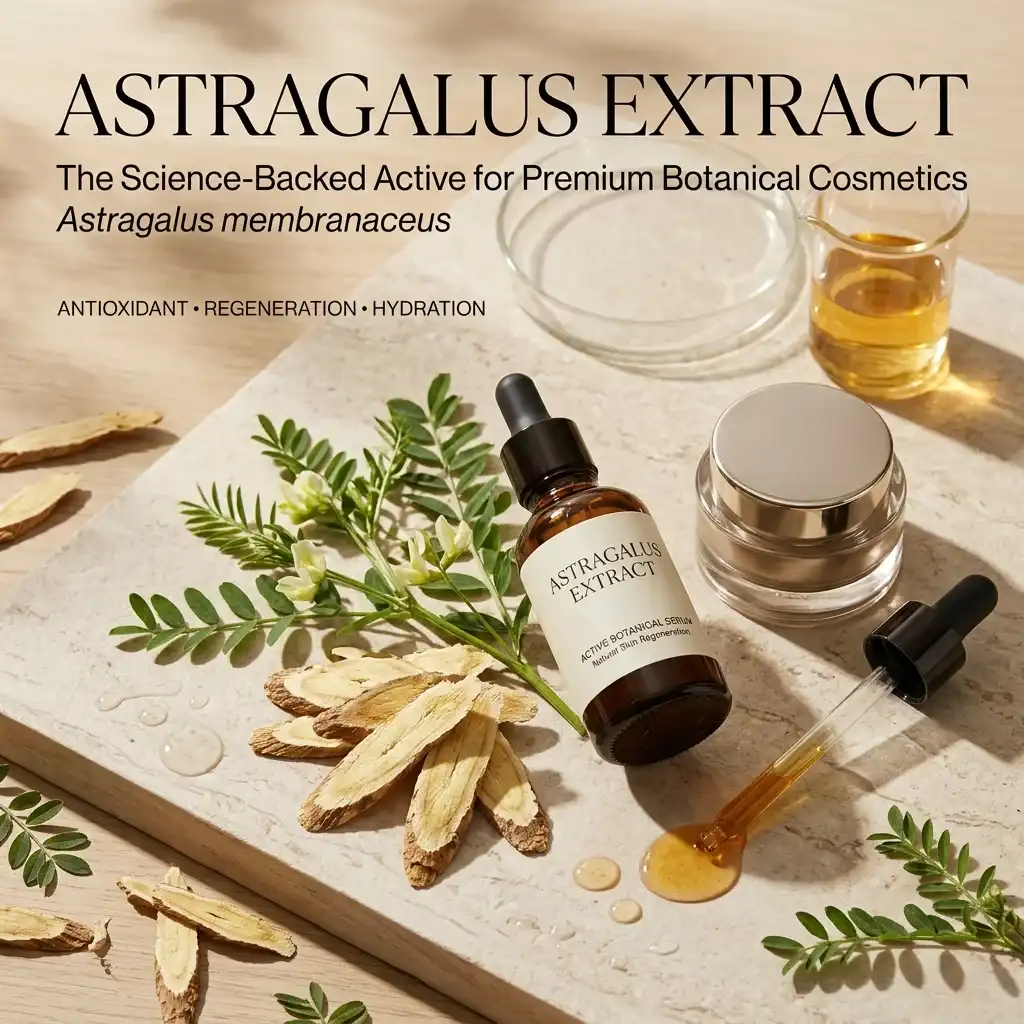
Astragalus extract in Premium Botanical Cosmetics: Applications for Serums, Creams, and Masks
This article provides a comprehensive guide to Astragalus Extract (Astragalus membranaceus Fisch. Bunge) as a science-backed active for premium botanical cosmetics. Derived from dried roots sourced from Shanxi, Inner Mongolia, and Gansu, the extract delivers polysaccharides and astragalosides (particularly Astragaloside IV) with documented antioxidant, anti-inflammatory, skin regeneration, and hydration benefits. The article explains the bioactive mechanisms—reducing oxidative stress markers, inhibiting inflammatory cytokine production, activating collagen synthesis and repair pathways, and forming a water-binding film in the stratum corneum—and details application formats across serums, creams, and facial masks with recommended concentrations (0.5%–3% in finished formulas, 1%–5% astragalosides HPLC-verified). A sourcing section compares standardized powder versus liquid extract, outlines certification requirements (ISO9001, FSSC22000, Kosher, Halal, COA with HPLC-verified actives, non-GMO and allergen statements), and contrasts astragalus with ginseng and echinacea in terms of sensitization risk and thermal stability up to 80°C. Procurement strategies cover vendor evaluation beyond price, vertical integration with 67+ hectares of plantation bases and 3,000+ metric ton annual processing capacity, 25 kg drum packaging with 10-day lead times, free samples, and technical documentation for FDA and EU EC 1223/2009 market access. Safety and regulatory compliance are addressed, including INCI naming, US and EU frameworks, and quality control through HPLC astragaloside standardization, UV-Vis polysaccharide verification, and ICH Q1A stability testing, along with a FAQ covering sensitive skin suitability, concentration ranges, compatibility with synthetic ingredients, and required documentation.VIEW MORE
Bulk Poria Cocos Extract Powder for Cosmetic and Ingredient Manufacturers
This article provides a comprehensive guide to Poria Cocos Extract Powder (Wolfiporia cocos) as a functional mushroom ingredient for skincare, supplement, and functional food applications. Derived from the dried sclerotium and standardized to 50%–90% polysaccharide content—specifically beta-pachyman—this off-white to light beige fine powder (95% pass 80 mesh, moisture and ash ≤5.0%) contains pachyman, pachymic acid, lanostane-type triterpenes, and ergosterol. The article explains its bioactive mechanisms, including film-forming moisturization through fungal polysaccharides and anti-inflammatory support through pachymic acid, and traces its transition from over 2,000 years of traditional Chinese medicine use to modern water-based serums, sheet masks, and emulsions. A procurement section outlines quality parameters, COA verification, comparison with reishi and lion's mane extracts, powder versus encapsulated formats, supplier identification in a fragmented market, raw material traceability, 10-day lead times, 25 kg drum packaging with storage below 25°C and 60% humidity for 24-month shelf life, and documentation for global market access. Formulation guidance covers recommended use levels (0.5%–5.0% w/w), cold-process compatibility, stability below 80°C, TEWL improvement when paired with hyaluronic acid or ceramides, and synergistic exploration with niacinamide. Supplier selection covers certification verification (ISO9001, FSSC22000, Kosher, Halal), third-party audits, OEM and private label options with adjustable polysaccharide standardization from 50% to 90%, and technical support from a 42-person R&D team. A FAQ addresses differentiation from reishi and lion's mane, purity verification, and topical safety.VIEW MORE.webp "Bulk Astraglus Extract for Cosmetic Manufacturers Seeking Standardized Botanical Ingredients")
Bulk Astraglus Extract for Cosmetic Manufacturers Seeking Standardized Botanical Ingredients
This article provides a comprehensive guide to Astragalus Root Extract (Astragalus membranaceus Fisch. Bunge) as a standardized botanical active for cosmetic formulations. Sourced from Shanxi, Inner Mongolia, and Gansu, this light yellow to pale brown fine powder delivers standardized astragalosides (1–10% by HPLC) and polysaccharides in a water-soluble, 95% pass 80 mesh format with moisture and ash ≤5.0%. The article explains its cosmetic benefits, including antioxidant and anti-aging activity through astragaloside IV telomerase activation in collagen-producing skin cells and polyphenolic free radical scavenging, anti-inflammatory and skin-barrier support through cytokine pathway modulation and film-forming humectant action, and skin-level immune modulation with potential influence on innate and humoral immune responses. A sourcing section explains why standardization matters—active compound levels can swing 30%–50% between unstandardized raw material lots—and details physical specifications, documentation requirements (COA, MSDS, non-GMO declaration, allergen statement, organic certificates) for FDA cosmetic registrations, EU CPNP notifications, and retailer audits. Supplier evaluation covers certifications (ISO9001, FSSC22000, Kosher, Halal), vertical integration with 67+ hectares of cultivation land and 3,000+ metric ton annual processing capacity, and customization of astragaloside IV levels (5%–20%) and polysaccharide concentrations (20%–70%) with OEM and private label services. Formulation guidance addresses recommended concentration ranges (0.5%–5.0%, with 0.5%–1.0% for leave-on products), synergistic pairings with hyaluronic acid and vitamin C, and stability considerations including chelating agents, pH 5.0–7.0, and nitrogen-flushed packaging for up to 24 months shelf life. Future trends include certified organic and traceable ingredient demand, extraction technology advances through membrane filtration and supercritical fluid-assisted processes, and digital traceability for procurement efficiency.VIEW MORE
Hops Extract for Functional Beverages: Formulation Considerations for Bulk Ingredient Buyers
This article provides a comprehensive guide to Hop-derived extracts (Humulus lupulus L.) as a science-backed botanical ingredient for functional beverage lines targeting relaxation, sleep, and antioxidant support. The extract contains alpha-acids (humulones), beta-acids (lupulones), and xanthohumol—a prenylated flavonoid recognized as one of the strongest antioxidants found in hops. The article explains the GABA-A receptor mechanism behind hops' sedative effects, citing Journal of Sleep Research findings that hops supplementation reduced time to fall asleep, and covers regulatory and safety baselines including recommended dosage of 100–400 mg per serving and required documentation (COA, MSDS, non-GMO and allergen statements). Key formulation considerations are detailed, including powder versus liquid form selection, water solubility advantages over lipophilic CO₂ extracts, ingredient compatibility with valerian root, L-theanine, and passionflower, and stability factors such as pH 3.5–5.0 and processing temperatures below 80°C. A procurement section outlines supplier certification requirements (ISO9001, FSSC22000, Kosher, Halal, USDA/EU Organic), pricing and hidden cost considerations, value-added services including OEM and private labeling, and comparative insights on extract versus raw hops and organic versus non-organic trade-offs. Implementation guidance covers dosing protocols (200–300 mg per 12 oz. batch), bitterness and flavor management, and batch consistency through HPLC-verified alpha-acid testing, along with a FAQ addressing dosage, side effects, and supplier quality verification.VIEW MORE
Bulk Orange Extract Powder for Beverage, Food, and Natural Ingredient Manufacturers
This article provides a practical guide to sourcing bulk Orange Extract Powder and pairing it with Poria Cocos Extract Powder for functional food, beverage, and supplement development. Orange extract powder, produced by spray-drying concentrated orange juice or peel extract, delivers vitamin C, natural carotenoids, and flavonoids including hesperidin and naringenin in a water-soluble, shelf-stable format suitable for ready-to-mix powders, sports drinks, functional teas, snacks, confectionery, baked goods, vitamin C tablets, immune formulas, and antioxidant blends. The article covers key bioactive compounds and research support, then introduces Poria Cocos Extract Powder (Wolfiporia cocos) standardized to 50%–90% beta-pachyman polysaccharides, explaining its fine off-white powder format, mild neutral taste compared with reishi and cordyceps, traditional associations with digestive and sleep support, and formulation flexibility in beverages and supplements. A sourcing section outlines supplier evaluation criteria including certifications (ISO9001, FSSC22000, HACCP, Kosher, Halal), standardization transparency, supply chain depth, OEM and customization options, minimum order quantities (25 kg drums), and US import and logistics considerations with full regulatory dossiers. Guidance on reading COAs and quality documentation, using B2B feedback, and building long-term supplier relationships is also provided. The article explains beverage formulation strategy combining orange extract and Poria Cocos polysaccharides, US regulatory positioning for structure/function claims, and market trends showing functional beverage growth above 8% annually driven by immunity and digestive health demand. A FAQ addresses storage life, Poria Cocos safety, authenticity verification, required certifications for US imports, and free sample availability.VIEW MORE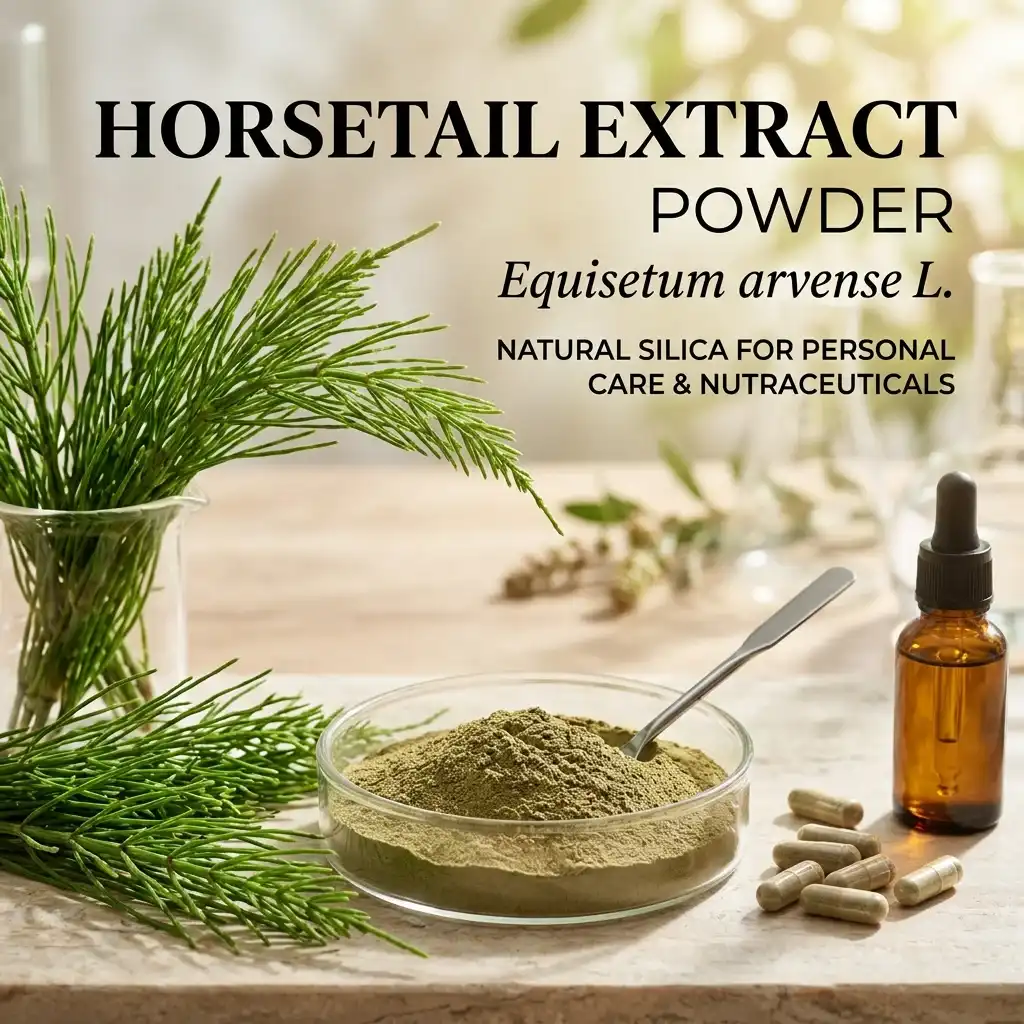
Bulk Horsetail Extract Powder for Personal Care Manufacturing and Botanical Formulations
This article provides a comprehensive guide to Horsetail Extract Powder (Equisetum arvense L.) as a silica-rich botanical ingredient for personal care and nutraceutical manufacturing. Derived from the aerial stems of the plant and standardized to organic silica ≥7% as silicic acid, this greenish-brown fine powder delivers plant-based silicon that converts to orthosilicic acid in the body—the only bioavailable form of silicon—supporting collagen synthesis, bone mineralization, and scalp health. The article explains what makes Equisetum arvense extract unique, including its naturally occurring organic silicic acid framework versus synthetic silicon dioxide, and details key bioactive compounds such as isoquercitrin flavonoids alongside silica. Primary application areas covered include anti-hair loss shampoos and scalp serums, anti-aging creams and skin tonics, bone health supplements paired with calcium and vitamin D3, and hair-skin-nails beauty-from-within complexes. A quality evaluation section compares standardized extract (silica ≥5% or ≥7%) with raw botanical powder (approximately 1% silica), and outlines critical parameters including silica content, moisture ≤5.0%, ash ≤5.0%, 95% pass 80 mesh, heavy metal limits (Pb <3.0 ppm, As <2.0 ppm, Hg <0.1 ppm), and water-soluble grades. Supplier selection guidance covers vertical integration with 67+ hectares of cultivation grounds and 3,000+ metric ton annual processing capacity, certifications (ISO9001, FSSC22000, Kosher, Halal), technical documentation (MSDS, non-GMO, allergen statements, organic certificates), and R&D depth with 10:1 and 20:1 extract ratios. Practical formulation guidance addresses dosage ranges (300–900 mg daily for hair or bone health products, 0.5%–3.0% for topical toners and scalp treatments), storage in 25 kg drums with double-layer polyethylene bags below 25°C, and safety considerations including thiaminase elimination through heat extraction. A FAQ covers standardized versus raw powder differences, required certifications, cosmetic safety, extract ratios, and minimum order details.VIEW MORE This article provides a comprehensive guide to Soy Extract Powder derived from non-GMO Glycine max (L.) Merr. seeds as a flexible, science-backed ingredient for protein-rich food and beverage formulations. Standardized to 20%–80% isoflavones (HPLC-verified), this pale yellow to off-white fine powder delivers bioactive phytoestrogens—genistein, daidzein, and glycitein—alongside plant protein and soy saponins, with water solubility, 95% pass 80 mesh, and thermal stability. The article explains what distinguishes soy extract from soy flour, soy protein isolate, isolated isoflavones, and soy lecithin, and details research-backed health benefits including menopausal symptom relief, LDL cholesterol reduction, and bone mineral density support. Functional properties for food and beverage formulation are covered, including stability in protein drinks, nutrition bars, and powdered supplement blends. A procurement section outlines certification requirements (ISO9001, FSSC22000, Kosher, Halal), non-GMO and organic considerations with PCR testing, order size and logistics (25 kg drums, 10-day lead times, free samples), and supplier reliability through vertical integration with 67 million m² of cultivation land and 3,000+ ton annual processing capacity. Practical formulation tips address recommended usage levels (40–80 mg total isoflavones daily, approximately 100–200 mg soy extract powder at 40% isoflavone level), solubility and flavor in liquid applications, and processing stability. Future trends include plant-based protein market growth (USD 35.5 billion in 2023, 9.5% annual growth), sustainability and traceability standards, and regulatory shifts shaping ingredient sourcing decisions.VIEW MORE
.webp "Can Astragalus Extract Support Antioxidant and Skin-Conditioning Cosmetic Formulations?")
Can Astragalus Extract Support Antioxidant and Skin-Conditioning Cosmetic Formulations?
This article provides a comprehensive guide to Astragalus Extract (Astragalus membranaceus) as a science-backed botanical ingredient for modern cosmetic formulations. Derived from dried roots sourced from Shanxi, Inner Mongolia, and Gansu, the extract contains astragalus polysaccharides (20%–70%) for skin barrier integrity and moisture retention, astragaloside IV (5%–20%) for antioxidant and anti-inflammatory activity, and flavonoids and saponins for free radical scavenging. The article explains its antioxidant mechanism in stabilizing reactive oxygen species, synergy with vitamin C and green tea polyphenols, and formulation stability at 0.5%–2.0% concentration for creams and serums. Skin-conditioning benefits are detailed, including hydration through film-forming humectant action, transepidermal water loss reduction, and anti-irritation effects suitable for sensitive skin and post-procedure recovery products. Formulation flexibility across sheet masks, gel masks, serums, ampoules, creams, and moisturizers is covered. A procurement section outlines supplier evaluation criteria (HPLC batch verification, Kosher, Halal, ISO9001, FSSC22000, heavy metal and pesticide limits, microbiological safety), supply chain reliability with 67+ hectares of owned plantation land and 3,000+ ton annual extraction capacity, 25 kg drum packaging with 10-day lead times, and OEM and private label capabilities supported by a 42-person R&D team. Safety profile, US and EU regulatory landscape, and market growth signals (plant extract cosmetics reaching USD 4.2 billion by 2028) are also addressed, along with a FAQ covering skin type suitability, comparison with ginseng extract, shelf life, and Halal/Kosher compliance.VIEW MORE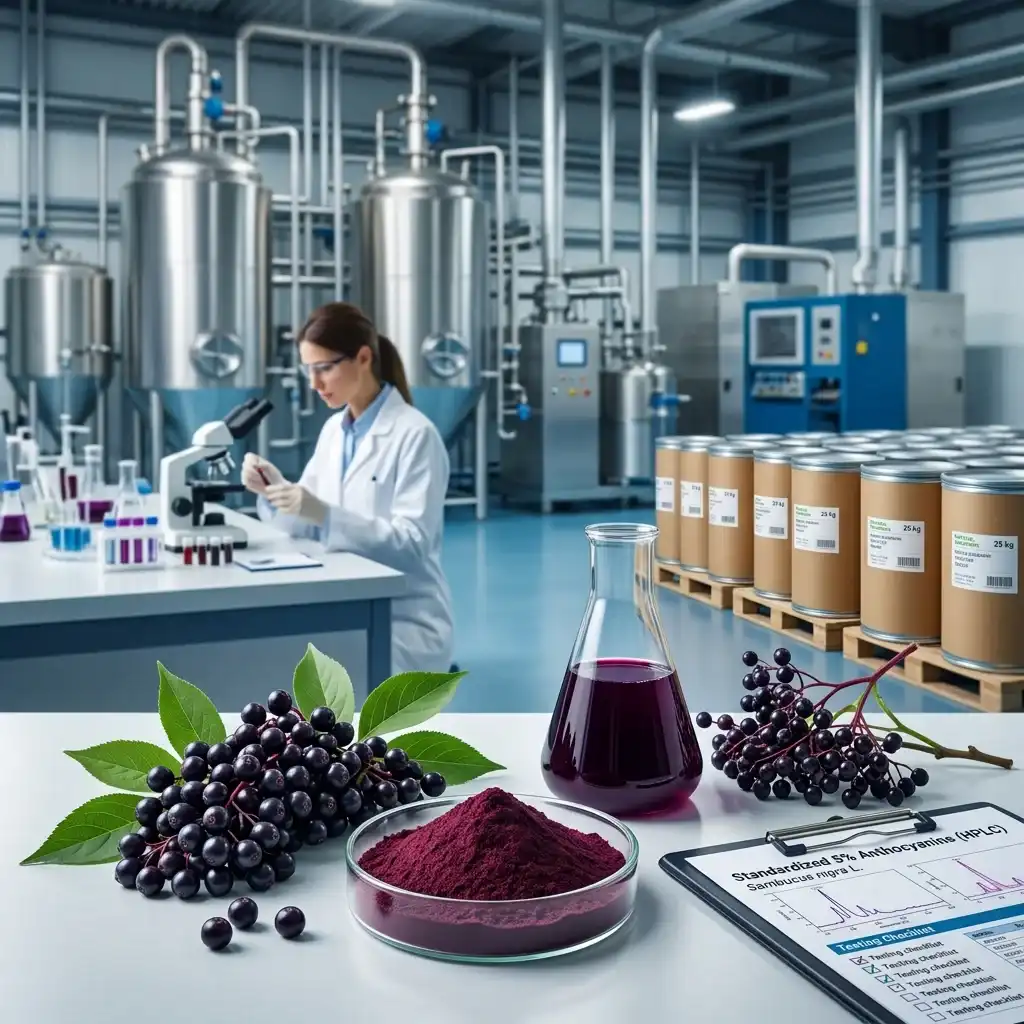
Bulk Black Elderberry Extract Supports Consistent Ingredient Supply
This article provides a comprehensive guide to securing a steady supply of Black Elderberry Extract (Sambucus nigra L.) for supplement brands, functional food manufacturers, and ingredient distributors operating at scale. Standardized to ≥5% anthocyanins (HPLC-verified), this deep purple botanical powder delivers clinically relevant antiviral and antioxidant activity, with market demand exceeding USD 1.3 billion in 2023 and projected growth above 8% annually to 2030. The article examines the challenges buyers face—seasonal harvest variability affecting anthocyanin content, adulteration risks with black rice, mulberry, or grape skin extract, and regulatory documentation gaps—and explains how vertically integrated sourcing, scalable extraction infrastructure, and flexible specifications (4:1 and 10:1 ratio extracts plus 5%–15% anthocyanin-standardized grades) support consistent ingredient supply. A supplier selection section outlines certification requirements (ISO9001, FSSC22000, Kosher, Halal, USDA/EU Organic), analytical testing depth (HPLC for cyanidin-3-glucoside and cyanidin-3-sambubioside, ICP-MS heavy metal screening, 500+ pesticide residue analysis, microbial testing, and GC solvent residue verification per USP <467>), and lead time and packaging reliability (25 kg drums, 10-day lead times, double-layered PE bags, storage below 25°C and 60% humidity). A FAQ addresses anthocyanin specifications, liquid beverage performance, ratio versus standardized extract differences, and required documentation, along with World-Way's vertically integrated supply capabilities and free sample availability.VIEW MORE
- 1
- 2
- 3
- 4
- 5