
Poria Cocos Extract Powder for Functional Beverages and Botanical Powder Blends
Nov 3, 2026
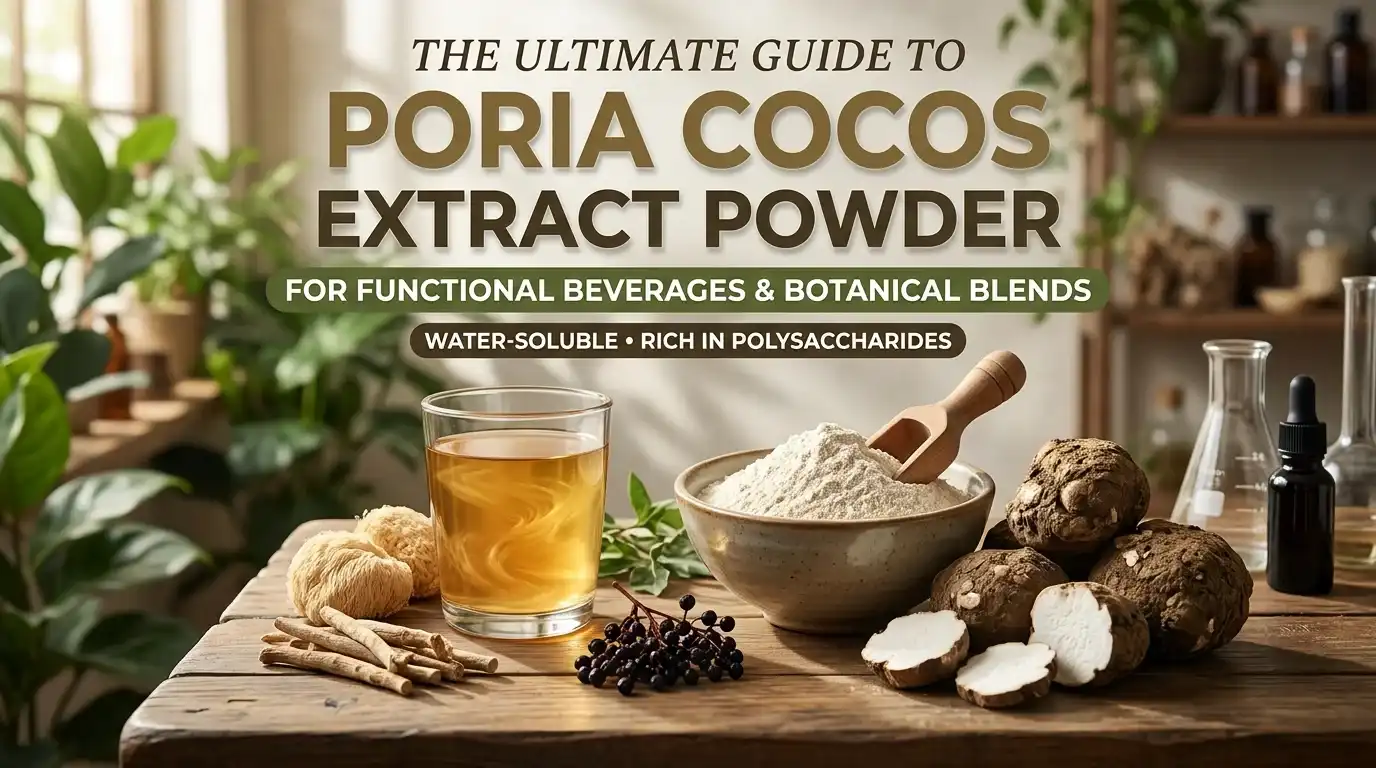
Poria Cocos Extract Powder is gaining serious traction in the functional beverage and botanical blend market—and for good reason. Derived from the dried sclerotium of Wolfiporia cocos, this water-soluble mushroom extract delivers standardized beta-glucan polysaccharides (50%–90% pachyman) alongside triterpenes and ergosterol. Unlike raw Poria biomass, the extracted powder format removes indigestible chitin, concentrates bioactive compounds, and integrates cleanly into aqueous formulations. For R&D teams and procurement managers building immune, digestive, or sleep-support products, this ingredient checks the boxes on efficacy, solubility, and supply consistency.
Understanding Poria Cocos Extract Powder: Properties, Benefits, and Uses
Botanical Source and Extraction Process
The first part of World-Way's Poria extract is high-quality dried sclerotia that come from limited farming areas in China. Advanced hydro-ethanolic extraction and spray-drying turn raw fungus into a fine, off-white to light brown powder that usually goes through 80 mesh. With this method, the amount of β-pachyman polysaccharide that is active stays the same, between 50% and 90%. The moisture level stays at ≤5% and the ash level stays at ≤5%. These are important factors when you have a lot of goods going through a production line.
Key Bioactive Compounds and Their Functions
Some of the most important chemicals in the extract are ergosterol, β-pachyman polysaccharides, pachymic acid, and lanostane-type triterpenes. Each of these is meant to do a certain thing. Delta-pachyman polysaccharides are what make the immunomodulatory activity happen, and pachymic acid helps with the anti-inflammatory and water-restricting effects. Vitamin D2 is made with the help of ergosterol. Research published in Carbohydrate Polymers (2019) confirmed that poria polysaccharides trigger immune responses through macrophages. In the US market, this gives scientific weight to label claims that help the immune system.
Application Benefits Aligned with Wellness Trends
Poria Cocos Extract Powder is gaining attention as a botanical ingredient for functional products targeting brain health, sleep support, and digestive wellness, all of which are growing consumer markets. In Traditional Chinese Medicine, Poria cocos has traditionally been used to support spleen function and calm the mind, while modern research is exploring its polysaccharides and their potential relationship with stress responses and gut microbial balance. For manufacturers developing functional beverages, Poria Cocos Extract Powder offers an opportunity to combine traditional botanical ingredients with contemporary product concepts. Market forecasts have also highlighted the commercial potential of functional drinks, although brands should verify the original source, market definition, and forecast year before using specific figures such as a projected U.S. market value exceeding $250 billion by 2028. When formulating beverages with Poria Cocos Extract Powder, developers should evaluate the polysaccharide content, solubility, taste, and stability of the selected extract. The appropriate dosage depends on the extract specification, intended product, available safety evidence, and applicable regulations; a range of 200 mg to 1,000 mg per serving should therefore be treated as a formulation starting point only when supported by relevant product data. By selecting standardized Poria Cocos Extract Powder and conducting suitable formulation testing, brands can develop functional beverage concepts that connect traditional botanical heritage with modern consumer preferences. Reliable specifications and batch consistency are also essential when scaling up Poria Cocos Extract Powder for commercial production and international distribution.
Quality Comparison and Selection Criteria for Poria Cocos Extract Powder
Purity, Potency, and Certification Standards
That being said, not all mushroom extracts are the same. Purchasing managers should ask for HPLC-verified polysaccharide content instead of just a colorimetric assay if they are looking at different sources. Colorimetric assays can give wrong results if non-fungal sugars are added. A part of World-Way has been approved for ISO 9001, FSSC22000, Kosher, and Halal. This is okay to bring into North America, the Middle East, and Europe all at the same time. The FSSC22000 standard, which has been evaluated by GFSI, is especially useful for use with food and drinks that are regularly checked for food safety.
Powder vs. Capsule Format for Beverage Applications
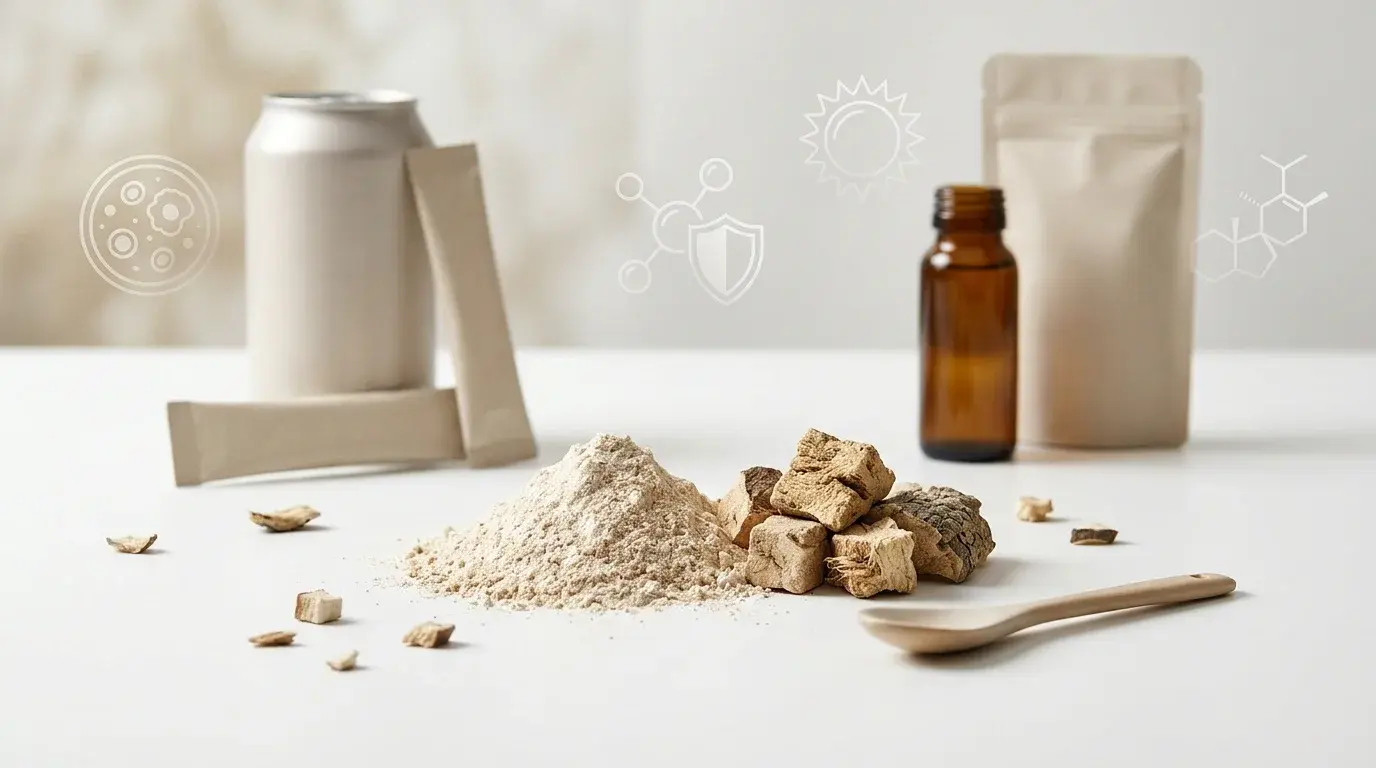
It is clear that the powder form is better than the pre-encapsulated form for mixing into drinks or botanical sachet mixes. When grades dissolve easily in both hot and cold water, they don't leave behind any sediment that you can see. This is important for drinks that are already made. But capsules need time to break down, so they can't be added to a drink right away. Standard polysaccharide grades (50%–90%) and concentrated ratio extracts (10:1 and 20:1) are both available from World-Way. This means that formulators can put any label claims they want on a product without having to change the whole grid. If you want to buy Poria Cocos mushroom extract from a reliable source, they should give you all the technical information you need without you having to ask for it. Before you agree to buy something, you should look over these papers and skills:
Supplier Evaluation: What Separates Reliable Partners from Risk
Certificate of Analysis (COA): HPLC data for each batch that confirms the amount of polysaccharides, moisture, ash, heavy metals, and microbes present.- In the US, food and supplement labels need to have an MSDS and an allergen statement.
- Certificate of Analysis (COA): Batch-specific HPLC data confirming polysaccharide content, moisture, ash, heavy metals, and microbial counts.
- MSDS and allergen statement: Mandatory for US supplement and food labeling compliance.
- Non-GMO declaration: Required by major US natural product retailers.
- Regulatory dossier support: Essential for NDI notifications and EU Novel Food assessments.
These rules about paperwork will keep you legal in every market where you sell. Compliance risks can happen when suppliers can't make these when they're needed, which can push back product launches by a lot.
Integrating Poria Cocos Extract Powder into Functional Beverage Formulations
Synergistic Botanical Pairings
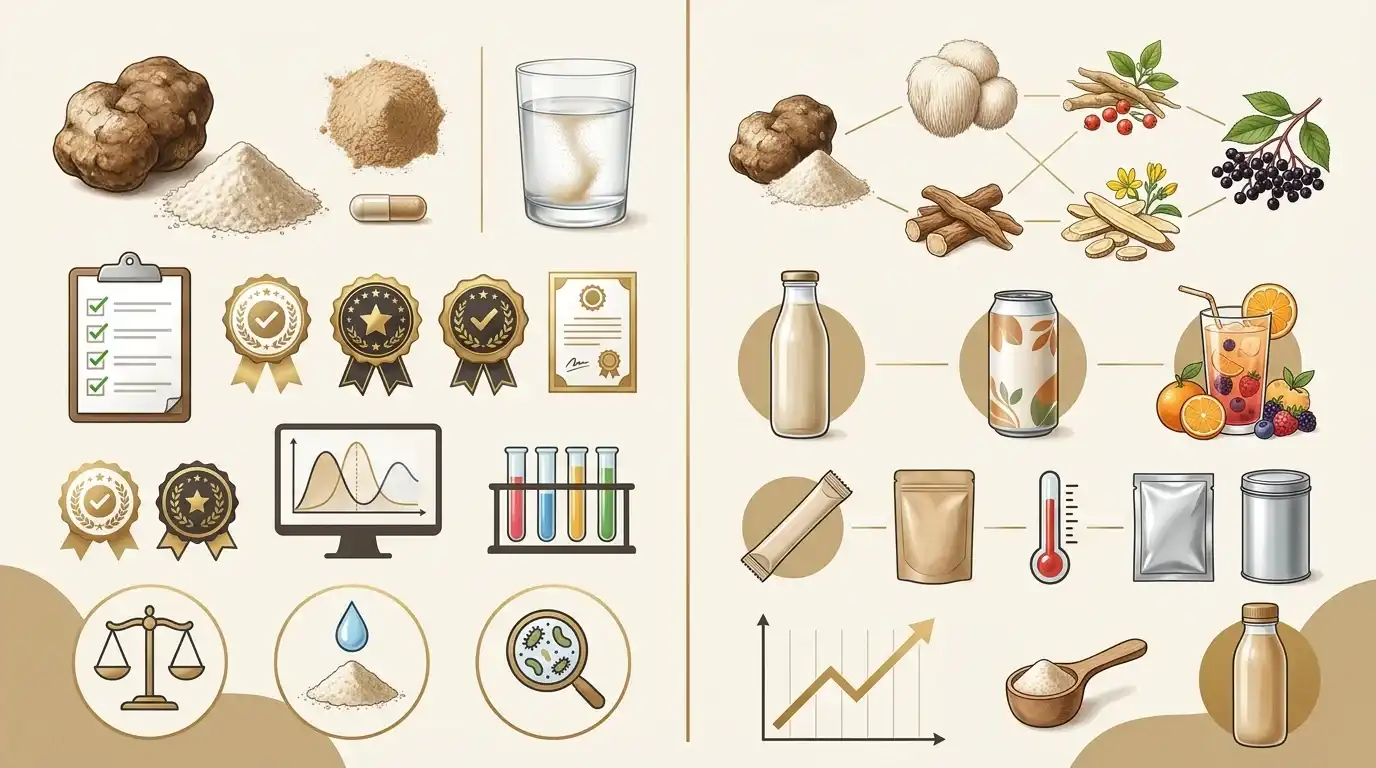
Poria Cocos Extract Powder can be incorporated into botanical blends alongside other adaptogens and plant-based ingredients to create functional product concepts for different consumer needs. When combined with Ashwagandha or Lion’s Mane mushroom extract, Poria Cocos Extract Powder may be explored in formulations designed for relaxation, sleep wellness, or cognitive health, although the effects of each combination should be validated through appropriate research. Blending Poria Cocos Extract Powder with Astragalus or Elderberry can also help manufacturers develop products positioned around general wellness and immune health, provided that all related marketing claims are supported by evidence. Another potential advantage of Poria Cocos Extract Powder is its relatively mild, earthy flavor, which may complement fruit-based beverage formulations without overpowering their main flavor profile. For beverage developers, the sensory characteristics of Poria Cocos Extract Powder can make it easier to balance botanical ingredients with fruit flavors and potentially reduce the need for additional flavor-masking agents. However, the actual taste and solubility depend on the extract’s concentration, processing method, and formulation. By testing Poria Cocos Extract Powder alongside compatible botanicals, sweeteners, and flavor systems, manufacturers can optimize taste, stability, and ingredient compatibility while developing appealing functional beverages and other plant-based products.
Stability and Formulation Considerations
Spray-dried Poria extract from World-Way stays stable at high temperatures, so it can be used to make hot drinks up to 85°C. Its water-soluble grade mixes with regular water without having to be stirred, which is good for powder sticks and quick drink mixes that are used one time. So that the carbohydrates stay whole, finished mixes should be kept below 25°C and below 60% humidity for 24 months. H2O caking can't happen if the goods are packed in nitrogen-flushed canisters or foil sachets that keep out moisture.
Real-World Formulation Outcomes
There are a number of functional drink companies in the US that have added Poria polysaccharide powder to their daily health drink lines. People like the drinks, they say, because they help them sleep and digest food. SPINS retail tracking data from 2023 shows that the "mushroom-based functional beverage" market segment grew 34% from one year to the next. But brand names are still being kept secret. The people who make the mixes say that 300–500 mg of water-soluble Poria extract meets the needs of most customers in terms of taste and usefulness.
Streamlined Procurement Process: Sourcing, Ordering, and Logistics
Supplier Qualification and Sample Evaluation
Before placing a bulk order, request a free sample of Poria Cocos Extract Powder from World-Way to evaluate its suitability for your formulation. The reported lead time is approximately 10 days, allowing procurement teams to assess Poria Cocos Extract Powder before committing to a larger purchase. During sample qualification, compare the material against your internal specifications by testing polysaccharide content using an appropriate validated method, checking particle size and moisture content, and evaluating solubility in the intended beverage or product matrix. These checks help confirm whether Poria Cocos Extract Powder meets your quality requirements and performs consistently under your planned processing conditions. Conducting these evaluations before scaling up production can reduce the risk of costly reformulation, material waste, and unexpected manufacturing delays. World-Way reportedly supplies Poria Cocos Extract Powder in 25 kg drums, a packaging format that can support both pilot-scale trials and larger commercial production runs. The supplier also reports FSSC 22000 certification for its factory, which buyers should verify by reviewing the current certificate and its scope. For businesses sourcing Poria Cocos Extract Powder on an ongoing basis, reviewing batch-specific certificates of analysis and establishing clear acceptance criteria can help monitor consistency between deliveries. By combining sample testing, documented quality checks, and verified supplier credentials, manufacturers can qualify Poria Cocos Extract Powder more confidently and build a more reliable procurement process.
Pricing Models and Volume Procurement
Poria polysaccharide extract costs are not set in stone. They depend on how much is bought and how much information is needed. Higher levels of polysaccharides (70–90%) cost more than 50% grades that are just getting started. If you sign a contract for a year with a fixed price, your costs won't change when the cost of seasonal raw materials changes, which is a real worry when you use botanical ingredients. The supply chain for World-Way's products includes over 1,000 mu of controlled crop base production and finished extract production. This lets the company keep prices stable without lowering the quality of its goods. People who buy more than 500 kg can talk about different levels of discounts.
Order Management and After-Sales Support
World-Way has set up shipping lines in North America, Europe, Southeast Asia, and the Middle East. It ships to more than 60 countries. You get a full COA, MSDS, and any other legal paperwork you need to get your goods through customs in the market you want to reach with every package. There is technical support after the sale from World-Way's 42-person R&D and application team. There are people who know both the science and the market who can answer your questions about preparation.

Conclusion
Poria Cocos Extract Powder has an established place in the botanical ingredient market, attracting interest from manufacturers developing products for digestive wellness, sleep support, and general health. With growing consumer interest in plant-based ingredients, Poria Cocos Extract Powder offers B2B buyers an opportunity to develop functional foods, beverages, supplements, and other botanical formulations. However, product development should be guided by credible scientific evidence, appropriate safety assessments, and marketing claims that comply with relevant regulations. For procurement teams sourcing Poria Cocos Extract Powder, the key considerations include supply reliability, complete technical documentation, consistent quality specifications, and flexibility in product customization. Working with an integrated supplier that manages cultivation and manufacturing can improve raw material traceability and simplify supply chain oversight. When evaluating Poria Cocos Extract Powder, buyers should also review batch-specific certificates of analysis, contaminant testing results, and relevant certification records to verify that the ingredient meets their requirements. A supplier with verified ISO 9001, FSSC 22000, Kosher, and Halal certifications may help streamline supplier qualification, provided the certificates are current and cover the relevant facilities or products. Access to free samples and a reported lead time of approximately 10 days can further help manufacturers evaluate Poria Cocos Extract Powder before placing bulk orders. By choosing a supplier that offers transparent documentation, dependable production capacity, and suitable customization options, businesses can source Poria Cocos Extract Powder more confidently and support a smoother transition from formulation trials to commercial production.
FAQ
What polysaccharide concentration should I use in a functional beverage?
50% to 70% polysaccharide grades work well for claims that they help the immune system and digestion at 300 to 500 mg per serving. It works best for high-end brands that make stronger claims on their labels when the concentration grade is between 80% and 90%. It is always important to compare your goal dose to the exact carbohydrate content of the COA. This has been shown by HPLC.
How does Poria cocos extract differ from Reishi mushroom extract?
Both come from medicinal fungi, but they have different major benefits. A lot more research has been done on reishi and how it can help the liver and help it deal with different situations. It stands out from other mushroom products on the market because it has more beta-glucan polysaccharides and works better to help with sleep, gut health, and immune function.
Is the extract safe for large-scale food manufacturing?
Yes. FSSC22000 and HACCP rules say that World-Way's extract is safe for food because it doesn't have any more heavy metals, pesticide residues, or microbes than what is allowed. It is naturally gluten-free and is made in a facility that checks for allergens. It has been shown that standard dosage ranges used in food applications don't have any bad effects on healthy adults when used at normal formulation levels.
What documentation comes with a bulk order?
With every bulk shipment, there is a COA, an MSDS, an allergen statement, a non-GMO statement, and any Kosher and Halal certificates that are needed. Certain governmental dossiers can be yours if you ask for them.
Request Your Free Sample from World-Way — Trusted Poria Cocos Extract Powder Supplier
World-Way Biotech has sold powerful plant extracts to over 500 companies in over 60 countries since 1992. Our production is FSSC22000 certified, and we have our own plantation bases where we make Poria Cocos Extract Powder. We also have a research and development team that works on just that. A 10-day lead time, free samples, and full technical documentation are all things we offer. You can ask for a sample and talk about setting up a yearly supply deal by emailing info@world-way.net or visiting worldwaybio.com.
References
1. Carbohydrate Polymers — "Immunomodulatory effects of Poria cocos polysaccharides on macrophage activation," 2019.
2. Journal of Ethnopharmacology — "Traditional uses and pharmacological properties of Wolfiporia cocos," 2017.
3. Food & Function — "Beta-glucans from medicinal fungi: extraction, purification, and bioactivity," 2020.
4. Phytomedicine — "Triterpenes from Poria cocos: anti-inflammatory and diuretic activity review," 2018.
5. Grand View Research — Functional Beverage Market Size, Share & Trends Analysis Report, 2023.
6. SPINS Retail Tracking — Mushroom-Based Functional Beverage Category Performance Report, 2023.
Standard Disclaimer (DSHEA):
These statements have not been evaluated by the Food and Drug Administration.
This product is not intended to diagnose, treat, cure, or prevent any disease.

Send Inquiry
You may like