
How Can Manufacturers Select Reliable Black Elderberry Extract Suppliers for Large Scale Production?
Sep 24, 2026
Selecting a reliable Black Elderberry Extract supplier for large-scale production requires evaluating five core areas: standardized anthocyanin potency, third-party quality certifications, supply chain traceability, documentation completeness, and production scalability. Manufacturers sourcing Sambucus nigra L. extract at volume cannot afford inconsistent batch quality or regulatory gaps. The right supplier combines proven extraction technology, audit-ready compliance records, and the capacity to fulfill recurring bulk orders without compromising active compound integrity. This guide walks through each selection criterion in practical terms so procurement teams can make confident, risk-managed sourcing decisions.
Understanding the Core Challenges in Sourcing Black Elderberry Extract
It's not as easy as just placing a bigger order to get more elderberry extract. When rates go up, a number of structural risks show up, and buying teams need to be aware of them before they stop production.
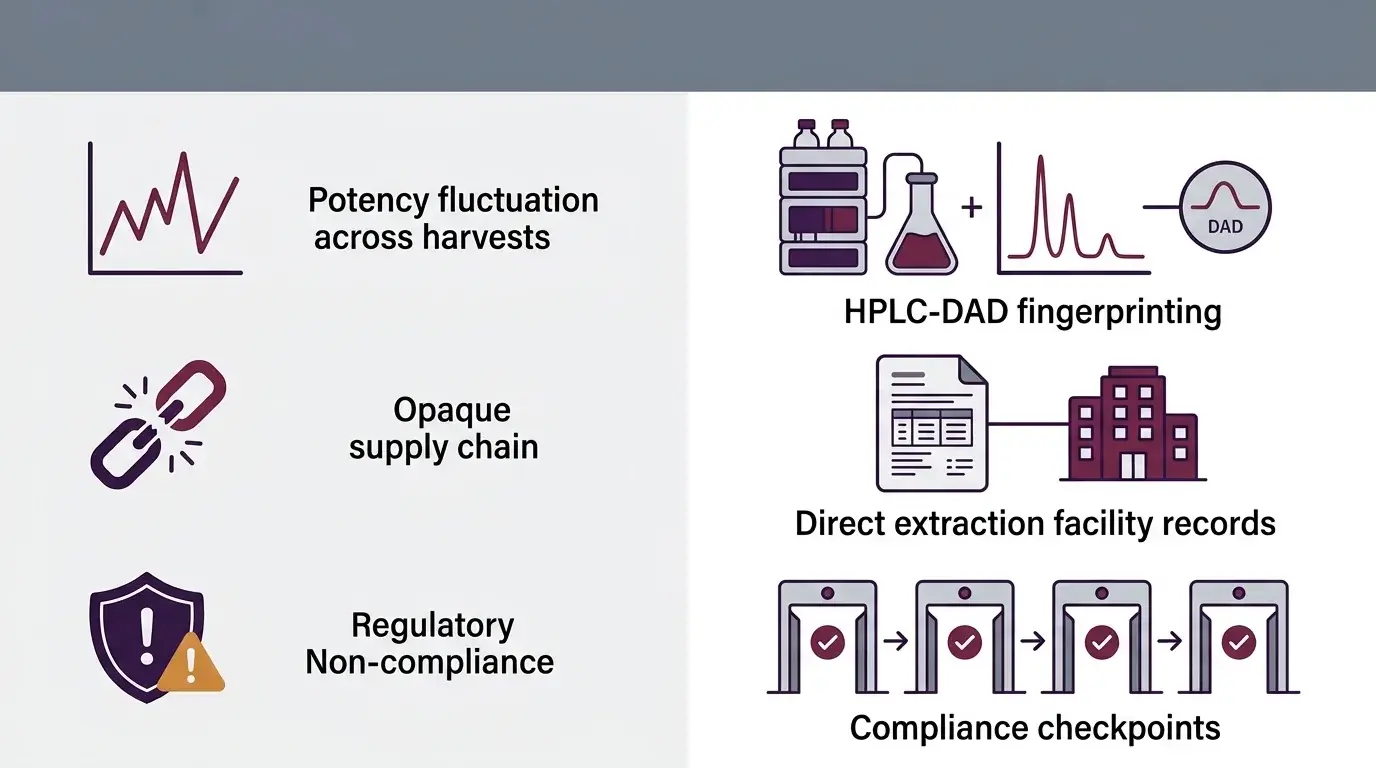
Inconsistent Potency Across Harvests
The amount of anthocyanin in Sambucus nigra food changes depending on where it grows, when it is picked, and how it is handled after it is picked. A supplier who doesn't have control over their own plantations can't promise that batch 12 will have the same cyanidin-3-glucoside profile as batch 1. The standard way to check for authenticity and rule out tampering with black rice or mulberry extract is to use HPLC-DAD fingerprinting.
Opaque Supply Chain Practices
A lot of wholesalers sell extracts without saying where the original extract came from. This leaves gaps in traceability that don't meet the requirements for import documentation in the EU and the US. Not just a broker's certificate is enough for manufacturers; they need to be able to see the extraction facility's records directly.
Regulatory Non-Compliance Risks
If an allergen statement is missing or a Halal license has passed, it can slow down customs processing and cause a product hold. Adding compliance checkpoints to the original process of qualifying a provider keeps expensive problems from happening later on.
Key Criteria for Evaluating Elderberry Extract Suppliers
The evaluation framework is easier to understand once you know what the risks are. Quality systems, product flexibility, and supply continuity should all be taken into account when a supplier is qualified.
Quality Certifications That Matter
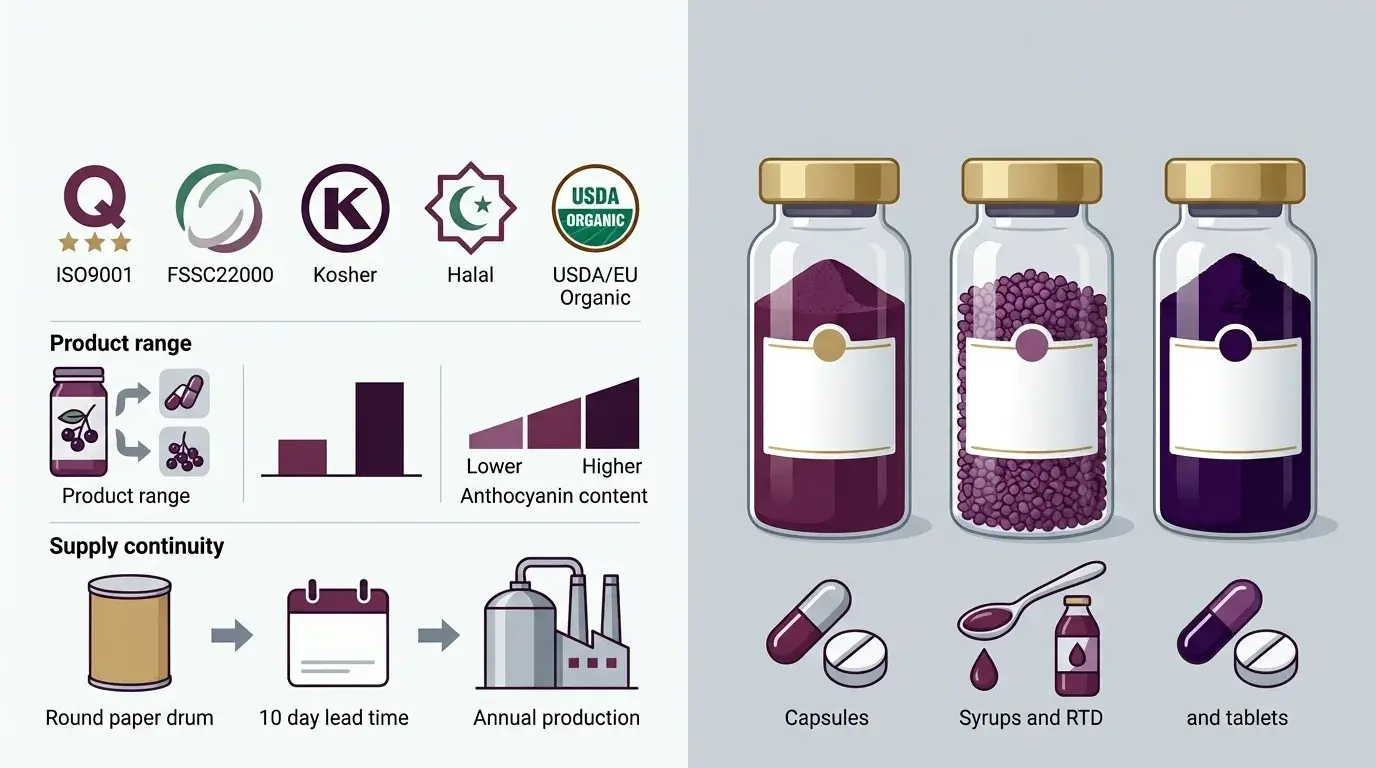
This is what you should look for: ISO9001, FSSC22000, Kosher, and Halal. As a whole, these four licenses cover control of food safety, tracking, and religious dietary compliance. All of these are important for getting into US and foreign markets. Getting USDA Organic or EU Organic approval makes clean-label products stand out more.
Product Range and Standardization Options
A good elderberry extract provider should give more than one level of standardization. For example, World-Way's Sambucus nigra extract comes in 4:1 and 10:1 ratios, as well as grades that are standardized for 5% to 15% anthocyanin with Black Elderberry Extract. In this range, formulators can find the right extract for the final product, whether it's a useful drink, an immune-supporting candy, or a cough syrup.
Supply Continuity and Lead Time Transparency
Buyers should make sure that a supplier's wait time is reasonable and always kept. The usual wait time for World-Way's elderberry powder, which comes in 25 kg drums, is 10 days. Suppliers who own plantation bases and have an annual processing capacity of more than 3,000 metric tons have a much lower risk of supply disruption than suppliers who only buy raw materials on the spot market.
Comparing Extract Forms for Procurement Decisions
Choosing the correct physical form of elderberry extract can change how well a product works, how long it lasts on the shelf, and how much it costs per unit. The buying and R&D teams should talk about the pros and cons of each style together.
Here are the main types of extracts that producers usually look at:
- Standardized dry powder (e.g., anthocyanins ≥5%): Deep purple fine powder, 95% passing 80 mesh, moisture ≤5.0%, ash ≤5.0%. Cold-water soluble, compatible with encapsulation, tablet pressing, and sachet formats. Stable in acidic environments (pH 3.0–4.5), making it well-suited for liquid formulations including syrups and RTD beverages.
- Ratio extracts (4:1 or 10:1): These indicate the mass of raw material concentrated into the final extract. They offer cost efficiency for applications where a guaranteed active percentage is less critical than overall polyphenol loading.
- High-potency standardized grades (10%–15% anthocyanins): Required for clinical-grade supplements and pharmaceutical intermediate applications where dosing precision is non-negotiable.
High-potency uniform grades (10%–15% anthocyanins) are needed for clinical-grade supplements and pharmaceutical intermediate uses where exact dosing is a must.
Procurement Strategies for Large-Scale Elderberry Orders
It takes more than just negotiating prices to do strategic buying at scale. Long-term procurement performance is affected by contract structure, documentation standards, and how well suppliers are integrated.
Establish MOQ Clarity and Batch Flexibility
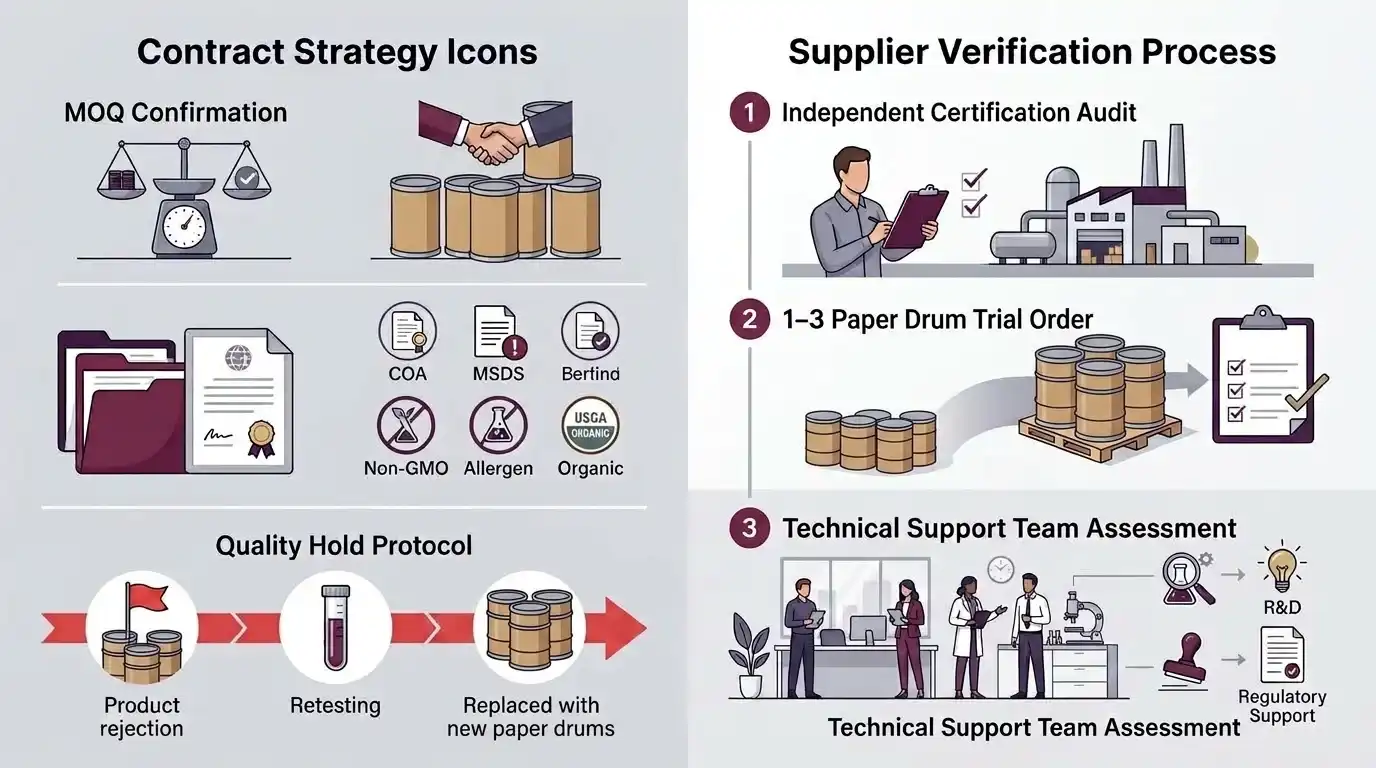
Before you sign a supply agreement, make sure you get written confirmation of the minimum order quantities. World-Way's standard unit of packaging is 25 kg/drum, and they offer free samples of Black Elderberry Extract so that customers can try them out before they commit. Knowing that batch sizes can be changed lets production planners match up order cycles with production plans.
Negotiate Documentation as a Contract Deliverable
A Certificate of Analysis (COA), Material Safety Data Sheet (MSDS), Non-GMO declaration, allergen statement, and any relevant organic documents should be sent with every big order. Regulatory dossiers for EU Novel Food or US FDA reporting support should be part of the technical package, not something that is added on at the last minute and needs to be asked for separately.
Build in Quality Hold Protocols
In the supply contract, spell out what will happen if a batch doesn't meet the requirements. Clear dates for refusal, retesting, and replacement keep production plans safe and stop arguments. Suppliers who can do their own HPLC-MS, GC-MS, and ICP-MS testing can answer batch queries faster than those who have to rely on outside labs.
How to Verify Supplier Reliability Before Finalizing a Purchase?
Structured proof is what builds trust in a company, not just their good name. The steps below protect big promises to buy things.
Request and Audit Certifications Independently
Don't believe what certification copies say at face value. Check ISO9001, FSSC22000, Kosher, and Halal certificates against the public records of the organizations that issued them. Independent checks often find certificates that have expired or don't match the correct location.
Use Trial Orders to Test Operational Reliability
A test order of one to three drums checks more than just the quality of the goods; it also checks how fast orders are processed, how well they are packed, how accurate the paperwork is, and how quickly the company responds to customer communications. If a supplier can handle a small order with care, they are much more likely to be able to handle a 500 kg monthly contract without any problems.
Assess the Technical Support Team
Suppliers who support research and development (R&D) can answer questions about formulation, give stable data, and help with regulatory applications. The 42-person technical team at World-Way is led by a founding professor who has written more than 100 academic papers. Five of the team members have doctoral degrees. This wealth of scientific information is useful when there is a question about product development in the middle of the launch cycle.
Conclusion
To get a lot of Sambucus nigra extract, you need a structured way to evaluate suppliers. Standardization of potency, the honesty of certifications, the ability to track products through the supply chain, and technical documentation are not just nice-to-haves; they are necessary to protect product quality and market access. Suppliers whose operations are fully integrated, from growing the plants to packaging the Black Elderberry Extract, always have fewer supply problems and better regulatory paperwork. These operational traits directly lead to lower sourcing risk and faster product launch timelines for procurement teams that handle yearly contracts and legal requirements that vary by market.
FAQ
What anthocyanin specification is standard for commercial elderberry extract?
A normal elderberry extract with anthocyanin levels between 5% and 15% by HPLC is used in most business-to-business projects. Anthocyanin levels of at least 5% are required by World-Way's product specifications. Higher-potency types of up to 15% are offered for use in pharmaceuticals and clinical supplements.
How do I confirm an elderberry extract supplier's botanical authenticity?
Ask for HPLC-DAD identification data and proof of DNA barcoding. These tests tell the difference between real Sambucus nigra and common fillers like mulberry or black rice extract, which are sometimes added to fake samples to make the anthocyanin levels higher.
What certifications should a qualified elderberry powder supplier hold?
ISO9001, FSSC22000, Kosher, and Halal are the bare minimum. For supplements sold in the US, GMP compliance and heavy metal testing (using ICP-MS) that is in line with Prop 65 are also expected. Clean-label product lines must have organic certification from the USDA or the EU.
What is a realistic lead time for bulk elderberry extract orders?
Standard large orders should be filled within 10–15 business days by a provider with enough production capacity. The usual wait time for World-Way's 25 kg/drum blackberry powder is 10 days.
Is free sampling available before a large purchase commitment?
Yes, World-Way does offer free samples so that you can test them out before placing a large order. This is a normal part of doing business with other businesses.
Partner with World-Way for Scalable Black Elderberry Extract Supply
Since 1992, world-way biotech inc. has sold plant products to more than 500 businesses in 60 different countries. World-Way is a trusted Black Elderberry Extract manufacturer that offers elderberry powder that is ISO9001 and FSSC22000 approved. They offer free samples, a 10-day wait time, and all the necessary regulatory paperwork. You can email our technology team at info@world-way.net or go to worldwaybio.com to ask for a sample and talk about your source needs.
References
1. Hawkins, J. et al. "Black elderberry (Sambucus nigra) supplementation effectively treats upper respiratory symptoms." Complementary Medicine Research, 2019.
2. Tiralongo, E., Wee, S. S., & Lea, R. A. "Elderberry supplementation reduces cold duration and symptoms in air travelers." Nutrients, 2016.
3. Charlebois, S. "Supply chain transparency and food safety compliance in botanical ingredient sourcing." Journal of Food Science and Technology, 2020.
4. United States Pharmacopeia. USP–NF Dietary Supplement Monographs: Elderberry. USP, 2022.
5. European Medicines Agency. Assessment Report on Sambucus nigra L., Fructus. EMA/HMPC, 2014.
6. International Organization for Standardization. ISO 22000:2018 Food Safety Management Systems — Requirements. ISO, 2018.
Standard Disclaimer (DSHEA):
These statements have not been evaluated by the Food and Drug Administration.
This product is not intended to diagnose, treat, cure, or prevent any disease.

Send Inquiry
You may like