
Beet Root Powder Supports Natural Color Enhancement and Functional Ingredient Supply for Beverage Manufacturers
Sep 23, 2026
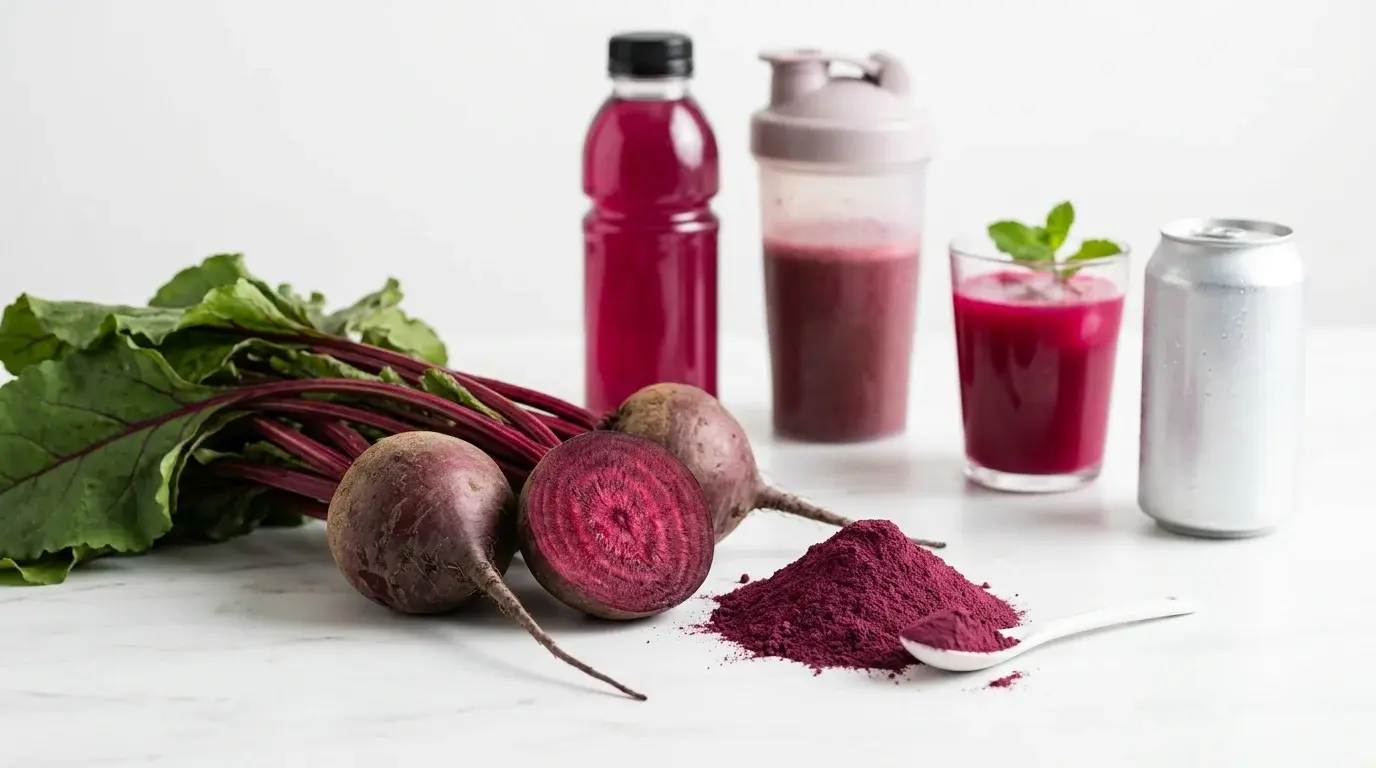
Beet root powder, derived from Beta vulgaris L., has become a go-to ingredient for beverage manufacturers seeking both natural color and functional performance in a single source. Standardized to betalains ≥1%, this purple-red fine powder delivers dietary nitrates, betacyanin, and betaine in a fully water-soluble format. At World-Way Biotech, we source premium beets from Heilongjiang, Inner Mongolia, and Xinjiang to ensure consistent potency. Whether your team is developing sports drinks, functional juices, or clean-label wellness beverages, beet root powder offers a scientifically grounded, regulatory-compliant solution worth considering.
Understanding Beet Root Powder and Its Functional Benefits for Beverage Manufacturers
What Makes This Ingredient Different From Raw Beet?
Beet Root Powder solves problems that fresh fruit can't. The amount of nitrate in raw beets changes depending on the soil and the time of year. That difference is gone with a dried, standardized powder. Formulators can be sure that every batch of World-Way's product will have the same amount of moisture (≤5.0%) and ash (≤5.0%) because it is milled to 95% pass 80 mesh.
Key Active Compounds and What They Do
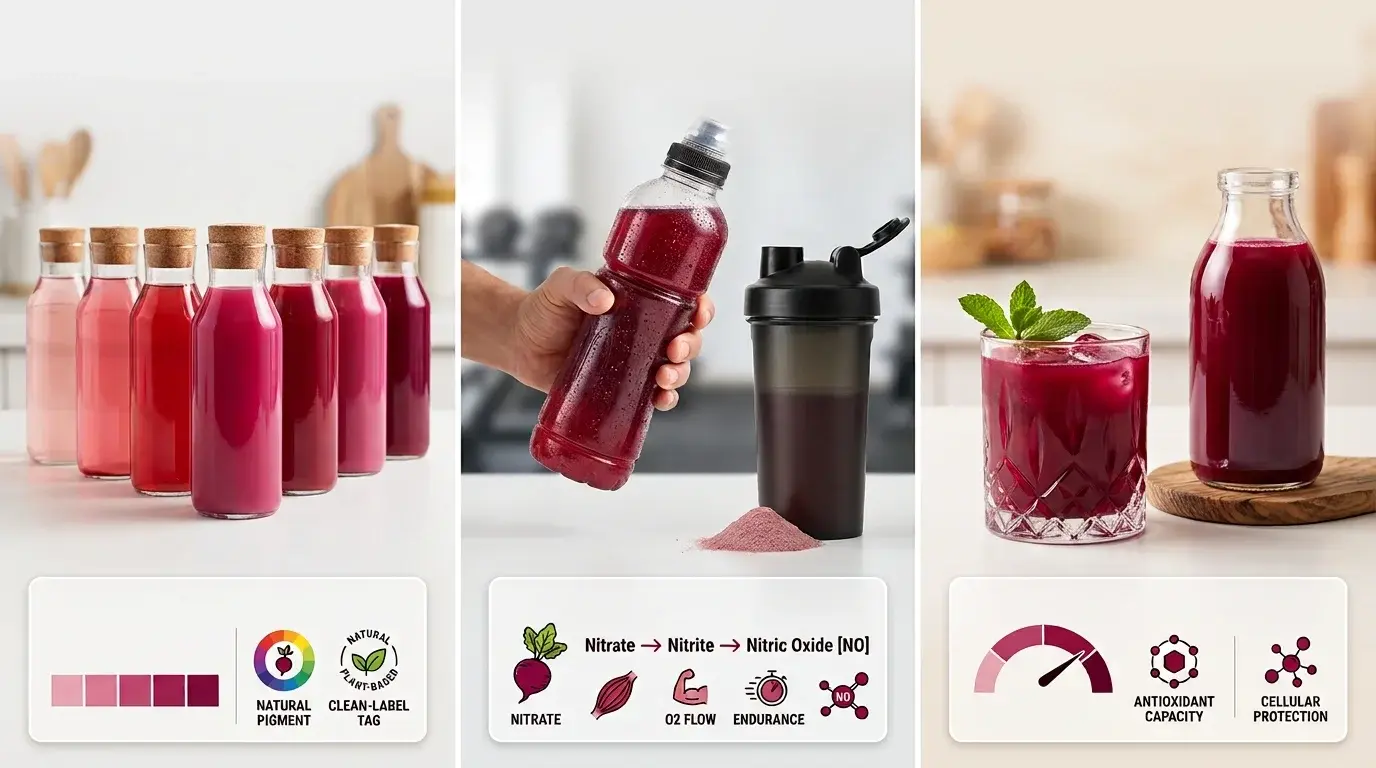
Betaine, betacyanin, and natural artificial nitrates are the three main chemicals that make beet juice work. Betaine helps the liver work well and keeps the heart healthy. The natural red color is betacyanin, which also has antioxidant properties. Nitrates in food are changed into nitric oxide in the body, which helps blood vessels widen and oxygen get to working muscles better during exercise. All three can be mixed with watery beverages without the need for extra processing help because they are completely water-soluble.
Choosing the Right Beet Format for Your Application
World-Way offers four types: raw root powder, betaine extract, juice powder, and betacyanin isolation. Because it dissolves better and has a 3–5 times higher nitrate content, juice powder is perfect for pre-workout and endurance drinks. In bulk food and functional food uses, raw root powder is cheaper and keeps more of the fiber that the roots contain. When you know which format fits your product's nutritional goals, you can avoid having to pay extra to change the recipe later on in the development process.
Natural Color Enhancement: Why Beet Root Powder Is a Preferred Choice?
The Problem With Synthetic Colorants in Beverages
Synthetic dyes like Red 40 are getting more and more attention from both lawmakers and customers. Several places now require warning labels on products that contain certain artificial colors, which puts global beverage brands at risk of not following the rules. Betalain-based colorants from beet root don't cause any of these problems. They are a clean-label option that is accepted by regulators in the US, EU, and big Asian markets.
Color Stability Across Different Beverage Matrices
Betalains work best at pH 4–6, which is around the same level as most acidic drinks, like juices, sparkling water boosters, and sports drinks. It's important to keep an eye on the formulation pH when the pH level goes above 7.0 because the color changes to a yellow-brown tone. World-Way's betacyanin fraction from Beet Root Powder is standardized to make sure that colors stay the same. This lets R&D teams predict the final color accurately across both cold-fill and hot-fill production lines.
Clean Label Positioning in North American Markets
People in the US are reading chemical labels more and more before they buy something. A report from 2023 SPINS found that 73% of supplement buyers would rather buy products with natural ingredients that they can recognize. Beet Root Powder is a good choice for this because it is listed on labels as a familiar food ingredient instead of a chemical compound name. This stance supports higher prices and more stores carrying the product, especially in natural and specialty food stores where customers make decisions based on how clear the ingredients are.
Functional Ingredient Supply: Supporting Beverage Innovation and Consumer Health Trends
Nitrate-Nitric Oxide Pathway and Athletic Performance
A 2019 study in the Journal of the International Society of Sports Nutrition confirmed that adding nitrates to your diet lowered the amount of oxygen your body used while you were exercising at a moderate level. Nitrates from beets work through the nitrate-nitrite-nitric oxide pathway, which makes blood vessels bigger and muscles work better. For drink makers who want to make sports nutrition drinks, this route gives them a scientifically proven way to back up performance claims without using artificial chemicals.
Cardiovascular and Antioxidant Benefits
Standardized beet extract has other uses besides improving exercise performance. It can also help with heart health and protecting cells from damage. Researchers have looked into how betaine helps keep homocysteine levels healthy, which is a sign of heart health. On the other hand, betacyanin's oxygen radical absorption capacity (ORAC) makes enriched drinks more antioxidant-rich. These features work together to make it possible for a single ingredient to support multiple product benefit claims at the same time.
Dosage Guidance and Quality Control
Depending on the claim (color vs. functional performance), the effective dose in drinks is usually between 500 mg and 3,000 mg per serve. Geosmin, which has an earthy taste, can be tasted at higher doses. Premium processing, such as vacuum drying during the production of juice powder, lowers the amount of geosmin for a better taste. Before releasing a batch, World-Way tests it in-house using HPLC-MS and ICP-MS to check for heavy metals, active concentration, and solvent residues.
Comparing Beet Root Powder Options: Making Informed Procurement Decisions
Organic vs. Conventional: Cost and Compliance Tradeoffs
USA It costs 20–40% more for organic and EU-certified organic beet powder than regular types. Labeling rights and market access make this cost worth it for companies that want to make approved organic products. For common functional drinks, a high-quality regular powder that is certified by ISO9001 and FSSC22000 usually meets all governmental and customer needs without making it harder to find.
Evaluating Supplier Credentials Before Committing
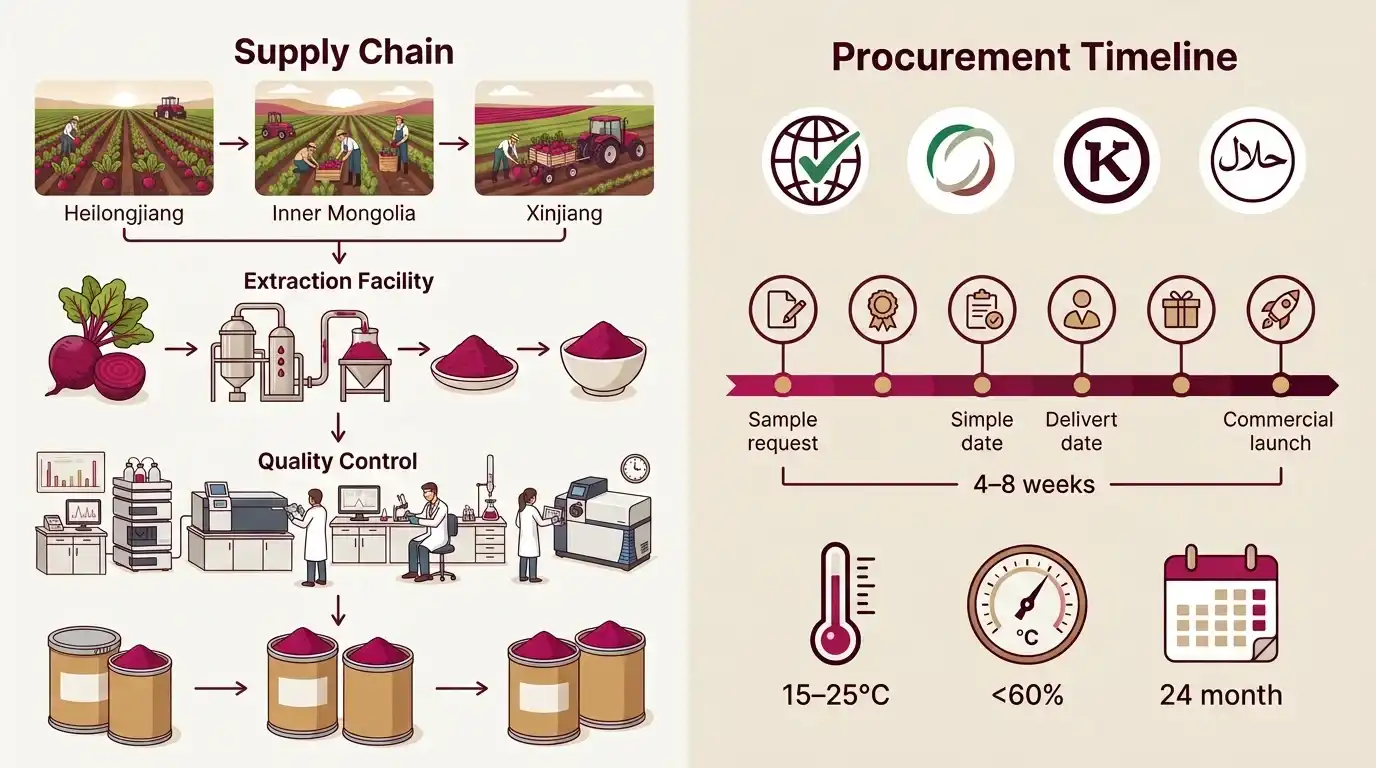
Before making large orders, procurement teams should check vendors against four main criteria: the validity of the certificates (Kosher, Halal, FSSC22000, ISO9001), the availability of batch-level COAs, claims of non-GMO and allergens, and the dependability of lead times. All four are offered by World-Way. The standard lead time is 10 days, and the product is packed in 25 kg drums of Beet Root Powder. This type of supply can be used for both small-scale testing and full commercial production runs without any problems with logistics.
Total Cost of Ownership Beyond Unit Price
The unit price of an ingredient is only one part of the math used in buying. It costs a lot of money to redo formulations when specifications aren't clear, to fail audits when regulation papers are missing, and to delay production when lead times aren't reliable. If you choose a supplier that owns the plantations from which the beets come all the way through to the finished powder, these downstream risks are lower, and you can be more sure of when your product will be available.
How to Source and Integrate High-Quality Beet Root Powder in Your Beverage Product Line?
Technical Documentation That Global Markets Require
To sell their drinks in the US and EU, companies need to have a full technical dossier for each item. This includes a COA, an MSDS, a non-GMO declaration, an allergen declaration, and any relevant organic licenses. This paperwork is made by World-Way for every order as a standard. Regulatory affairs teams don't have to ask the seller for more paperwork in order to use these papers for label compliance, submissions from store buyers, and third-party checks.
Storage and Shelf Life Management
Beet Root Powder can hold water. When you store something wrong, it clumps, loses its color, and loses its potency. The best way to store things is in sealed, moisture-barrier containers like aluminum-lined drums, at temperatures between 15 and 25°C, and with a relative humidity below 60%. The 25 kg sealed drums made by World-Way are made to handle these situations during foreign shipping. If you keep the powder the right way, it will stay in good shape for 24 months from the date it was made.
From Sample Request to Commercial Launch
From the first inquiry to the first business release, the normal procurement timeline is 4 to 8 weeks. This includes evaluating samples (1–2 weeks), getting internal approval and a purchase order (1–2 weeks), and making the product and shipping it (2–3 weeks). World-Way's free sample program lets R&D teams test new formulations before committing to large orders. Because the standard lead time is 10 days, production schedules can still be changed as launch dates get closer.
Conclusion
Beet Root Powder is a clean-label ingredient that can be used to make drinks because it gives them natural color and has been shown to have health benefits. When procurement and R&D teams are sourcing on a large scale, the most important things are consistent specifications, full legal paperwork, and a reliable supply chain. All of these requirements are met by World-Way's beet extract, which is standardized to betalains ≥1%, certified under ISO9001, FSSC22000, Kosher, and Halal, and sourced from the best growing regions in China. It is a good idea to use this ingredient when color performance and functional efficacy need to work together in the same formula.
FAQ
Is beet root powder safe to use in commercially sold beverages?
Yes. Beet root powder derived from Beta vulgaris L. holds GRAS (Generally Recognized as Safe) status under US FDA guidelines for food use. It is also accepted as a natural food colorant in the EU. Standard use levels in beverages (500–3,000 mg per serving) fall well within established safety thresholds.
What is the difference between beet root powder and beet juice powder?
Beet juice powder is produced by spray-drying or freeze-drying expressed beet juice, resulting in 3–5x higher nitrate concentration and instant cold-water solubility. Beet root powder retains dietary fiber and costs less per kilogram, making it better suited to bulk food applications where fiber content and cost efficiency are priorities.
How do I confirm there are no synthetic dyes in the product?
Suppliers should provide thin-layer chromatography (TLC) or HPLC testing data to confirm pigment identity. World-Way uses HPLC-MS analysis to verify that betacyanin content is naturally derived and free from synthetic colorant adulteration, with results documented in every batch COA.
Can beet extract work in carbonated or high-acid beverage formats?
Yes. Betalains are stable at pH 4–6, which covers most carbonated soft drinks, flavored sparkling water, and acidic sports beverages. Stability testing against your specific formulation matrix is recommended before launch to confirm color retention under processing and shelf conditions.
Partner With World-Way for Premium Beet Root Powder Supply
Since 1992, World-Way Biotech has sold plant extracts to more than 500 businesses in 60 different countries. You can get free samples of our beet extract (Beta vulgaris L., betalains ≥1%, approved by ISO9001, FSSC22000, Kosher, and Halal) which ships in 25 kg drums and takes 10 days to arrive. We support your product launch from specification to delivery as a reputable manufacturer of Beet Root Powder with owned plantation sourcing and full regulatory documentation. To get samples right away, email our team at info@world-way.net or go to worldwaybio.com.
References
1. Domínguez, R., et al. "Effects of Beetroot Juice Supplementation on Cardiorespiratory Endurance in Athletes." Nutrients, 2017.
2. Clifford, T., et al. "The Potential Benefits of Red Beetroot Supplementation in Health and Disease." Nutrients, 2015.
3. Jones, A.M. "Dietary Nitrate Supplementation and Exercise Performance." Sports Medicine, 2014.
4. Lechner, J.F., and Stoner, G.D. "Red Beetroot and Betalains as Cancer Chemopreventative Agents." Molecules, 2019.
5. SPINS. "Natural and Specialty Channel Consumer Trends: Clean Label Preferences." SPINS Wellness Industry Report, 2023.
6. Wruss, J., et al. "Compositional Characteristics of Commercial Beetroot Products and Beetroot Juice Prepared from Seven Beetroot Varieties." Journal of Food Composition and Analysis, 2015.
Standard Disclaimer (DSHEA):
These statements have not been evaluated by the Food and Drug Administration.
This product is not intended to diagnose, treat, cure, or prevent any disease.

Send Inquiry
You may like